Three stretches of California's Central Coast could be closed to commercial and recreational fishing under petitions from two Chumash groups, and the California Fish and Game Commission spent this week hearing from the people on both sides of the line.
The commission met August 12 and 13 with the tribal-led petitions on its plate. A decision is not expected until October.
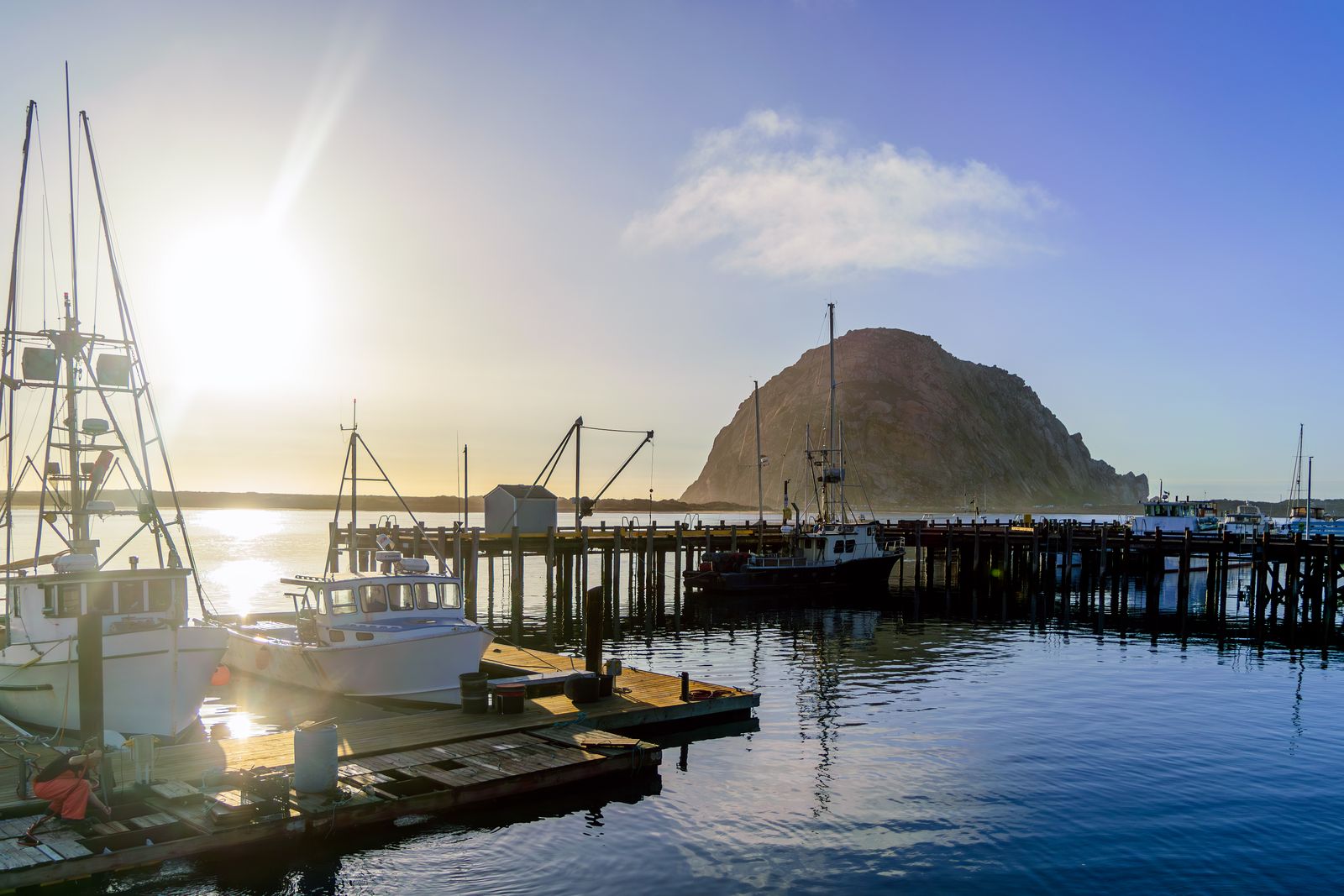
The largest fight is over Chitqawi, an 8.45-square-mile State Marine Conservation Area proposed by the Santa Ynez Band of Chumash Indians running from Morro Rock north past Cayucos. As originally filed in 2023, it would have kept some recreational fishing legal. That changed in April, when the tribe amended the petition to allow take only by its own members.
"The original petition proposed the allowance of recreational take of finfish and invertebrates except mussels and scallops," Claire Waggoner, habitat conservation program manager for the California Department of Fish and Wildlife's Marine Region, told KSBY. "So it would've still continued to allow some recreational take."
Tribal chairman Kenneth Kahn framed the petition as a co-management proposal rather than a closure.
"Our goal, as the only federally recognized Chumash tribe in the nation, is to help protect the biodiversity and cultural resources in the waters along the central coast through co-management with the state," Kahn said in a statement. "We filed the Chitqawi MPA petition in 2023 to protect the northernmost coastal Chumash village site that is culturally and historically important to the tribe."
That has not settled Morro Bay. The proposed boundary covers grounds worked for Dungeness crab, rock crab, halibut and salmon.
"It's our livelihood," Lori French, a Morro Bay fisherman's wife, told the station. "It's his identity. It's not like you just go to work and shut the job off."
French said the fleet has been shut out of the process. "In the whole MPA process, we have been, I would say, ignored," she said. "For the fishermen, it would have a devastating economic impact and for the town, for Morro Bay, I think it would be pretty severe also."
The City of Morro Bay made the same complaint in writing. In a letter to Fish and Wildlife director Meghan Hertel and commission president Eric Sklar, reported by Estero Bay News, mayor Carla Wixom and harbor vitality director Chris Munson wrote that "the City of Morro Bay was not notified, consulted, or invited to participate in the petition review proceedings conducted to date," including tribal committee meetings in August 2025 and April 2026. The letter warned that "a process that excludes local municipalities risks overlooking real-world impacts and undermining the public trust that is essential to successful, long-term marine stewardship."
Sixty miles south, a second petition covers 9.18 square miles off Point Sal, reaching just over four miles offshore. It comes from the Northern Chumash Tribal Council and the Natural Resources Defense Council, and it would allow shore-based hook-and-line fishing plus take tied to Vandenberg Space Force Base operations.
"Point Sal emerged as a really special place with really strong connections to Chumash heritage and identity, and a place that was pristine and beloved by locals," Sandy Aylesworth, the NRDC's director of Pacific initiatives, told the Santa Maria Sun. "It was for that reason that we thought that Point Sal might be a promising area to have a new marine protected area."
"Ultimately sacrifices and things were made with the marine sanctuary designation that we would like to see shore up better protections for the biodiversity and for durable protections for the coastline," Sage Walker said. "And this is one way that we can achieve that."
Charter operators say the arithmetic does not work for them. Wayne Blicha, who runs Flying Fish Sportfishing out of Port San Luis, told the commission he is not hostile to conservation.
"I consider myself a marine steward, even though I'm a taker of the ocean," Blicha said. "We look at Point Sal as being a very important habitat to us." With protected areas already in place off Point Buchon and Point Purisima, he said, "we have a very shrinking area that we're able to access and more emphasis will be put on those smaller areas to fish."
Erik Rodrigues, captain of the Avila Beach boat Patriot, put it more bluntly. "With this imposed MPA it would cause too much pressure on our limited amount of reef structure, which is already taken away from us," he said. "So, if the goal of this MPA is to remove us from fishing, then it will work."
A third petition, the 9.05-square-mile Mishopshno area off Carpinteria, drew the same split at a packed Goleta hearing covered by Noozhawk, where supporters wore blue shirts and opponents wore green. Veronica Mendoza of the Northern Chumash Tribal Council argued the case for restraint: "Abundance is never created by taking everything. It is created by relationship, by reciprocity, by understanding that if the ocean is feeding you, your family, your body, your spirit, you have a responsibility to feed it back."
Jaime Diamond, who runs Stardust Sportfishing out of Santa Barbara with her family, said the closure would take away a food source rather than a hobby. "Our kids and our local community, who do rely on this as a food source, will lose that access," she said. "It's not something that will be regained going somewhere else."
The petitions are three of 20 filed with the commission in November 2023, alongside 72 proposed regulatory changes. The commission acted on five in December 2024. CDFW released evaluations for ten more in March 2026 — all of them petitions not led or co-led by tribes. The tribal-led ones, including Chitqawi and Point Sal, are still under departmental review.
Waggoner was careful about where the agency's role ends. "It's beyond our evaluation," she said. "The commission has a lot of things that they can factor into their decision."
Even approval would not close anything quickly. Waggoner said a granted petition would enter California Environmental Quality Act analysis and further public engagement, a process she estimated at two to five years.