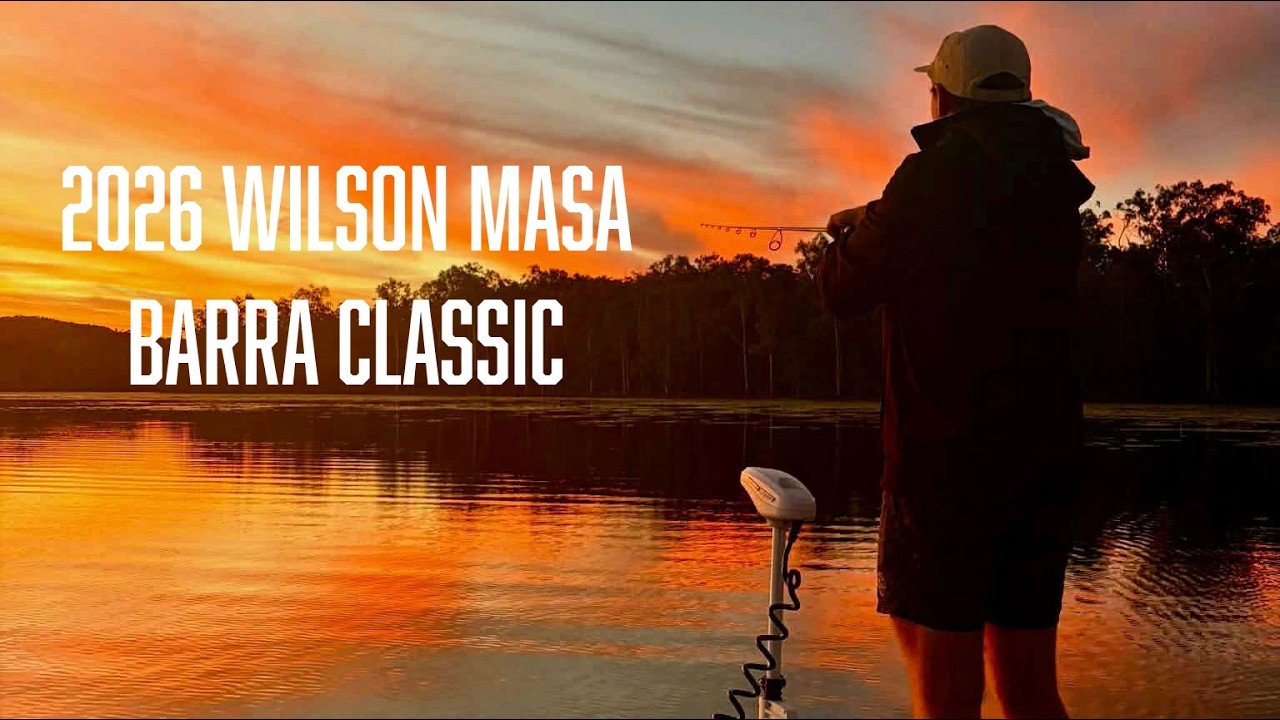
The dominant story in impoundment barramundi fishing in 2026 has not been the fish, the weather or the lures — it has been forward-facing sonar. So when an Aussie YouTube team rolled up for the Wilson MASA Barra Classic in late March, they did so with a very deliberate statement of intent.
"We're going to try and beat the guys with the live scope," the angler said at the start of the team's published recap. "We're going to fish with no live scope and we're just going to hammer it hard."
The comp is a 16-hour overnight format — session one running from mid-afternoon Saturday until 8 a.m. Sunday — and that alone tests any team's stamina, let alone one giving up the electronics that now dominate dam fishing. The team drew boat number 37 for the opening session and 13 for the second, a sequencing they admitted was close to ideal.
"It's sort of good that where we wanted to sit like we didn't want to be first and we didn't want to be bang in the middle, so it doesn't swap for the second session," the angler said during rig-up.
The pre-fish footage is a tour through gear that has become standard for serious impoundment barra work — Wilson Weedless swimbaits in the new seven-inch size, a 60-inch UV-activated variant, Raid Japan Super Fish Rollers in 7.5 inches, Duo jerk baits — and the team was honest about the appeal of the live-scope crowd's tackle, even as they chose to fish blind.
Session one did not deliver. The team came in with no fish on the brag mat despite multiple follows and hits.
"Not exactly how we wanted to go. We got a heap of follows from fish, but dropped heaps as well if we did end up hooking them," the angler said in the morning recap.
"It was a bit weird because the one thing we did notice that we have noticed in all the other sessions is there was minimal barra boofing throughout the night. Normally you're hearing them every five minutes if that," the angler said.
That observation cuts against one of the advantages a no-livescope team was counting on. Fish that crash on the surface give themselves away to any angler with good ears and a headlamp; a dam that has gone quiet overnight takes away that cue and puts live-scope boats at a clear advantage, because they can still mark fish on the screen in dead-calm conditions.
The team's morning review was frank.
"A lot of the guys with the livescope did really well. Obviously Flynn and I, we aren't running the livescope yet," the angler said.
The comp sits inside a broader conversation the recreational fishing world is having in 2026. From American bass tournaments to Australian impoundment events, forward-facing sonar has pushed catch rates up sharply, redrawn leaderboards, and prompted some events to debate technology rules. The Wilson MASA Classic has not changed its format, but the gap between old-school and sonar-equipped boats is now visible on the scoreboard, and a team willing to document that gap honestly is useful content in the debate.
Whether the team rethinks its no-livescope stance for a second run is a question they left open. What they did offer was a rare thing: an unvarnished read from inside a comp where the technology is absolutely setting the pace.