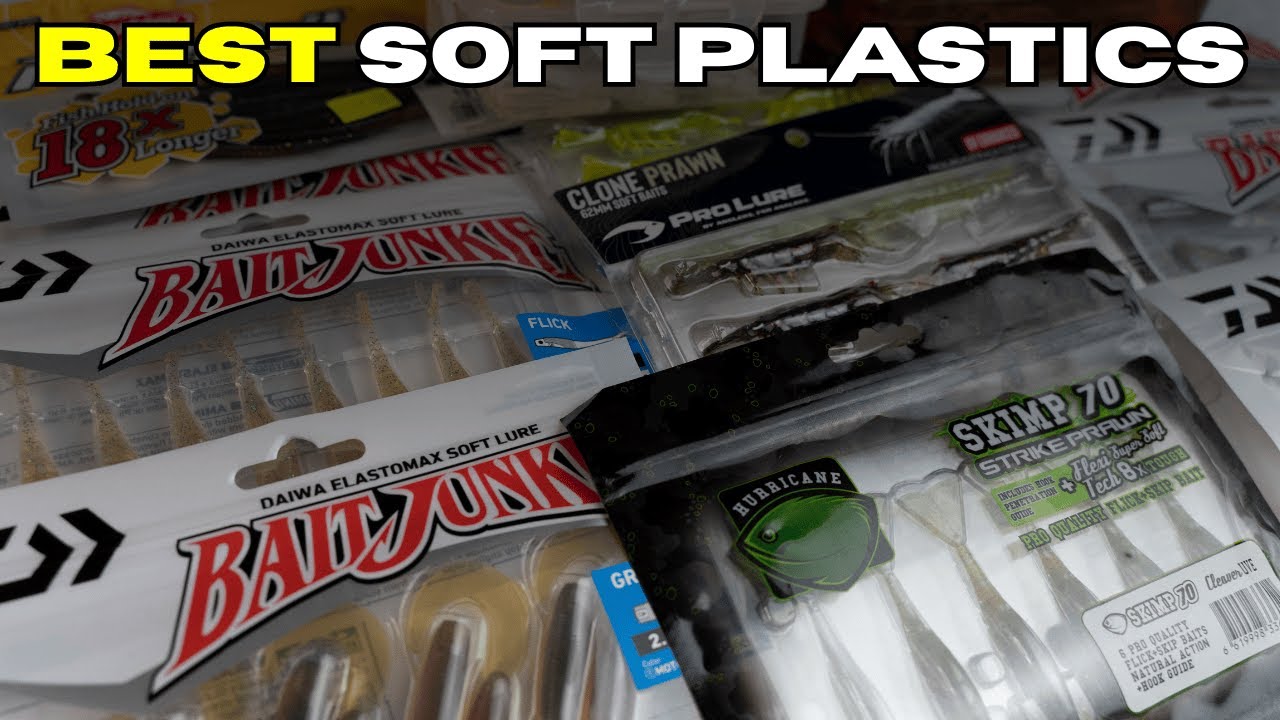
Walk into any tackle store and the soft plastics wall can be paralysing — endless brands, shapes and colours, all promising fish. In a new tutorial, Sydney finesse tournament angler Abs cuts through the noise with five bream plastics he says every lure fisher should carry.
"Soft plastics fishing for bream can be really exciting until you realise there are so many soft plastics on the market and so many factors to make it very overwhelming," he said, introducing himself as a finesse angler who has spent the last few years mastering light-tackle fishing.
His first pick leans on scent rather than looks: the Gulp Krabby. "Sometimes it doesn't matter how realistic a lure looks if the fish aren't even around to see it," he explained. "The Gulp Krabby changes that game. It's loaded with scent that pushes through the water, pulling in fish from far away." He rigs it on a 1/16th hidden-weight jig head with a size one or two hook so it sinks vertically and naturally, and keeps a packet in camo colour ready for rock walls, pontoons and oyster racks. "What I love most — it just works when nothing else does."
Number two is his answer to fish that are switched on but shut down — the Eco Gear Aqua Bream Prawn. A biodegradable bait that has to be kept in its juice, he rigs it weedless on a size 10 worm hook to skip-cast into tight mangroves and shallow snags without snagging up. "This lure shines in pressured water," he said. "When the fish have seen absolutely everything else, this is the ace up your sleeve."
Third is the Prolure Clone Prawn, his go-to for land-based sessions where casting angles are tight. Fished slowly near structure on a hidden-weight system, weedless rig or light jig head, it mimics a prawn in estuary systems and stands out for its durability. "Whether you're fishing from a boat, a kayak, or even land-based, it just catches fish," he said.
His fourth choice is a personal favourite — the Daiwa Bait Junkie 2.95 Flick. "Most soft plastics get thrown away after a fish or two. Not this one. The more it's chewed, the better it seems to fish," he said. Its long, thin profile and darting, wounded-baitfish action come into their own in dirty water, grabbing the attention of followers and convincing them to commit. He fishes it on a light jig head around bait-holding structure like pontoons and rock walls, and on weed and sand flats to fire bream up — landing what he called "an absolute horse" during the session.
The fifth, he says, is a must-have for beginner and pro alike: the risky critter. With flicking arms and a subtle kick, it looks like it is trying to escape even when sitting on the bottom — ideal for slowly picking apart tight structure under boats, along mangrove edges and beside pontoons. "It slows your fishing right down and forces you to focus on the precision," he said. He fished it through extremely shallow mangroves and was rewarded with a bream pushing 45 centimetres. "It was one of those sessions where slowing things down and picking apart the water made all the difference in the world. Rig it light, let it drop, and wait for that tick on the line. That's when the magic happens."
The thread running through all five is finesse: light rigs, natural presentations and a willingness to slow down when the fish get fussy. Whether you fish from a boat, a kayak or the rocks, Abs argues, a small selection of proven plastics will catch more bream than a tackle box you can barely close.