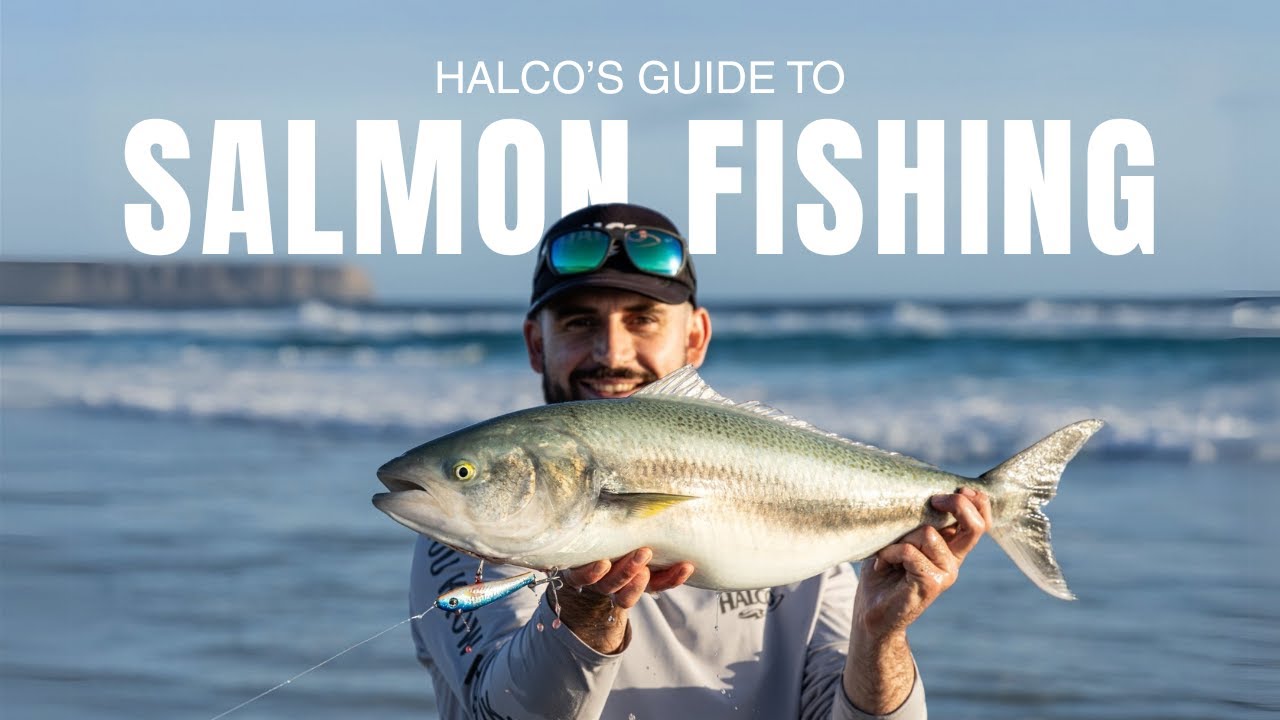
For sheer accessibility and arm-stretching fun, few fish beat the Australian salmon — and on Western Australia's south coast, the annual run turns ordinary beaches into one of the country's great land-based fisheries.
In a how-to filmed amid the WA south coast run, a Halco Tackle presenter laid out exactly how to find, target and land these hard-fighting fish, starting with why they are such a popular target in the first place.
"Salmon have got to be one of the most accessible sports fish in our country," he said. "You get them on the east coast, west coast, south coast. They are everywhere and they are great fun to catch." They fight hard, go aerial and tail-walk, and can be taken on both bait and lures during a migration that, on the south coast, sees fish moving from the south up toward the west coast on their spawning run.
The first job is reading the beach. The presenter's number-one structure is a gutter — a deeper trench of water running along the sand. "All a gutter is, essentially, is a deep piece of water running along the beach," he explained. "Typically a wave breaks and reforms, and that's what fish use as a highway." Reefy outcrops and pockets sheltered from swell are also worth a look, as they trap baitfish and offer easy meals. A pair of polarised sunglasses, he stressed, is a must — without them it is almost impossible to tell salmon from reef and sand.
The gear is refreshingly simple. He favours a 10-foot rod (anywhere from nine to eleven feet works) rated around 20 to 30 pounds, a 4000 to 6000-size reel and 20 to 30-pound line — light enough to cast a long way, with plenty of power to control fish in the wash. Anglers who prefer to soak a bait in a gutter can simply beef up to traditional beach tackle.
On lures, he ran through the full spread. Metals like the Outcast in sardine pattern and the "ever-popular" Halco Twisty cast a mile and imitate a fleeing baitfish; stickbaits such as the Halco Slidog 105 Heavy carry more presence in the water; surface poppers offer the most visual, heart-stopping strikes; and for boat anglers, trolled divers like the Halco Laser Pro in 120, 160 or even 190 sizes are a deadly way to both find and catch fish.
Presentation matters more than lure choice, though. The key move is the lead cast — placing the lure ahead of a moving school rather than on top of it. "You look at your fish, see which way they're moving, and we want to put that lure in front of the school of salmon," he said. From there it is about reading the fish: surface-feeding schools will hit almost anything thrown into them, while fish sitting deeper or further out call for a heavier lure worked slower with a few twitches on the drop. "Just gauge the mood of the fish," he advised. "Once you've had one or two casts, you'll see pretty quickly what you're dealing with."
Landing one is the simplest part of all. His method is the classic pump-and-wind: lift the rod tip to about 45 degrees, wind down on the drop and keep gentle, constant tension. "When that fish wants to run, just let it run. That's part of the fun," he said. "It'll be at your feet before you know it."
With tons of fish moving through the gutters during the run, a modest kit and a basic grasp of where salmon hold and how to present a lure, the WA salmon season is about as welcoming an entry point into sportfishing as Australia offers.