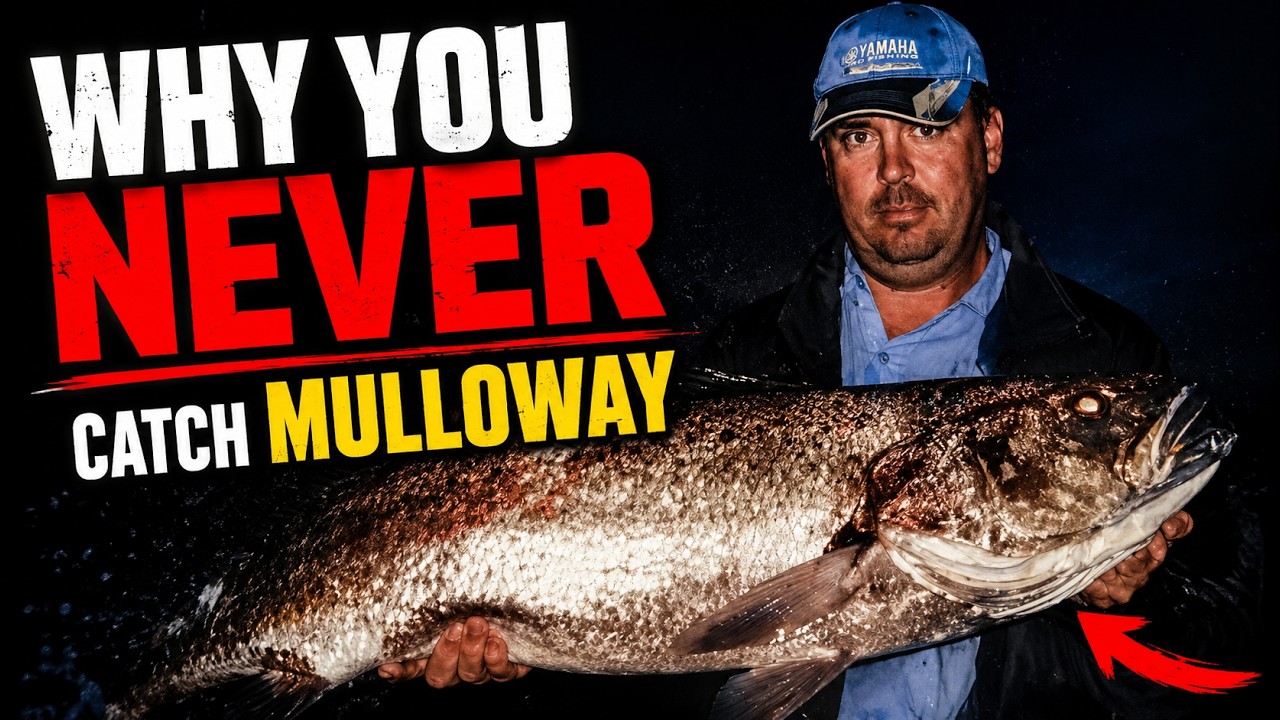
Big mulloway are not so much caught as earned, and most anglers, says veteran jewfish hunter Shannon, sabotage themselves with the same repeat mistakes. Drawing on 40 years chasing the species, he laid them out plainly.
Mistake number one is fishing dead water. A spot that looks lifeless is lifeless, he said, and no amount of loyalty to a favourite mark will change that. The fix is to read the water before committing — hunt for bait, birds and current — and to keep moving until you find signs of life. "If there's life there, stay on it. If there's no life, leave," he said.
Tide is closely tied to that. Mulloway are lazy ambush predators that hold behind structure or in deep holes and wait for moving water to deliver their food, so slack water is largely wasted time. He leans on a low tide and the first of the run, and on an old saying that has stuck with him for years: "A good mulloway spot is a bad mulloway spot on the wrong tide."
The error he rates above all others is noise. In shallow water especially, sound travels and scatters big fish, so he preaches near-silence — no loud talk, no clattering anchors, no dropped sinkers, no heavy footfalls. Bait should be fresh or live, not a servo packet of frozen squid; he urges anglers to gather mullet, salmon, pike or beach worms and keep them lively.
He is also adamant that most people fish far too heavy. Where others rig 80lb mainline and 100lb leader, he runs around 30lb, pointing out that mulloway rarely fight dirty off the reef and mostly use their weight against you. And in the rivers, he warned, the classic blunder is striking too soon — while a fish is still mouthing the bait — and pulling the hook. Let it move off, let the line load up, then set. Patience, he insists, is the whole game.