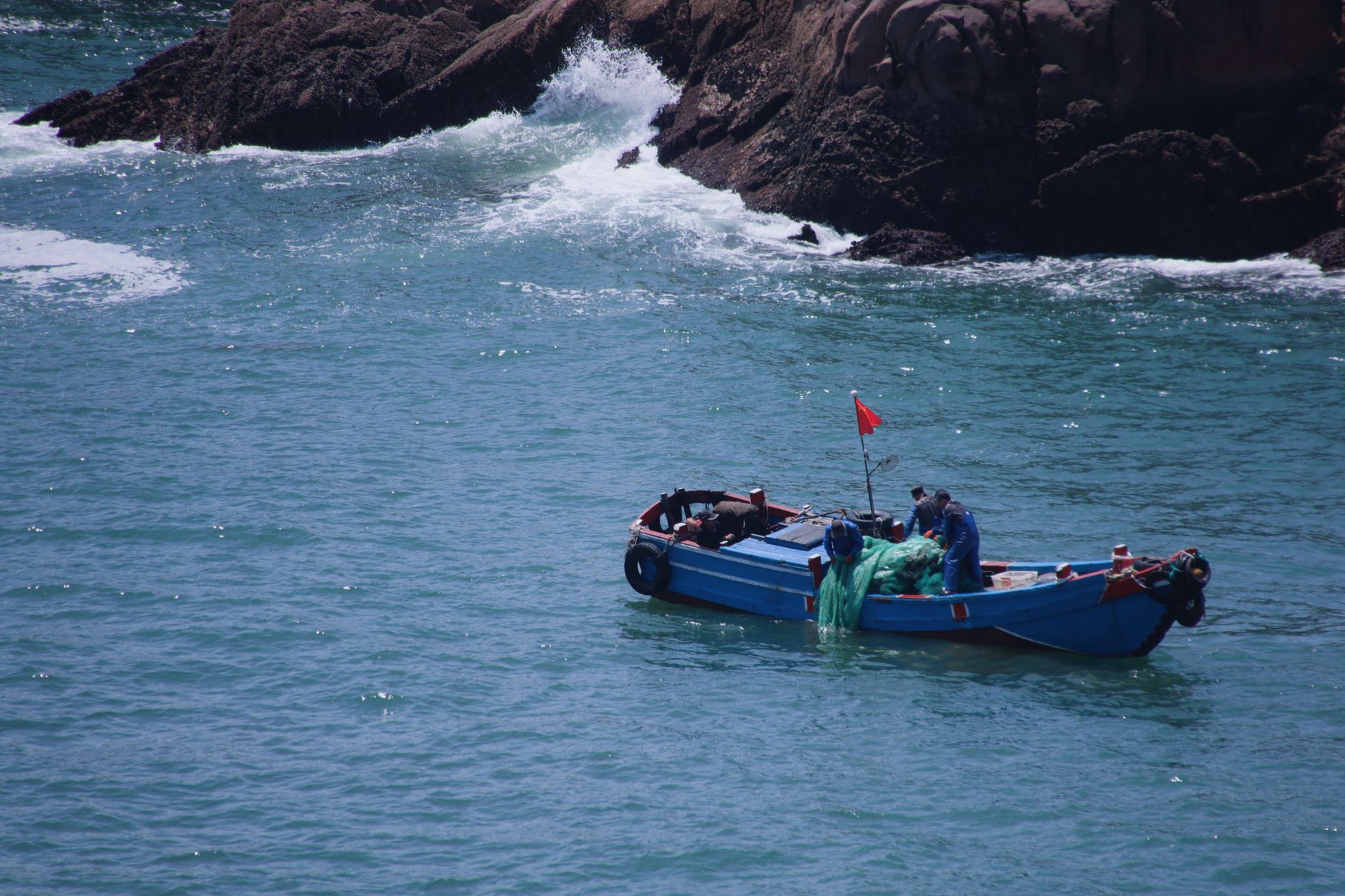
The tuna in your local fishmonger's case likely began its journey in the Western and Central Pacific, in waters monitored by a workforce most anglers have never heard of: independent fisheries observers. They spend weeks aboard commercial longliners, recording catches, noting bycatch of protected species and reporting illegal dumping. A fresh SBS investigation this month lays out how dangerous that role can be, and how seldom a dead observer's family learns what really happened.
The Association for Professional Observers counts at least 14 who have died or gone missing at sea since 2015. Few of those cases have been closed. The best known is Eritara Aati Kaierua, a 40-year-old father of four from Kiribati, found dead in a cabin on the Taiwanese-flagged longliner Win Far No. 636 in March 2020.
His last message home, emailed to his wife Tekarara on 21 February 2020, gave no hint of trouble: "Fish is a little scarce or maybe this location is not fertile, we are now fishing in Papua New Guinea and we are still here." He died within a fortnight.
The investigation that followed is what turned the case into a cause. David Hammond, who founded the charity Human Rights at Sea, says the finding was quietly overturned. "The first coroner who actually saw the body had highlighted in the official and publicly available reports that Eritara died from a blunt force trauma to the head," Hammond said. Then, he added, "That second review from independent coroners changed the findings to death by natural causes."
The charity's independent review sets out 26 unanswered questions: why an early homicide inquiry was dropped, why the vessel was let go while it was still treated as a possible crime scene, and why potential evidence such as food containers was never kept for testing.
Observers themselves tend to stay quiet, wary of reprisal. Jude Piruku, once an observer with the Pacific Islands Forum Fisheries Agency, spoke about the long stretches of solitude. "You've got a lot of time on your hands to think, and imagine, and look at the endless horizon," he said. The work could also turn confrontational: "On one of my trips on a Chinese longliner, I was obstructed from doing my job." Reading about Kaierua shook him. "When I first read about [Eritara's] case in 2020, I lost hope," Piruku said.
The fishery they police is one of the region's economic pillars. The Western and Central Pacific accounts for more than half the world's tuna catch, worth roughly US$1.5 billion to the Forum Fisheries Agency's members. Its director of fisheries operations, Allan Rahari, called the catch "a backbone to a lot of our Pacific Island countries," which is why inaccurate logbooks matter so much. "They're catching fish, but they're not reporting their catch accurately," he said.
The cost is financial as well as environmental. Commander Khan Beaumont, a surveillance operations officer at the agency, estimated the scale of the theft bluntly: "Approximately US$300 million disappears in illegal activity each year."
Observers are meant to be the check on all of it. After Kaierua died, the Forum Fisheries Agency created a compensation scheme to plug insurance gaps for observers hurt or killed at work. What campaigners still want is simpler and harder to deliver: a credible answer when an observer never comes home.