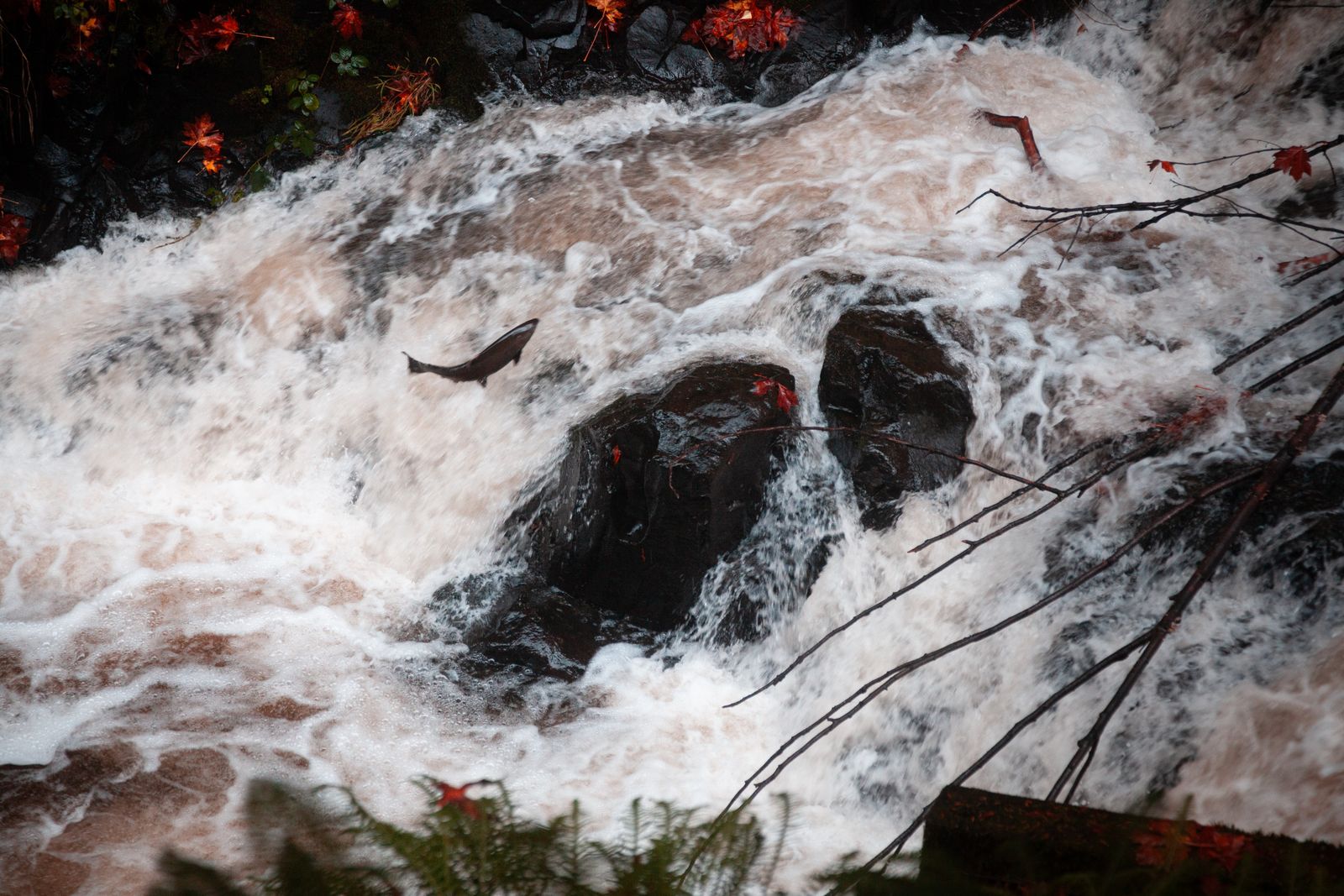
Genetic evidence that Ireland's wild salmon are absorbing DNA from escaped farm fish has landed with force, restarting an old argument over whether salmon cages belong on the west coast at all.
The survey — paid for by the Marine Institute and carried out by University College Cork — tested 6,322 young salmon pulled from 133 rivers between 2023 and 2025, measuring them against 1,755 fish banked as a baseline between 2003 and 2008. In 34 per cent of the populations examined, researchers detected introgression, the irreversible seepage of farmed genes into wild lineages. The other two-thirds were clean. The mixing was rated low in 27 per cent of rivers, moderate in 6 per cent and severe in just 0.8 per cent.
For the scientists, the fear is about what these fish might lose the ability to become.
"Ireland's Atlantic salmon populations represent a unique and irreplaceable 15,000-year legacy from the last Ice Age," said Professor Philip McGinnity of University College Cork, who led the research. "Any fundamental change to the genetic makeup of these populations could seriously hamper their capacity to evolve and adapt to future challenges, including those associated with global warming."
Cage-reared salmon are selected to pile on weight quickly behind a net, not to dodge predators or read a river, and study after study has found their offspring struggle once wild — dragging down the resilience of whatever population they join.
The report did not arrive in a vacuum. In August 2024, between 7,000 and 8,000 farmed salmon poured out of a damaged pen at Killary Harbour, on the Galway–Mayo border, into the biggest wild salmon fishery in western Ireland. Inland Fisheries Ireland later traced the escapees across at least 12 rivers, with as many as 30 potentially exposed — 26 of them conservation areas — and reckoned roughly 450 fish made it into freshwater. About one in five of the escaped males was sexually mature.
"The substantial geographical spread over which escaped farmed salmon were confirmed – in a critical region for wild Irish Atlantic salmon populations – is particularly concerning," said Dr Seán Kelly, a research officer at Inland Fisheries Ireland.
His colleague Dr Cathal Gallagher, the agency's head of research and development, spelt out the danger. Sexually mature farmed fish moving into wild rivers at spawning time, he said, "poses a risk of interbreeding with wild salmon" and "can pose a significant threat to wild salmon populations through genetic contamination, impacting the overall ability of future salmon generations to survive in the wild."
The divide is less about the numbers than about what to do with them. The Marine Institute presented its new DNA tools as a way to police fish farming more tightly rather than end it.
"Applying cutting-edge genetic tools, we can better assess interactions between farmed and wild fish and ensure that management decisions are supported by robust scientific evidence," said Dr Ciaran Kelly, the Institute's director of fisheries. "This is essential to safeguarding biodiversity and maintaining public and stakeholder confidence in Ireland's salmon aquaculture sector."
Others see no fix short of removal. Billy Smyth of Galway Bay Against Salmon Cages says there is no practical way to recover fish once they reach a river — "Once salmon enter fresh water they stop feeding. They're very hard to catch without netting" — and wants the industry wound down. "Salmon farmers should be bought out like the drift-netters were in 2007," he said, pointing to Ireland's move to close its commercial drift-net fishery to protect wild stocks.
The study's authors are calling for compulsory national genetic monitoring, rapid sampling whenever fish break loose, and stronger containment at farms. For the majority of rivers where wild DNA is still intact, they cast the findings not as an ending but as a line worth holding.