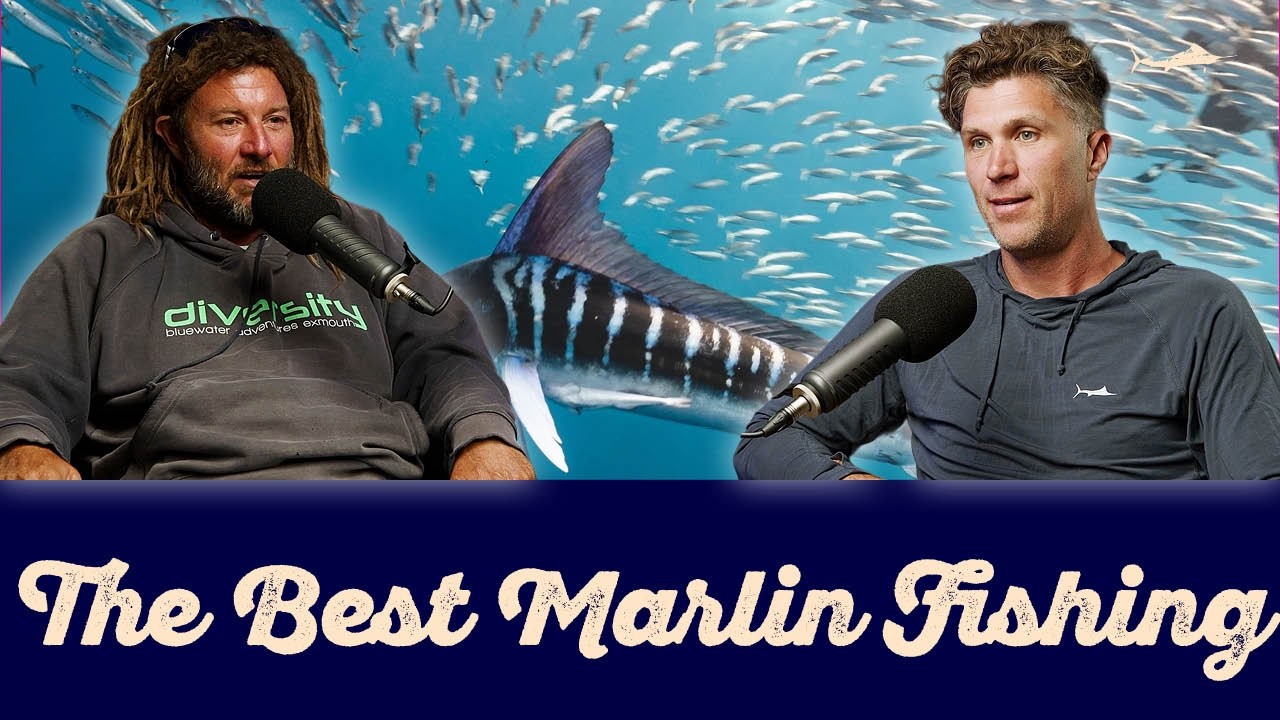
A South Coast New South Wales striped marlin bite that has produced consistent 20-fish days for multiple boats has Western Australian gamefisher Lee Mitchell calling it arguably the best gamefishing ever seen in Australia. Mitchell, a 23-year commercial fisherman from Exmouth, joined The Fishing Podcast to detail a 10-day session that produced 100 billfish — the bulk of them in a single four-day window.
"The last month, I suppose, of fishing on the south coast of New South Wales has been arguably the best fishing anyone could have ever seen," Mitchell told hosts. "I don't know where in the world you can get it like that to be honest. You know, it's what you hear about in Cabo and all these exotic places back in the day — and yeah, it's right here."
Mitchell's tally — 100 billfish in 10 days, with about 70 of them coming in four — is staggering on its own, but the broader fleet's results were every bit as wild. He counted multiple consecutive 20-stripe days for himself, two grand slams (a stripe, blue and black on the same day), and back-to-back 25-fish days from gamefisher Joel Oliver that he believes may be the Australian single-day striped marlin record. "Joel rocked up and he did two days in a row of 25 — both all stripes I think. I'd say from my understanding that's the Australian stripe marlin record days."
What set the run apart, in Mitchell's view, was the combination of fish density and average size. "These are 100 kilo fish, like near on all of them," he said, drawing the contrast with WA's smaller stripes. "There was probably half a dozen of those fish were like over that 140 kilo type mark." Cold 22-degree water also kept the fish fighting longer than the warmer-water blues he is used to. "Once they go down — or any fish in that 22 degree water — they just don't roll over."
Mitchell argued the bite has actually favoured trailer boats over heavier sportfishers, because the schools have been shifting fast along the coast and the smaller hulls can chase the body of fish 200 km in a day. "The bike can move so quickly up and down the coast, and the guys over here have got it so dialed in on rip charts and the networking side of it," he said. "Plus, the style of fishing — trailer boats is quick. You can catch them quick."
Mitchell also weighed in on the lessons coming from the West, where Eddie Lawler's pioneering work out of Exmouth turned blue marlin from a bycatch into a defined seasonal fishery. "Anyone in Xmouth or near on WA that knows how to catch marlin can accredit it to Eddie, I would think to a degree."
For tackle, Mitchell has moved up from 15 kg gear after this run. "I don't think I'll be fishing 15 kilo again over again. I started fishing that and it's just not that much fun on the angler — at least with 24 plus you can hit them with sunset and sort of trick them into it."
The bite was still rolling when the podcast was recorded, with multiple 20-fish days continuing for crews dialed into the rip lines and the South Coast network.