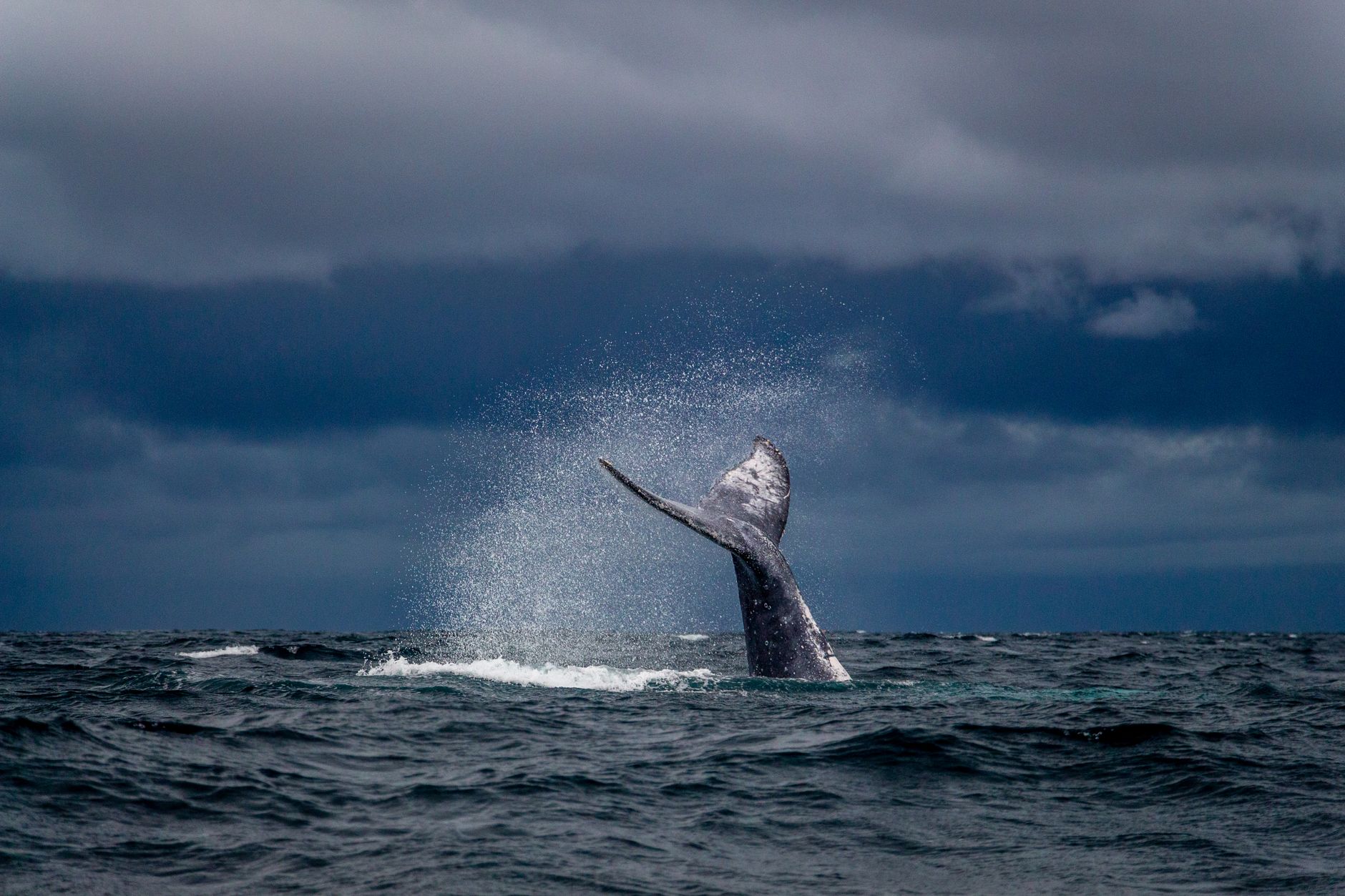
A young humpback whale that spent three days pinned to the seafloor 20 miles off Newport, Oregon, was cut free on July 26 by a team of trained responders and a local commercial fishing vessel. The whale swam away. It is not expected to live.
The animal was first spotted on July 23 by Oregon State University research assistant Craig Hayslip, flying a whale and gear survey aboard a US Coast Guard helicopter. He called it in to NOAA's West Coast Entanglement Hotline, which pages trained responders up and down the coast. When boats reached the whale the next morning, they found it anchored by gear running roughly 400 feet to the bottom.
GoPro footage taken underwater showed a line running straight through the animal's mouth.
"The whale's jaw was wide open beyond anything you would expect to see," said Jim Rice, who manages the Oregon Marine Mammal Stranding Network at Oregon State University. "We could tell by the angle it was not natural."
The first attempt failed. Responders from OSU's Marine Mammal Institute and the Oregon Coast Aquarium, joined by entanglement specialists Doug Sandilands and Jenn Tackaberry of Cascadia Research Collective, attached buoys to a trailing rope to slow the whale, then took them off again when it became clear the gear was immovable.
"We realised if a whale couldn't move it, then we humans weren't going to move it, either," Hayslip said.
Weather shut the operation down until July 26, when Newport fisherman Poggy Lapham brought his vessel, the F/V Michele Ann, out to the site. Lapham, who has run marine mammal scientists offshore before, used the boat's hydraulic winch to lift the gear far enough that responders in an inflatable could get in and cut the line off the whale.
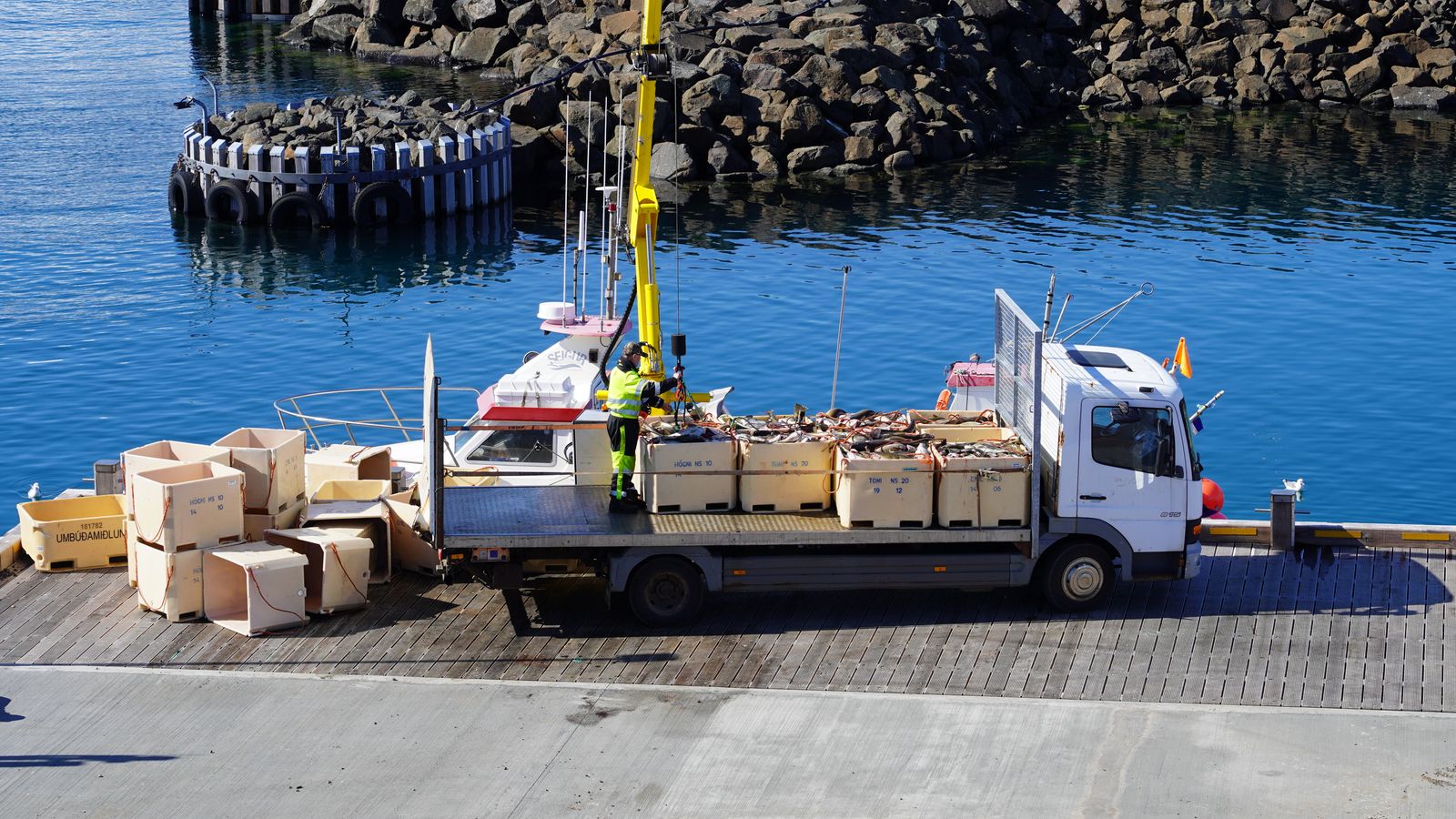
What came up over the rail was not one fishery's problem. The crew recovered more than 3,000 feet of line, five sablefish pots and several commercial Dungeness crab traps from both Oregon and Washington. NOAA Fisheries said the condition of the gear suggests it was lost or derelict rather than actively fished, and the agency is following up with the owners. DNA was taken off the recovered gear to work out which humpback population the whale belonged to. A photo catalogue matched it to an animal last seen in British Columbia in 2024.
Lapham's read on it went straight at his own industry. He told NOAA Fisheries the case should be a wake-up call to ask, "How can we better incentivize gear retrieval and tracking of lost gear to reduce this risk?" He noted that commercial Dungeness crab gear has to carry identifying tags while sablefish pots do not, which makes tracing an entanglement back to its source considerably harder.
For NOAA, the response itself was the win.
"This is truly a heartbreaker because of the whale's injuries, but we will learn so much from this case that can help us prevent future entanglements," said Lauren Saez, who coordinated the response for NOAA Fisheries' West Coast Region. "We disentangled the whale safely, got all the gear back, and had great collaboration with the fishing industry."
That collaboration is not accidental. Jim Burke, director of animal care at the Oregon Coast Aquarium, said the Oregon team had recently trained with the Cascadia specialists and had boats and gear staged for exactly this kind of call. A grant from the Oregon Wildlife Foundation paid for safety and documentation equipment.
The scale of the problem is the part the numbers make plain. More than 30 humpbacks were confirmed entangled off the West Coast last year, and humpbacks feeding off the coast in summer are the species most often caught up. NOAA public affairs officer Michael Milstein said the July 26 case was one of three documented entanglements off Oregon so far in 2026. Another humpback washed up dead on July 7, tangled in sablefish gear.
None of this lands in a quiet room. Oregon crabbers turned out in numbers earlier this year to oppose proposed entanglement rules, arguing the burden falls on a fleet already squeezed. Lapham's framing sidesteps that fight by pointing at gear nobody is fishing any more, which is a harder thing to defend.
The advice for everyone else is unchanged: only trained, federally authorised responders should go near an entangled whale. Sightings go to the West Coast Entanglement Hotline on 1-877-767-9425.