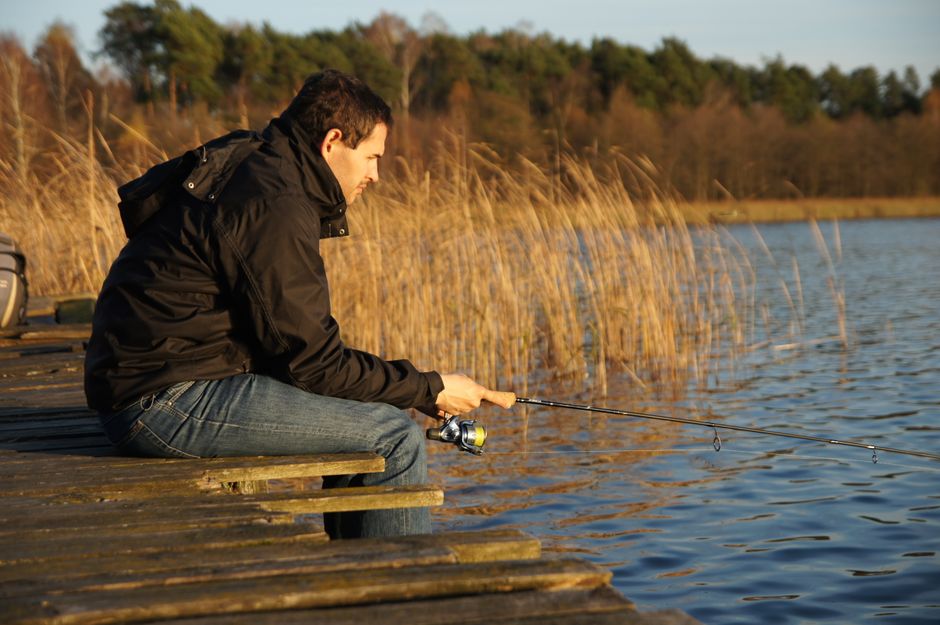
The fish that American anglers quietly take home each year add up to a far bigger harvest than the official record admits — by a new estimate, between 17 and 48 times more than the figure the United States reports to the United Nations.
The research, led by Matthew Robertson at Memorial University of Newfoundland's Fisheries and Marine Institute, was designed to capture the true size of the country's recreational catch. Alongside collaborators from the U.S. Geological Survey, the University of Missouri and Louisiana State University, Robertson's team assembled more than 15,000 surveys across 40 states and merged fishing-effort data with catch and release information.
Their numbers are striking. In the lower 48 states, recreational anglers are estimated to catch 2 billion to 6 billion fish annually. Once released fish are stripped out, between 230,000 and 670,000 metric tons are kept each year — against the 13,388 metric tons the US had been reporting to the UN's Food and Agriculture Organization. That retained catch could represent about 20 percent of the nation's fresh fish consumption, worth an estimated 3 billion US dollars.

This is not a story about anglers breaking rules. It is about a blind spot in the data. If the recreational harvest barely registers in official tallies, then the real pressure on fish stocks is being undercounted — and a population can look far healthier than it actually is.
Robertson's team cautions that without accurate figures, managers may overestimate how many fish are in the water, which could lead to unexpected population collapses and the kind of abrupt regulations and closures that anglers dread. A stock judged stable on incomplete numbers might already be stretched thin.
State-level snapshots bring the gap into focus. In Minnesota alone, anglers were found to harvest roughly 80 million pounds of fish a year, well above earlier expectations — and a hint at how the shortfall stacks up nationwide once every state is added in.
For the angling community, the takeaway cuts both ways. The study underlines just how important recreational fishing is, as an economic force, a tradition and a real food source for countless families. At the same time, it strengthens the argument for sharper catch reporting and broader participation in surveys, on the simple logic that reliable data is what keeps fisheries open and productive.
Published in early May 2026, the work is set to stir discussion among regulators and fishing organisations. Its central lesson, though, is plain enough: a fishery cannot be managed on numbers that ignore most of the people fishing it.