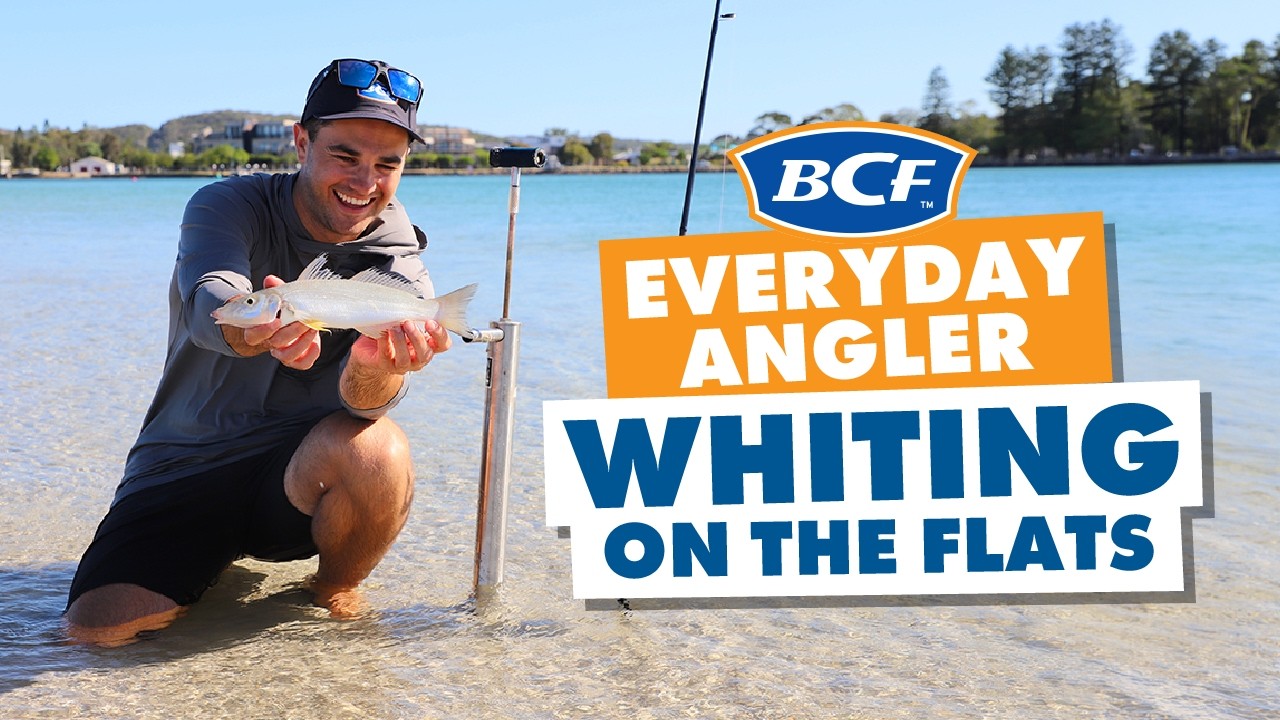
"This is basic fishing. It's simple," says Jono, the host of BCF's Everyday Angler series, wading onto an estuary sand flat with a yabby pump and a single rod. His mission for the morning was modest and self-contained: collect his own bait, drift it for sand whiting, and turn the result into fish and chips without leaving the water's edge. The total bait bill, he joked, came to "donuts."
The first job was nippers. Rather than buy bait, Jono pumped his own from the flats, working a yabby pump into likely holes and sieving the spoil through a pool-noodle-rigged float so the live baits stayed fresh in the water beside him. He aimed for around 20. "You might go four or five holes without getting anything, and then you'll get one hole with lots," he said, describing the trial-and-error rhythm. The appeal, he argued, is that the bait lives exactly where the fish feed. "They live up on the flats in the first place. We're matching the hatch."
Accessibility was the recurring theme. Jono drove to a public wharf and walked out onto the flat, no boat, kayak, paddle board or four-wheel drive required. "There's plenty of things that we can do as everyday anglers where you don't need a fancy boat or kayak," he said. "And this is one of them."
His terminal tackle was deliberately spartan: a small running sinker, a tiny swivel and a short length of 4 lb fluorocarbon to a small hook, the lightest line he could buy in store. The reason, he explained, is the species itself. "They live in crystal-clear water on these shallow flats, and they are hawks of the flats. They see everything." A lightly pinned nipper, flicked out and allowed to drift naturally on the incoming tide with the bail arm open, did the rest. He warned against over-threading the bait or striking too early, preferring to feed line and let the fish commit.
The method produced. Jono landed a brace of yellowfin whiting, fish he rates among "the tastiest critters," sliding each into a kill bag suspended in the water to stay fresh. An undersized yellowfin bream was returned. "I'm not a fan of keeping them at all," he said. "They're very slow growing." A rising north-easterly eventually pushed him off after about 90 minutes, a session length he was perfectly content with. "Not every fishing session needs to be five or six hours out on the water," he said. "Us everyday anglers don't always have that time."
Back at the car, the catch-and-cook payoff was just as pared-back. Using a small camp cooker that lives permanently in his vehicle, Jono fried thinly sliced potatoes and whiting fillets on the bank. His one piece of cooking advice was about timing. "A lot of people get scared about cooking seafood. They cook it for too long thinking it's like chicken," he said, noting a thin whiting fillet needs only about 60 seconds a side over high heat.
The broader pitch was that this style of fishing travels. Sand flats hold whiting, bream, flathead and more right around the country, he noted, from south-east Queensland to Victoria and South Australia, and you can be on them within a couple of hours of finishing work. "You can get out here and have fun just like this, and it's super accessible."