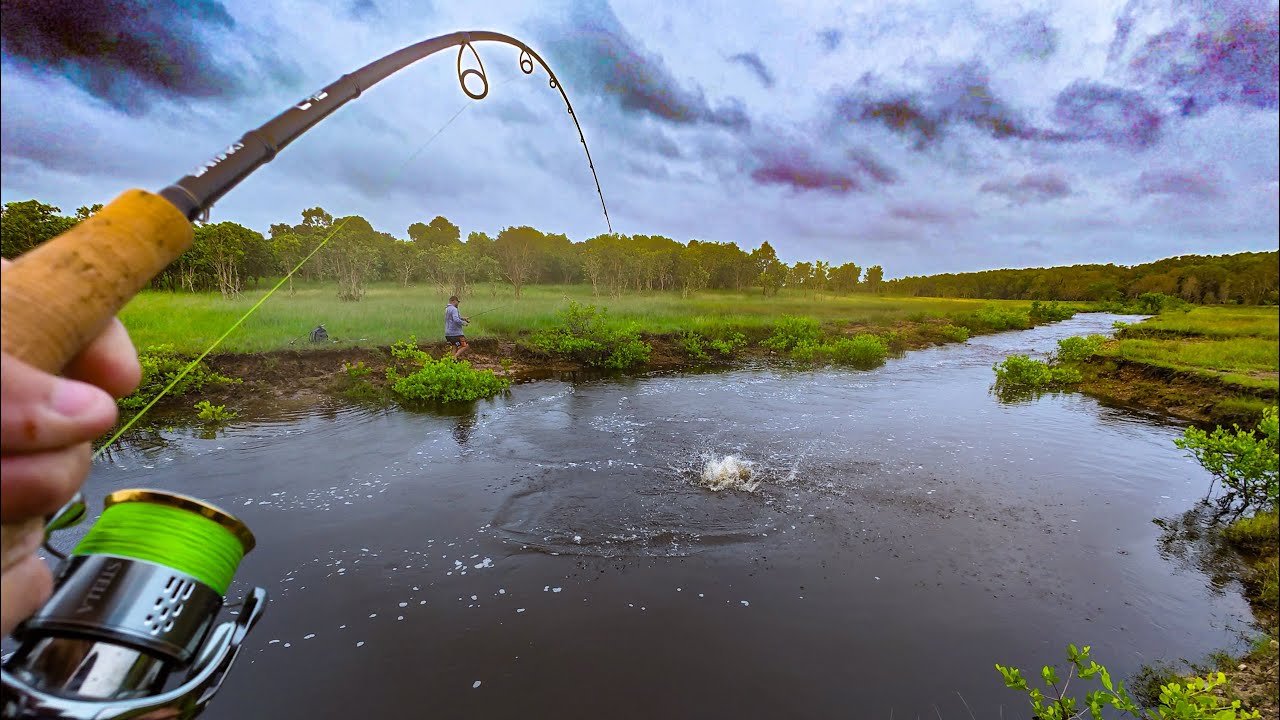
The Forgotten Coast of Florida earned its nickname honestly. In Wakulla County, where commercial fishermen, charter captains and small-town restaurants all still know one another by name, an angler from the Tug Trash Outdoors channel went looking for grouper and found something rarer: a living piece of folk history called worm grunting.
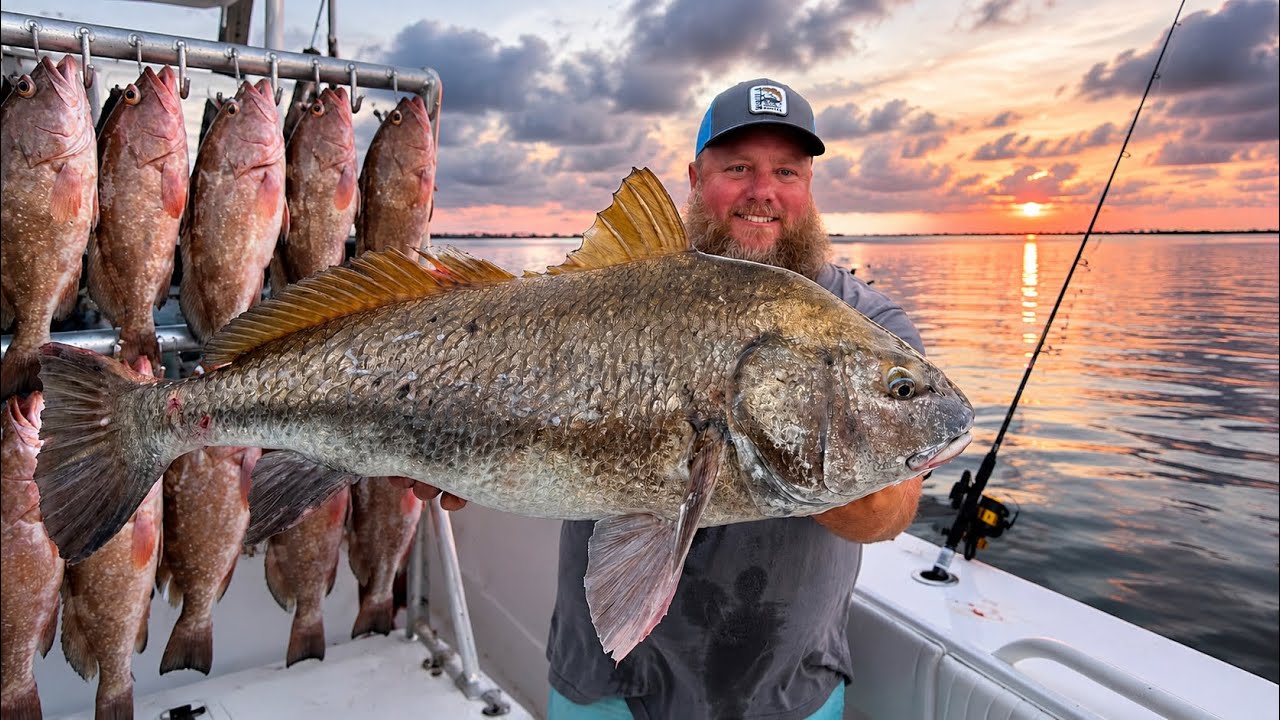
The trip itself delivered plenty of fishing. Out of Panacea aboard a charter, the group boxed red grouper while carefully releasing the species that were closed, gag grouper and red snapper among them, before weather pushed them inshore for big black drum on half a crab. But the moment that lingered came on dry land, in the nearby town of Sopchoppy, which bills itself as the worm grunting capital of the world.
Worm grunting is exactly what it sounds like. A grunter drives a wooden stake, called a stob, into the ground and rubs it with a flat piece of iron, sending a low vibration through the soil. The buzzing mimics the approach of a digging predator, and earthworms surface to escape, where they are gathered by hand for bait.

The man demonstrating it has been doing it almost his entire life. "Ever since I was about seven years old," he said, when asked how long he had been grunting. "Sixty-five, seventy years." In his hands was a roofing iron worn smooth and grooved by decades of use. "This is where my dad's iron is actually pitted where his hand is," he said, showing how the metal had been shaped by skin and sweat over a lifetime.
For his family, this was never a hobby. "When I was coming up, we didn't have no commercial," he said. "If you wanted to go fishing, you needed some worms. That's how you did it." The worms themselves are a local native species, he explained, found nowhere else, and they out-fish anything from a shop when it counts.
That is especially true in spring. "During the bedding part of the brim in the spring, they can't beat a worm," he said, using the regional name for bream and panfish. "That artificial, they just forget about it. It's like obsolete all of a sudden." His rule of thumb was pure match-the-hatch: use the bait that is native closest to home.
Conditions, he admitted, make the work harder than it used to be. Worm grunting needs moisture in the ground, and the region has been drier in recent years. "We don't have the water we used to have," he said. "We get a good shower and in two days you don't even know it rained."
What came through most clearly was that this is a tradition hanging by a thread. He once hauled worms in bulk to one of the biggest bait operations in the South, but those days are largely gone, replaced by a quiet honour-system trade with friends and family and a few local stores. He has worn out the wooden stobs at a rate of about three a year, but the iron in his hand has lasted most of his life. "My wife told me, when you wear it out now, we'll quit," he said. "I got fifty years."
Asked to describe it, he did not hesitate. "It's a dying art," he said. Sopchoppy still throws an annual Worm Gruntin' Festival to keep the spirit alive, but the genuine article, a man calling worms from the earth with a stick and a strip of iron, is a sight that grows scarcer every year. On the Forgotten Coast, at least, it has not been forgotten yet.