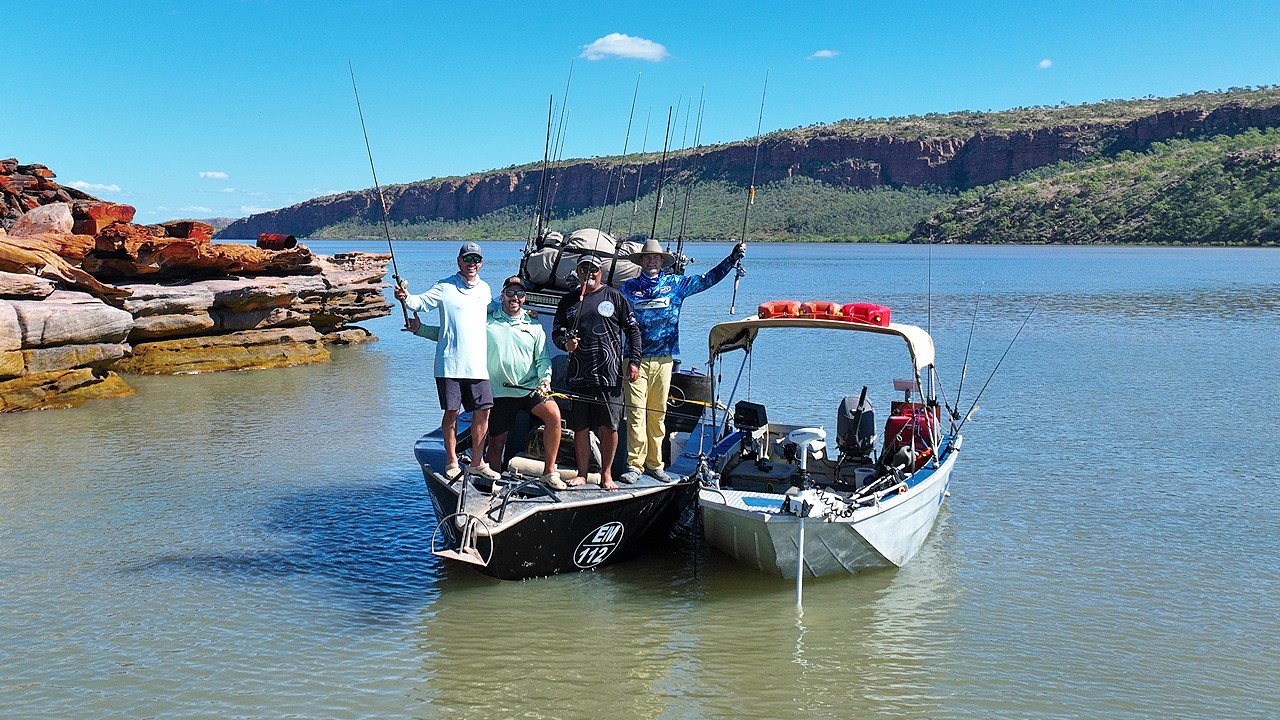
For Sammy Hitzke, the Kimberley has never been just another fishing trip. The remote stretch of north-west Australian coast — famous for its enormous tides, crocodiles and sharks — had sat at the top of his bucket list since childhood. "The Kimberley has sat right at the top of my bucket list since I was a kid," he said, "sparked by watching the wild adventures of Malcolm Douglas and later Rex Hunt on an old VHS tape I still own today."
The plan was simple in theory: five days living off two boats with three mates, eating what they caught, chasing the barramundi that draw anglers to Australia's far north-west. Flying into Kununurra and launching near Wyndham into the Cambridge Gulf, the crew had more lures than meat in the esky and were, by Hitzke's own admission, "relying on fish" for dinner.
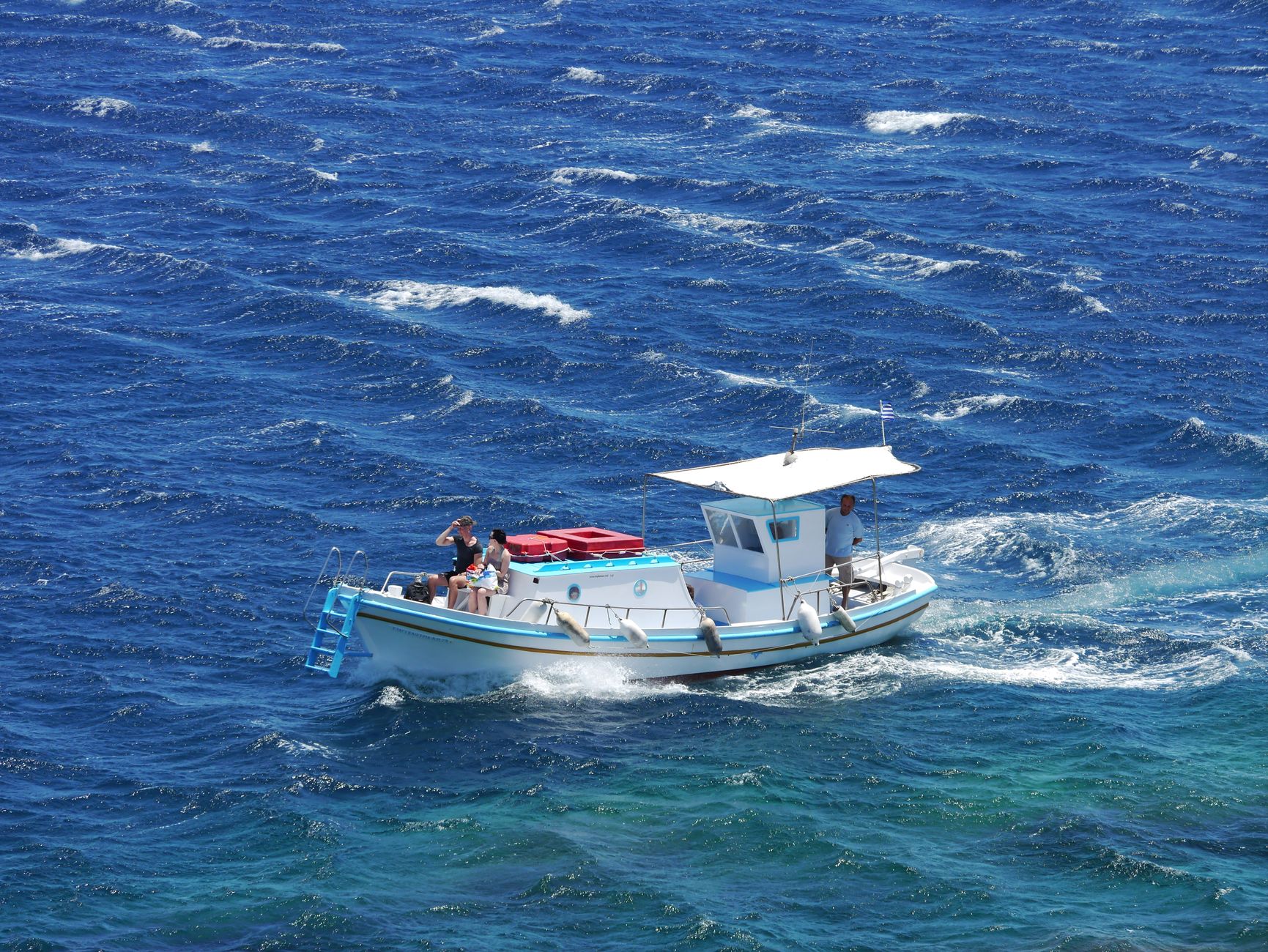
Steering them was local guide Dave from Snagga Barra, who has fished the region for more than two decades. "I got this built in 2002 when I used to do the fishing charters," Dave said of his weathered, fish-hardened boat. "Built it once, built it right." With Dave's knowledge of the country and a second boat for safety across the big tides, the group felt they were in good hands.
The fishing, though, refused to read the script. Cast after cast through promising snags produced nothing, and the assumption that remote water means easy fishing quickly unravelled. "I know it doesn't matter where you go — fish are fish, and they don't bite all the time," Hitzke reflected. "But there's a certain level of expectation that the further away from civilisation you go, the easier it will be."
The barramundi stayed stubborn. A 57cm fish became Hitzke's first Kimberley barra and the night's dinner, cooked whole over the coals with its scales left on to protect the flesh. Live-baiting with mullet drew savage bites but a frustrating run of bust-offs in the timber, while the snags claimed leader after leader.
What saved the trip was variety. Working small fish traps and finesse plastics over a rock bar, the crew found fingermark stacked up, then murray cod, queenfish and blue salmon — enough to keep the camp fed even as the barra hunt stalled. "It's actually more about the adventure than the catching," Hitzke said at one point, before adding with a grin, "I'm satisfied with the adventure, but I'm not content with the catching."
That tension — between the grind and the grandeur — became the real story. Hiking down an escarpment to reach an untouched pool spotted earlier on Google Earth, Hitzke paused to take it in. "This is one of the most picturesque places I've ever fished," he said. "The fact that the fishing was slow really helps you take a step back, remember where you are, and just enjoy what was happening around you."
By the end of the opening leg, the tally was modest: a handful of rat barra, a feed of fingermark and cod, and a growing respect for how quirky an unfamiliar system can be. "When you don't know a system, you've got to work it out," Hitzke admitted. "If Dave's not catching them hand over fist, then we're always going to struggle."
The crew signs off the first instalment with a teaser of better things to come — a move to a new river system, rods loading up on trophy fish and a barra "over a metre, well and truly." But the lesson from the slow days lands just as hard as any big fish: in country this wild, the adventure is the reward, and the catching, when it comes, is a bonus.