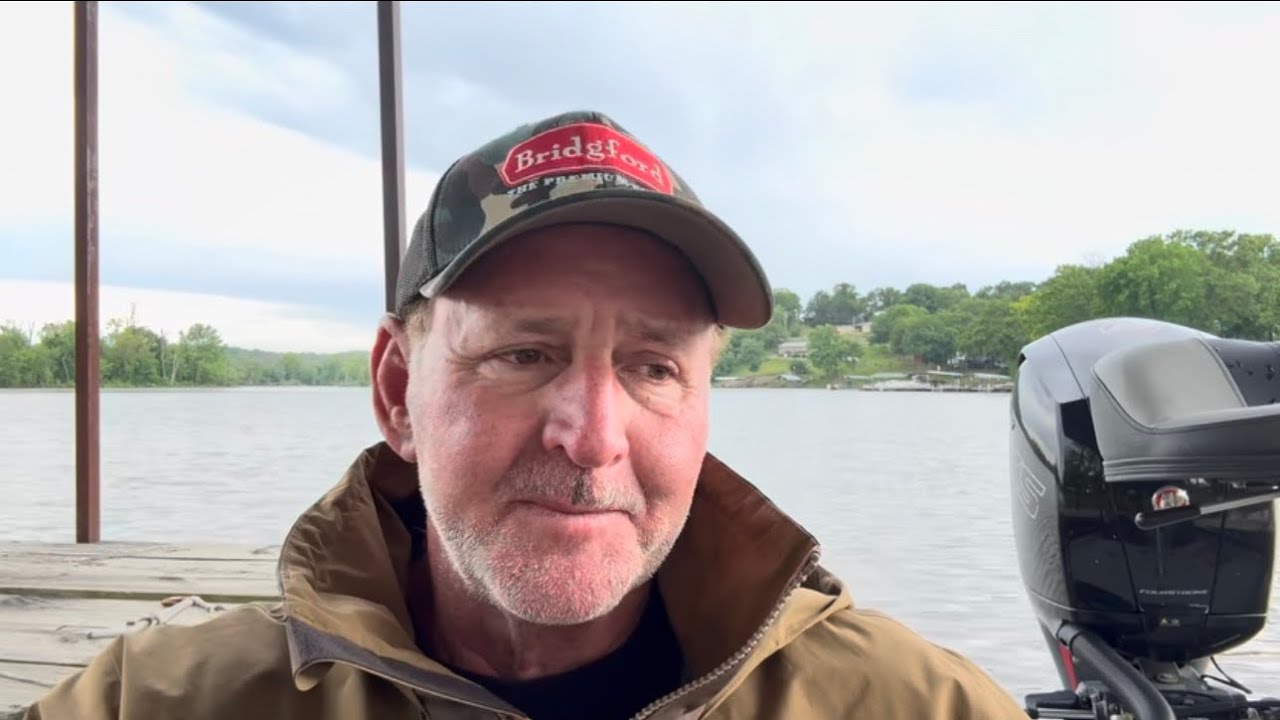
Veteran tournament bass angler Randy Blaukat has used the latest episode of his Intuitive Angling channel to argue that the sport of bass fishing in 2026 is sliding into its worst overall state in his nearly 60-year career, citing a combination of environmental rollbacks, an unchecked electronics arms race and a sponsorship landscape that is squeezing all but independently wealthy competitors out of the top tier.
Blaukat, who first fished professional tournaments in the mid-1980s and has been around the inside of the bass industry through multiple ownership cycles, used the format of his twice-a-year 'state of the sport' update to deliver a direct, unedited assessment of where the sport sits as it enters mid-2026.
"While there are a few bright areas in the state of the sport in 2026, the sport of bass fishing is in a bad place right now," Blaukat said. "We are in worst shape right now in this sport than I have ever seen it."
The first of his concerns was environmental. Blaukat pointed to roughly 18 months of federal-level deregulation in the United States, arguing that the rollback of water quality protections was a direct attack on the lakes and rivers that recreational anglers depend on. He was careful to frame the issue around survival of the resource rather than along party lines.
"We have got to come back and have some common sense legislation put in part where we have these safeguards that are there all the time for people," Blaukat said, "because if we pollute our playing field that we love with bass fishing, what else do you have?"
He urged anglers to actively track the voting records of their local representatives on environmental legislation and to engage with public-land protection campaigns, which he said were gathering political momentum in the lead-up to mid-decade.
Cost was Blaukat's next focus. He argued that the on-water economics of the sport have never been more punishing, with top-tier tournament entry fees now sitting in the five- to six-thousand dollar range and fuel, accommodation and tackle costs all spiking. The combination, he said, has begun to bend the demographic of competitive bass fishing.
"Since there are so many more tournament anglers than there's ever been, the money's not there," Blaukat said. "You have a lot of people that are independently wealthy that are emerging as tournament anglers because they don't have to have the money."
The veteran was at his most pointed on the question of forward-facing sonar. Blaukat accused major electronics manufacturers of effectively dictating tournament rules to circuit organisers, and warned that artificial intelligence integration with consumer fishing electronics would deepen the divide between technology-led and skill-led competitors.
"Electronic companies have basically strong-armed the tournament organisations and said, 'You will allow forward-facing sonar or we will not support your organisation,'" he said.
He argued that the result has been the slow squeeze of seasoned veterans out of the very tournaments that once celebrated them, replaced by less experienced anglers who have been able to ride the technology curve. He also flagged increased recreational lake traffic — wake boats, pontoons, jet skis — as a separate but compounding factor placing the underlying fish populations under unprecedented pressure.
"Bass have been on this planet for 3 million years," Blaukat said, "and they didn't get there by being stupid. They're adapting fast, and they're evolving fast to compensate for this increased fishing pressure."
Despite the bleak headline, Blaukat closed with a small list of what he sees as legitimate bright spots. He cited the rise of secondary tournament circuits running 'no-livescope' events with common-sense rule books, growing grassroots opposition to the privatisation of public land, and a broader cultural awakening among recreational anglers that he believes is starting to translate into political weight.
"The voice of the bass anglers are very powerful if we unite and bring awareness to these problems," he said.
His warning was that apathy remains the single biggest internal threat to the sport. The future of bass fishing, in Blaukat's framing, will depend less on which lure wins next weekend's tournament and more on whether the country's recreational anglers are willing to defend the water they fish in.