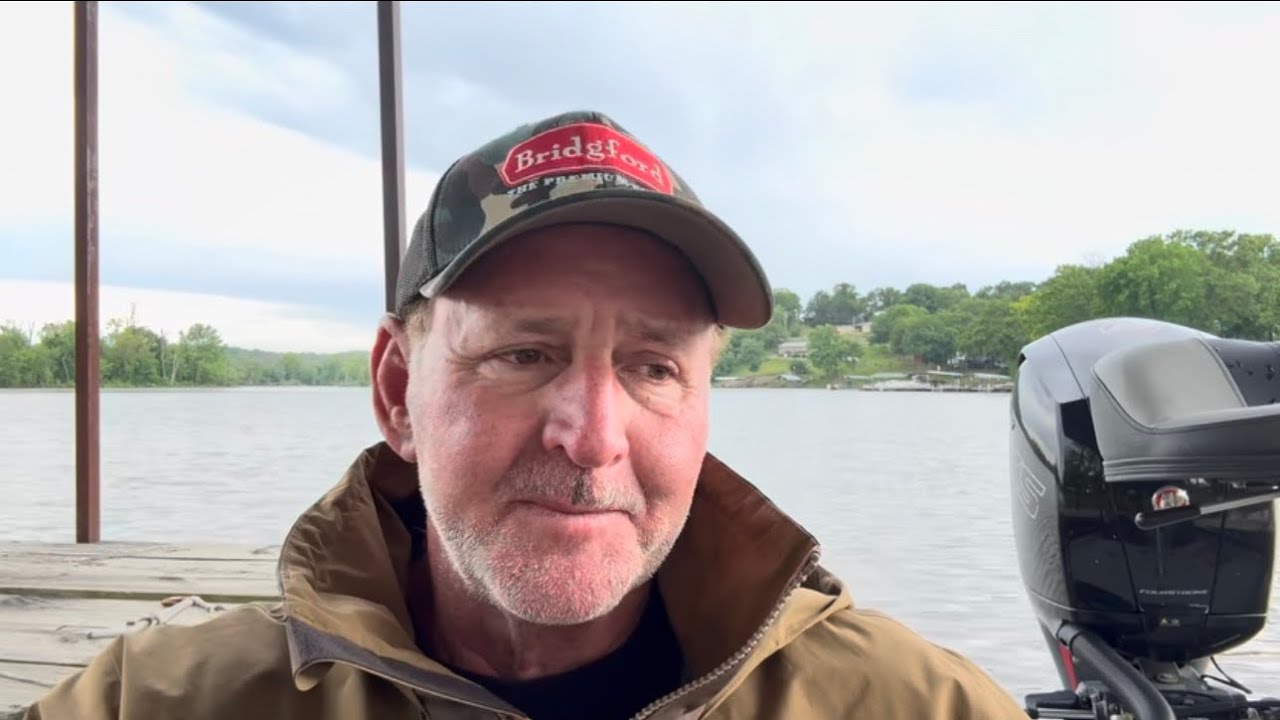
Long-time professional bass angler Randy Blaukat has delivered one of his bluntest 'state of the sport' assessments yet, arguing that the bass fishing world in 2026 is facing a convergence of environmental, technological and financial pressures unlike anything he has witnessed across nearly six decades on the water.
In his latest Intuitive Angling video, Blaukat — who has fished professional tournaments since the mid-1980s and competed at every level of the sport — spoke directly to camera about what he believes anglers are not being told. He did not soften the message.
"While there are a few bright areas in the state of the sport in 2026, the sport of bass fishing is in a bad place right now," Blaukat said. "It's probably out of all the years I've been fishing, you know, ever since I was a kid, we are in worst shape right now in this sport than I have ever seen it."
The Missouri-based veteran pointed first to what he described as a year and a half of environmental deregulation, arguing that rollbacks of water-quality protections at the federal level were a direct threat to recreational fisheries. He framed the issue not as a political position but as a survival question for anglers.
"We have got to come back and have some common sense legislation put in part where we have these safeguards that are there all the time for people," he said, "because if we pollute our playing field that we love with bass fishing, what else do you have?"
Blaukat urged viewers to check the public voting records of their congressional representatives and senators on environmental legislation, noting that water quality, mercury contamination and the protection of public lands have become flashpoints across the country.
Cost was Blaukat's second major concern. He argued that bass fishing has never been more expensive, with tournament entry fees at the top professional level reaching five to six thousand dollars, fuel prices stubbornly high, and even mid-tier hotels eating into anglers' budgets. The result, he suggested, is that the sport is increasingly accessible only to the independently wealthy.
"Since there are so many more tournament anglers than there's ever been, the money's not there," Blaukat said. "The money is simply not there to give to these tournament anglers for sponsorship. So therefore what you have is you have a lot of people that are independently wealthy that are emerging as tournament anglers because they don't have to have the money."
The veteran reserved some of his sharpest commentary for the role of forward-facing sonar and electronic-aided fishing in tournament competition. He accused major electronics companies of pressuring tournament organisations into permitting the technology, and argued that the equipment now allows comparatively less-skilled anglers to outperform seasoned veterans.
"Electronic companies have basically strong-armed the tournament organisations and said, 'You will allow forward-facing sonar or we will not support your organisation,'" he said. He argued that the resulting income disparity was forcing superstar veterans out of the sport while artificial intelligence — still unregulated in the recreational electronics space — would only accelerate the trend.
Blaukat also pointed to mounting fishing pressure and increased recreational boat traffic on inland lakes. With more tournaments, more wake boats and more jet skis on the water than at any previous point in his career, he argued that bass populations are being squeezed.
"Bass have been on this planet for 3 million years, guys, and they didn't get — they hadn't lived here for 3 million years by being stupid," he said. "They're adapting fast, and they're evolving fast to compensate for this increased fishing pressure."
Despite the gloomy headline, Blaukat closed with a list of what he believes to be genuine bright spots. He cited the emergence of secondary tournament circuits running 'no-livescope' events with what he called common-sense rules, growing public opposition to the sale of public land, and a swelling movement of recreational anglers who are starting to push back politically on environmental rollbacks.
"The voice of the bass anglers are very powerful if we unite and bring awareness to these problems," he said.
His closing message to viewers was that apathy was the single biggest threat to the long-term sustainability of the sport — and that, regardless of where bass fishing sits on the league table of American outdoor pastimes, anglers themselves must be willing to engage with the issues shaping their fisheries.