Tournament bass fishing's loudest ongoing argument — whether forward-facing sonar belongs in competition — got louder this week when a high-profile pro declared the technology had broken the sport.
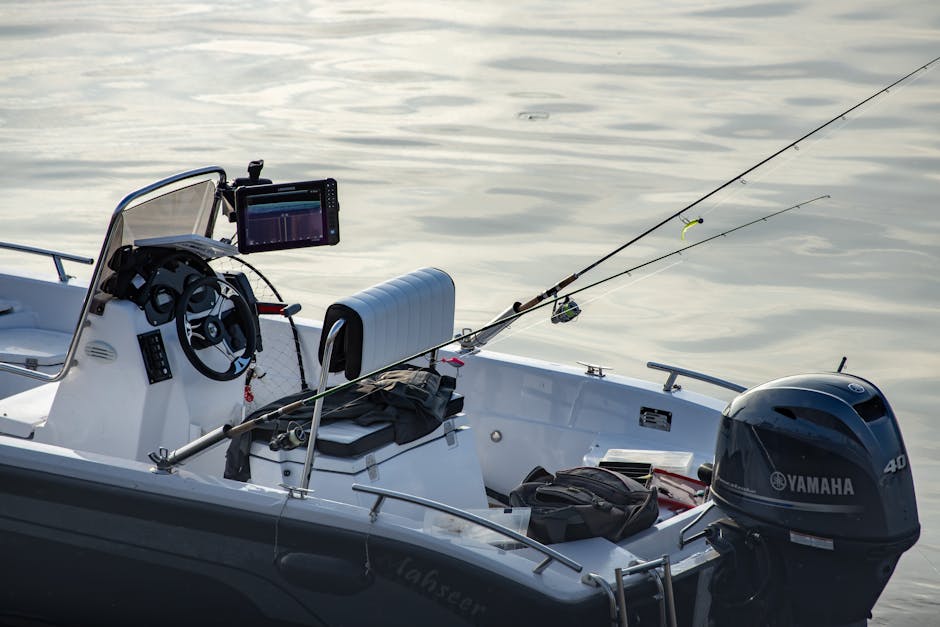
Bassmaster Elite angler Mark Daniels Jr. used a 21-minute video on June 9 to spell out why he thinks live, real-time imaging — which lets anglers watch and cast at individual fish on a screen — has stripped the challenge out of tournaments. Grand View Outdoors editor Dave Maas, writing about the clip, distilled the case as a "fair chase problem," where "the odds are tilted too far in an angler's favor."
The sport's governing bodies have already responded. B.A.S.S. will allow forward-facing sonar at no more than five of the nine regular-season Elite Series events in 2026, with those events drawn at random and the rest banning it even in practice. The existing limits — a single live-sonar transducer and 55 total screen inches — remain, and the 2026 Bassmaster Classic will still permit the technology. At the grassroots level, Texas circuit Outlaw Outdoors has banned it outright for 2026.
The deeper anxiety, for many veterans, is about craft. Jimmy Houston, a Classic winner and longtime broadcaster, says the screen has rewired how newcomers fish. "Forward-facing sonar has taught a lot of younger people to stop 'fishing.' They're hunting now," he said. "They've got their heads down, staring at that screen, and they won't even make a cast until they spot a fish." He sees old skills fading: "There are a lot of these younger pros who are really good at reading their electronics who don't know how to work a Zara Spook, slow roll a spinnerbait or how to stroke a jig." Even so, Houston refuses to write the tool off entirely. "It helps the average angler. But on our show, we emphasize that it's just one tool. Don't let it make you stop fishing," he said.
Hall of Fame pro Denny Brauer points to the part of the game a screen can't replace. "When it comes to tournament fishing, so much of it is decision-making, reading the conditions," he said. "Time on the water is so important. You learn subtle little things that you can't pick up through your electronics. I don't know if there's a shortcut to that."
Others kept it short. Four-time champion Rick Clunn noted that "Awareness of nature constantly gives you clues," while Larry Nixon shrugged off the idea that electronics had stolen the fundamentals. "A bass is still a bass, anywhere you go," he said. "I know their daily and yearly patterns as well as anyone in the universe."
There is a counter-case, and it leans on the scoreboard. Reviews of the 2025 Elite Series found that wins were split fairly evenly between anglers leaning on electronics and those using traditional tactics — which supporters of the technology say undercuts the claim that sonar decides events, and suggests B.A.S.S. acted on member sentiment rather than evidence.
So the 2026 season opens on a compromise few are happy with: forward-facing sonar permitted at some events, banned at others, the split settled by chance. The gadget, at this point, is almost beside the point. The real fight is over what a bass tournament is meant to measure — fish-finding firepower, or the older, slower craft of working water you can't see.