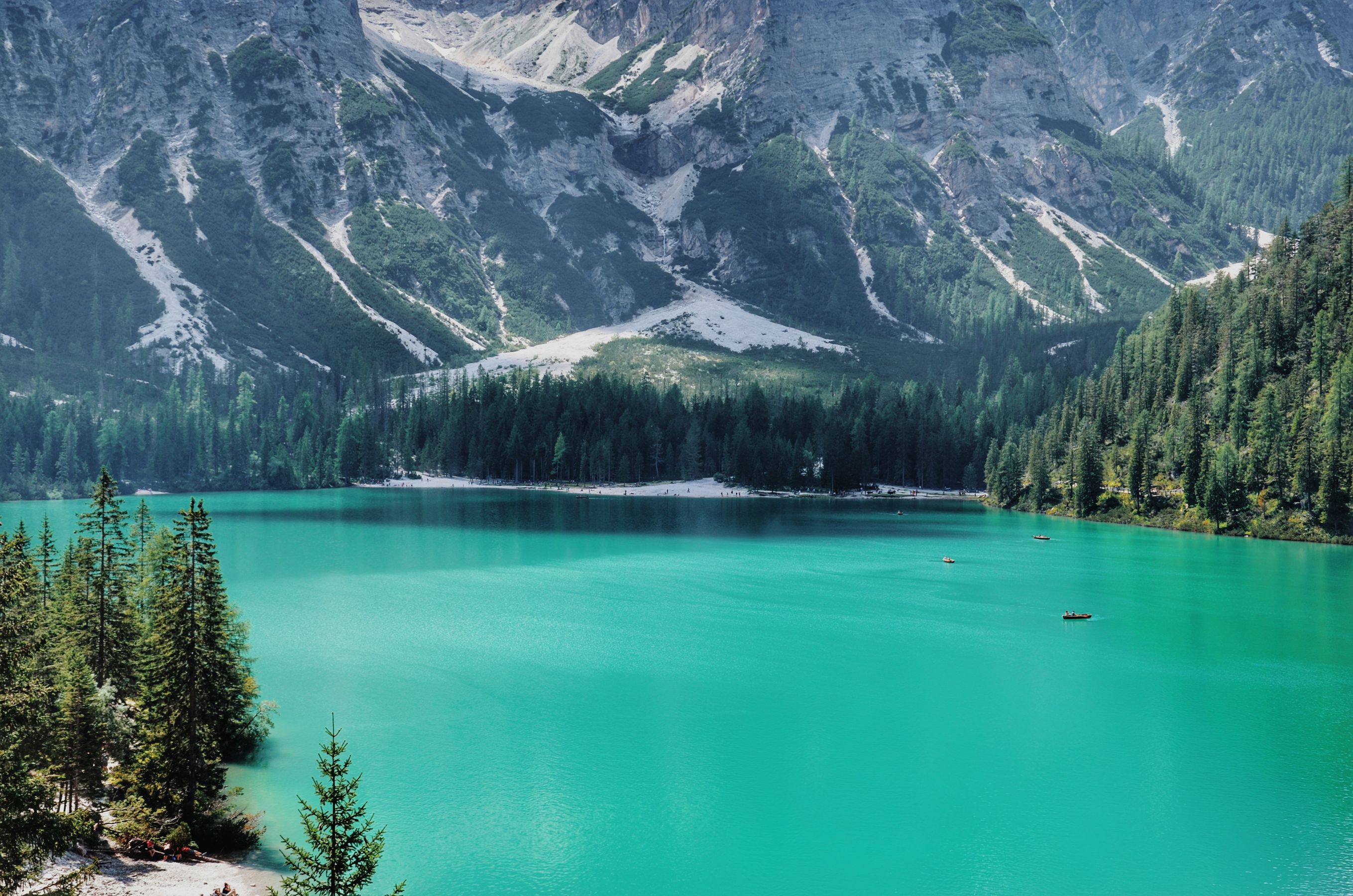
Few conservation rituals look stranger than the one Utah stages every summer: clouds of tiny fish spilling from a light aircraft into isolated mountain lakes. The Utah Division of Wildlife Resources has run the program since 1956, topping up more than 300 backcountry lakes each year, some every season and others on three- or five-year cycles, sometimes releasing 10,000 fish in a single pass.
Done right, it is surprisingly delicate. The fish measure only one to three inches, are kept off feed ahead of the flight, and drop from 50 to 150 feet while the plane holds 70 to 80 mph. Their small size, the agency notes, means the air brakes their fall and most survive the plunge. With the lakes cut off from any road, the DWR maintains that every alternative would put more stress on the fish.
Anglers love the sight, and for good reason: without it, many of these high lakes would hold nothing worth casting to. Yet scientists keep circling back to a thornier question about a tradition, more than a century old, of seeding fish into places that never had them.
That question resurfaced this month in Olympic National Park. Field crews covered 500 miles and climbed 200,000 vertical feet to gather environmental DNA, the genetic residue creatures leave behind in water, from lakes across the park. The resulting survey, released this winter, turned up introduced trout in about half of the 117 lakes examined. Twenty-one of them had never been officially planted at all, evidence that anglers had taken stocking into their own hands.
Since 1930, upwards of 1.6 million fish have been carried or dropped into Olympic's naturally fishless lakes, a handful of them planted as many as 18 times. "There has been a growing recognition, particularly in wilderness areas and national parks, that the introduction of nonnative species is not consistent with park policy," said Dr. Steve Fradkin, the park's coastal ecologist and limnologist. "In a place like Olympic, which is 95% congressionally designated wilderness, that sort of thing is in conflict with what in a modern day we tend to think we're all about."
The core concern is simple enough: drop a predator into a lake that grew up without one, and the balance tips. "In lakes, we know that the consequences are quite dramatic," said Angela Strecker, a freshwater ecologist at Western Washington University, who told Vox that stocked trout devour native tadpoles, salamanders and insects, a loss that cascades to the birds and mammals depending on them.
Still, the Olympic findings muddied the tidy version of the tale. Long-toed salamanders and rough-skinned newts showed up less often in lakes holding fish, but amphibians overall were found sharing 45 lakes with trout, over three times the tally of fish-only waters. "Our expectation ... was that wherever you have fish, the amphibians are in jeopardy," said Jeff Duda, a USGS research ecologist on the study. "What we discovered is that there's some nuance to that." Many amphibians, he pointed out, carry an advantage fish lack, legs, letting them slip away to shallow pools and wetlands beyond a trout's reach.
The trouble is that those havens are shrinking. Olympic's snowpack this year measured a mere 26% of normal, and the fleeting pools amphibians depend on are the first casualties of a warming climate, potentially herding them back toward the same lakes where stocked trout are waiting.
Wildlife agencies insist their methods have moved on. Utah leans on sterile trout that cannot breed, prioritizes native cutthroat in waters that already hold them, and says other species are kept out of lakes where they might harm native fish. Whether a generation of cautious rules can offset a century of fish raining from the sky is exactly what the eDNA is starting to reveal.