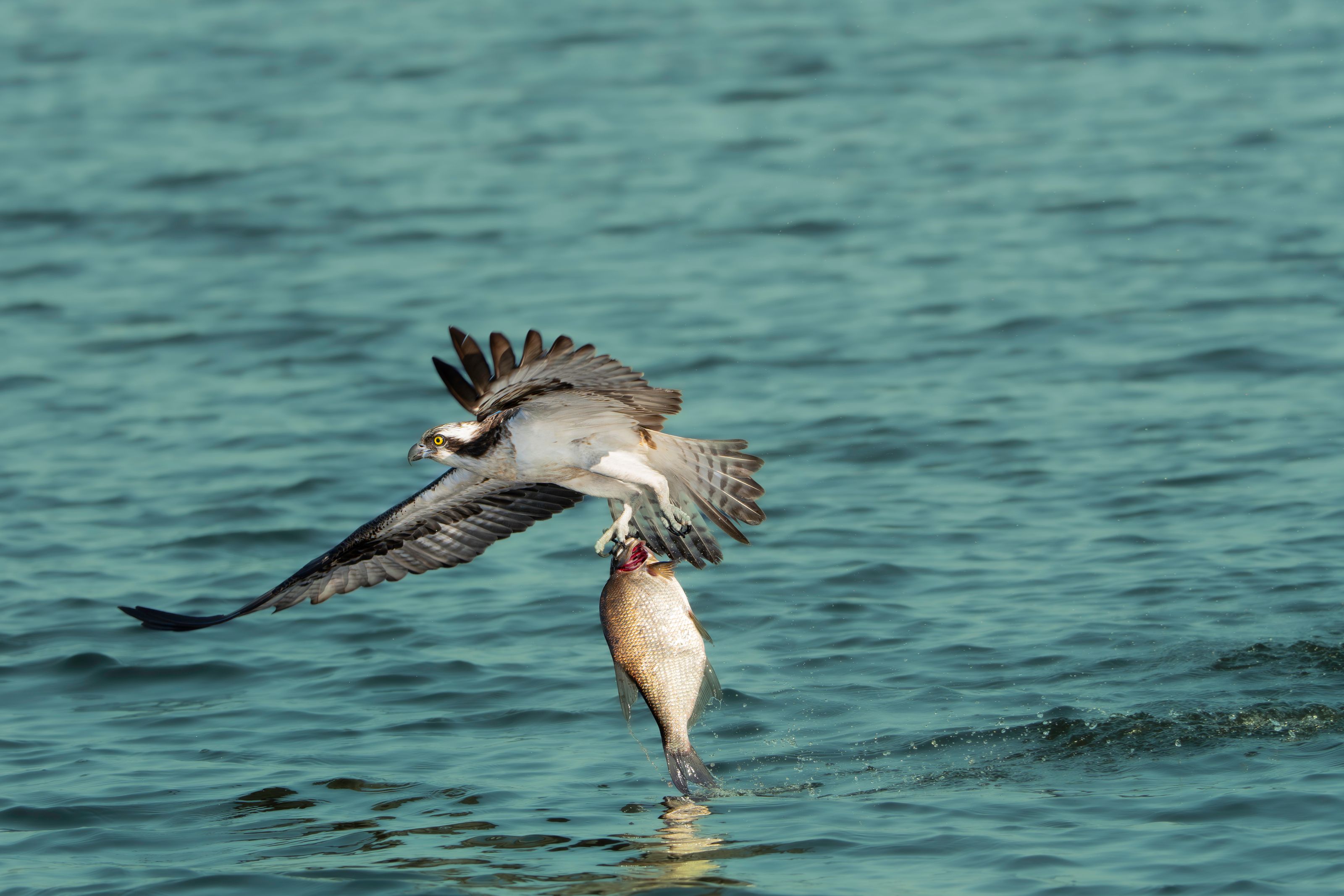
The whistling call of ospreys was once a constant over the tidal creeks of the Chesapeake Bay. It has faded — and a new study argues that hungry chicks are the reason, thrusting the region's menhaden fishery back into a bitter dispute over the small baitfish that feeds nearly everything in the estuary.
Published in Frontiers in Marine Science in June, the research examined 571 osprey nests across the bay during the 2024 nesting season. The team, drawn from William & Mary's Center for Conservation Biology, the U.S. Geological Survey and other institutions, concluded that where the water turns salty and ospreys lean hardest on Atlantic menhaden, chicks are dying before they can fly.
"Osprey chicks are starving in their nests," said Dr. Bryan Watts, who directs the Center for Conservation Biology at William & Mary and led the work. "And the reason is simple. Their primary food source is menhaden. And that food source is no longer abundant."
Roughly a fifth of the planet's ospreys — more than 10,000 breeding pairs — nest around the Chesapeake. The study found the volume of menhaden carried back to chicks has collapsed by about 80 percent over 40 years, and in some areas breeding success has slipped below half the level needed to sustain the population.
Conservationists read the birds as an alarm. "Ospreys continue to tell us something is wrong," said Will Poston, forage campaign manager at the Chesapeake Bay Foundation. "The science clearly demonstrates that declining menhaden numbers are driving this crisis. Virginia needs to listen." He is pressing for a halt to industrial menhaden netting inside the bay until scientists can pin down a sustainable catch. "Virginia can't afford to keep kicking this down the road," he added.
The stakes for the fishery are large. Ocean Harvesters, which feeds Omega Protein's reduction plant at Reedville, holds permits to take about 350 million pounds of menhaden annually, some 110 million from the Chesapeake — most of the Atlantic harvest — and the operation supports roughly 270 jobs on the Northern Neck.
Industry leaders reject the link. In a July statement, Ocean Harvesters said campaigners had distorted the osprey findings to push for restrictions, pointing out that Watts has conceded his paper does not directly connect weak osprey reproduction to menhaden fishing. "The right path is Bay-specific science, not Bay-specific blame," the firm said, adding that ospreys also feed on striped bass, catfish and gizzard shad and that the stock is "not overfished" coastwide. Industry spokesman Ben Landry dismissed the menhaden theory as "an oversimplified explanation for a complex ecological issue."
Others in the bird-science world find the trend persuasive. "The Ospreys are telling us that something is changing," said Don Lyons, director of conservation science at the National Audubon Society's Seabird Institute. "They are telling Omega, too." Along the New Jersey coast, Ben Wurst of the Conserve Wildlife Foundation has seen nesting colonies crater — one that raised 55 young two years ago managed five last summer. "Everyone knows something is going on. The fact is, the fish are not here," he said. "And the ones we do see are smaller." His message to the fleet: "If you're not sustainable, you're all going to be out of jobs."
Managers have chosen compromise so far. The Atlantic States Marine Fisheries Commission's 2025 assessment indicated menhaden removals might need to be halved to safeguard the bay's predators; the commission instead settled on a roughly 20 percent reduction, close to recent catch levels. Congress has earmarked $2.5 million for a Chesapeake-specific menhaden study. Until the results land, the ospreys keep pressing the case on their own.