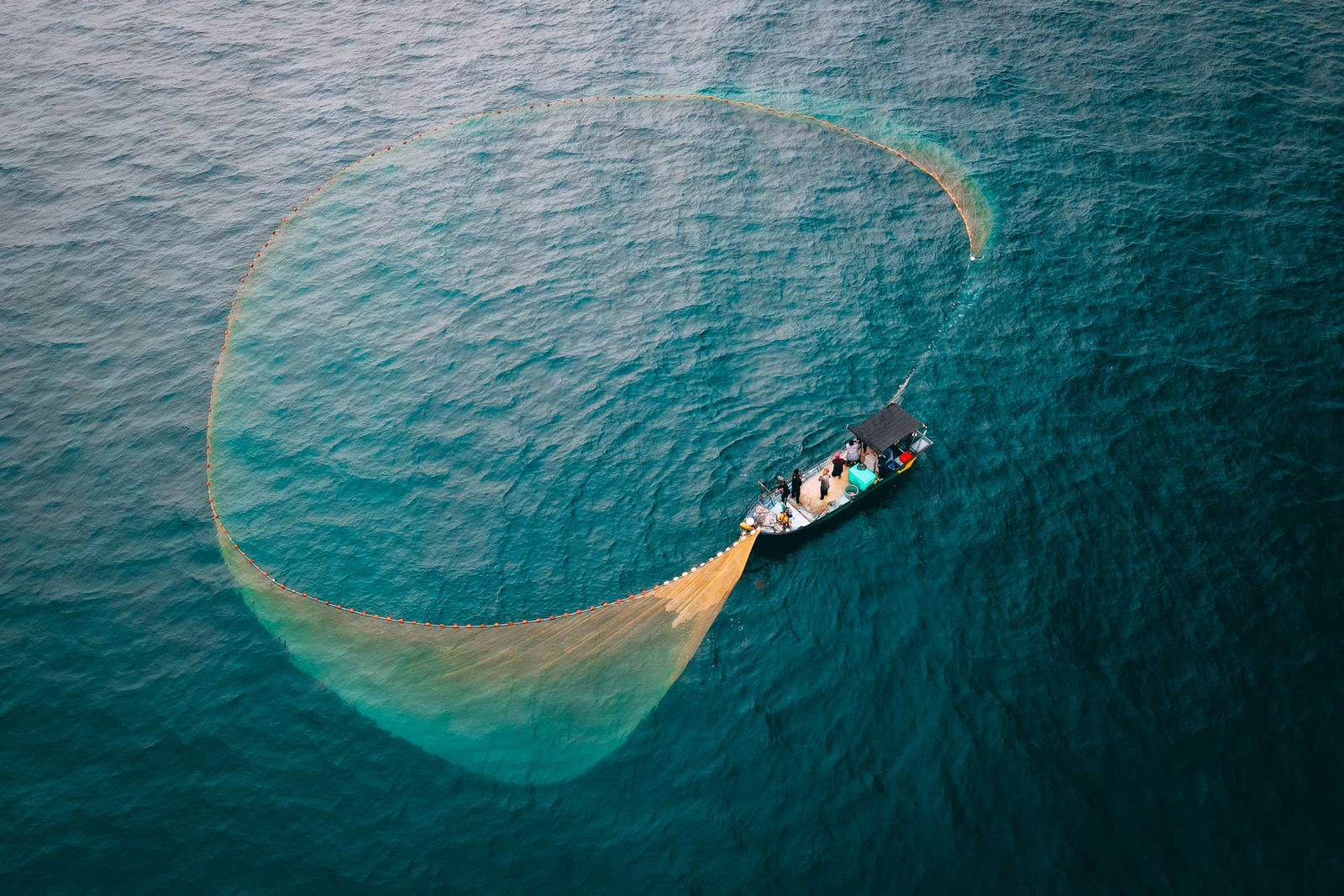
A clause buried in the 1972 Marine Mammal Protection Act says imported seafood has to come from fisheries that guard whales and dolphins roughly as well as American ones do. It sat effectively dormant for half a century. NOAA Fisheries switched it on last year — and is now asking the public how to run it, while conceding the current design may be unworkable at scale.
Writing in the Federal Register on 29 July, the agency called the mechanism valuable and gruelling in the same breath.
"NMFS' implementation experience indicates that the MMPA import provisions framework is an important tool that can be used to encourage harvesting nations to implement more effective measures to reduce marine mammal bycatch but that administering the program at the scale required by the current regulations is resource-intensive and operationally complex," NOAA wrote, noting that "completing the first full round of comparability findings proved to be significantly more complex and time-intensive than [NOAA Fisheries] anticipated when the final rule was promulgated."

Here is the machinery. A 2016 rule obliges NOAA to issue a "comparability finding" for each of the 2,500-plus foreign fisheries that export to the United States, certifying their marine mammal bycatch controls match US standards. Miss out, and the US market closes. The rule shipped with a five-year grace period; NOAA extended it three times, settling on 31 December 2025.
August 2025 brought the first full slate: full findings for 89 nations, partial findings covering fisheries in 34 more, and denials for 240 fisheries across 46 nations, as National Fisherman reported. Benin, Grenada, Guinea, Haiti, Iran, Namibia, New Caledonia, Russia, Saint Lucia, The Gambia, Togo and Venezuela were denied across the board — and Benin, Haiti, Iran and Venezuela had not applied at all.
Conservation lawyers had fought a decade for exactly this, suing in 2024 to stop the extensions.

"The MMPA sets a strong international standard for preventing bycatch, but the US has been ignoring it and abandoning the iconic ocean animals it's supposed to protect for more than half a century," said Kristen Monsell, Oceans Legal Director at the Center for Biological Diversity. "Whales and dolphins being caught in fishing nets around the world can't afford any more delays."
Now they are litigating the reverse complaint — that NOAA waved through countries it should have failed. CBD, the Natural Resources Defense Council and the Animal Welfare Institute filed suit in the US Court of International Trade on 21 May over findings granted to Argentina, Ecuador, India, Norway, Taiwan, Tunisia, the United Kingdom and Vanuatu, describing them as "based on incorrect assumptions, flawed and inadequate evidence, and other logical and factual errors." Their examples include Vanuatu tuna boats skipping hooks designed to reduce false killer whale bycatch and franciscana dolphin dying in Argentine commercial gear.
"This litigation should result in a seafood import ban for the eight nations, and the governments will have to crack down on deadly bycatch to get back into the lucrative US seafood market," said Sarah Uhlemann, CBD's International Program Director.
Earthjustice Senior Attorney Danika Desai pitched it at the dinner table. "Thanks to the Marine Mammal Protection Act, the United States has worked to save countless numbers of whales, dolphins, and other animals from dying in fishing gear," she said. "But many other governments do not have similar protections and fisheries drown and injure marine mammals at alarming rates. Seafood from those dirty fisheries will wind up on our plates unless the US government follows the law and bans it."

The NRDC's Zak Smith, who directs its global biodiversity conservation work, argued the rule shields American boats too. "The US seafood industry is a world leader in this, but our government continues to let foreign fisheries peddle their whale- and dolphin-killing fish into the United States as long as these governments say they're 'trying,'" Smith said. "That is not good enough."
American processors and distributors read the same rollout as a due-process failure. A coalition of them sued NOAA in the same court in October 2025, saying the agency assessed fisheries behind closed doors for ten years and then handed US firms a four-month window to rebuild their sourcing.
"After a decade of assessing fisheries, without stakeholder input, NOAA has given affected members of the seafood community only four months to come into compliance or face complete shutdown," said Gavin Gibbons, Chief Strategy Officer at the National Fisheries Institute. "We are talking about US processing and distribution businesses working with imported raw materials that cannot be sustainably harvested at this volume in our own waters."
The coalition insists its quarrel is with the execution, not the statute — and that a hard import ban simply redirects the fish.
"Banning these products is very likely to do more harm than good," Gibbons said. "Shutting off commerce with fisheries gives up leverage and actually encourages selling to countries with little or no marine mammal protections. Fears about unintended consequences are very real."
NOAA's own description of the workload gives the process complaint some ballast, whatever one makes of the remedy. Assessors had to weigh detailed conditions for every fishery across "vastly different legal systems, institutional capacities, monitoring programs, bycatch reduction strategies, and data availability," wade through vast documentation and return to governments repeatedly to iron out contradictions. Round one ran past three years.
The sticking point is the standard itself. "Defining 'US standards' and what may be considered to be 'comparable in effectiveness' for a multitude of fisheries under a range of systems of governance presents an immense analytical hurdle," the agency said.
Comment is open on five fronts: pinning down what "US standards" means, allowing for differing national legal systems and capacity, streamlining administration, applying the rule evenly across exporters, and preserving a level playing field in the US market. The window shuts on 28 September.