It was the coldest morning of the year — 11 degrees at the ramp — and the kind of slow start that sends most anglers home early. Instead, the angler behind Micks Gone Fishing salvaged a tough winter creek session with one small adjustment, turning a fishless first hour into a steady run of threadfin salmon.
The plan had been straightforward: sneak into a coastal creek on a building tide, throw topwater over a rock bar for a jack or a barramundi, then work upstream. But the cold had the fish firmly shut down. "Eleven degrees ain't going to be very fun for a barra," he conceded, and an early section he expected to produce gave up nothing — "not even a touch."
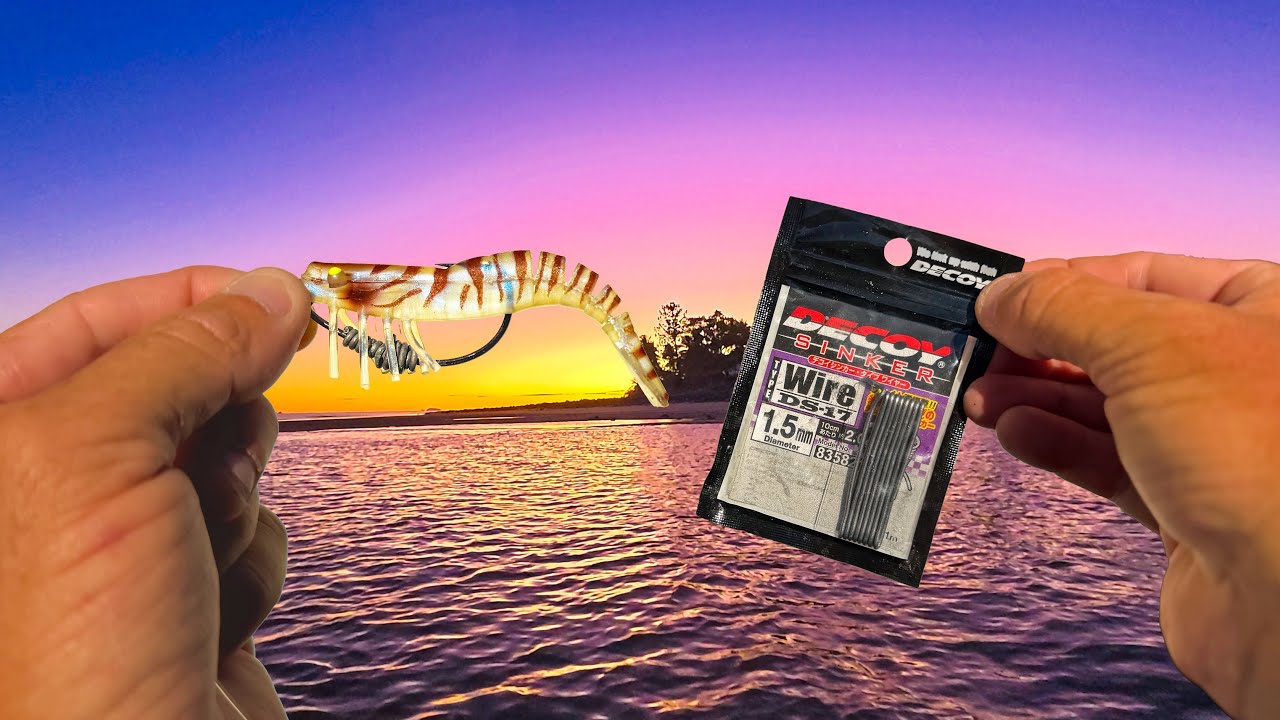
The breakthrough came after spotting fish stacked deep on the sounder, sitting lethargically in around four metres of water. Rather than force a reaction bait, he downsized dramatically to a small soft-plastic prawn — and crucially, added a wrap of lead wire to the jighead. The trick is all about the sink rate. "This lead wire makes them sink that much slower," he explained, giving the little prawn a slow, natural fall that cold, sluggish fish could intercept without having to chase.

It worked almost immediately. The first threadfin came grudgingly — "he's proper lethargic," he noted as he lifted a fat, healthy fish — but it confirmed the pattern. From there the bites kept coming, mostly on a tiny finesse prawn rigged on light spin tackle with a short bite leader. "Once you work out what they want," he said, the session flipped from a write-off to a genuine bit of fun.
Presentation and patience were everything in the cold. Several of the better bites came not tight to the snags but out in the middle of the channel, where the fish were holding. "Two of the bites I got were right out in the middle," he said. "So don't give up too early." The slow-falling prawn had to reach the bottom to draw a strike, and in four metres of water against the current, that took time — a test of nerve as much as technique.
By the time the tide turned and the current became too strong to fish the light presentation, the crew had boxed a respectable tally of threadfin — "six, seven, eight" fish between them — all in good condition. None were monsters; the focus was firmly on small baits for finicky winter fish. "We found what they want — little prawns," he summed up. "Not big ones today."
The running theme of the morning, repeated like a mantra every time a fish came over the net, was simple: "don't stop believing." It was half a joke and half a genuine lesson. A slow, cold start that could easily have ended in a "rage quit" back to the boat ramp instead produced one of those satisfying sessions where a single tweak unlocks the bite.

For anyone braving a winter estuary, the takeaway is worth filing away: when the water drops and the fish go quiet and deep, scale right down, slow the fall — a little lead wire on a small prawn does the job — and give it time to reach them. As the morning proved, the difference between an empty esky and a steady bite can come down to one little trick.