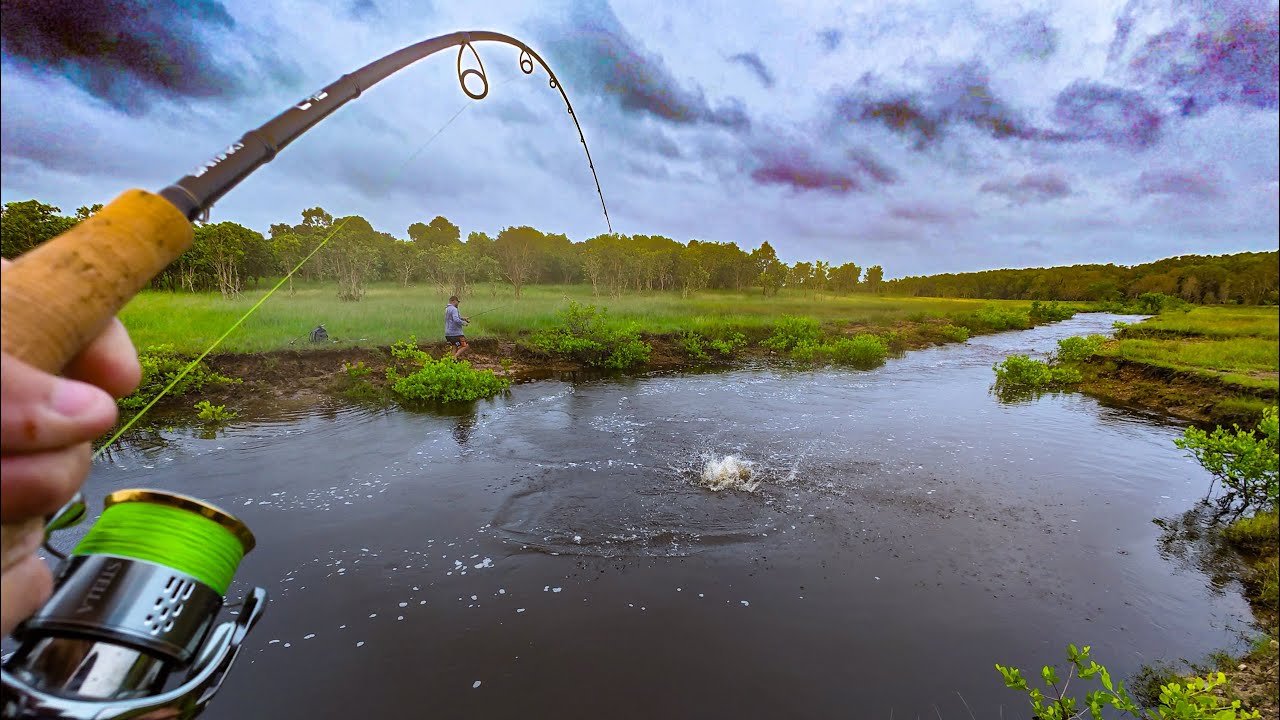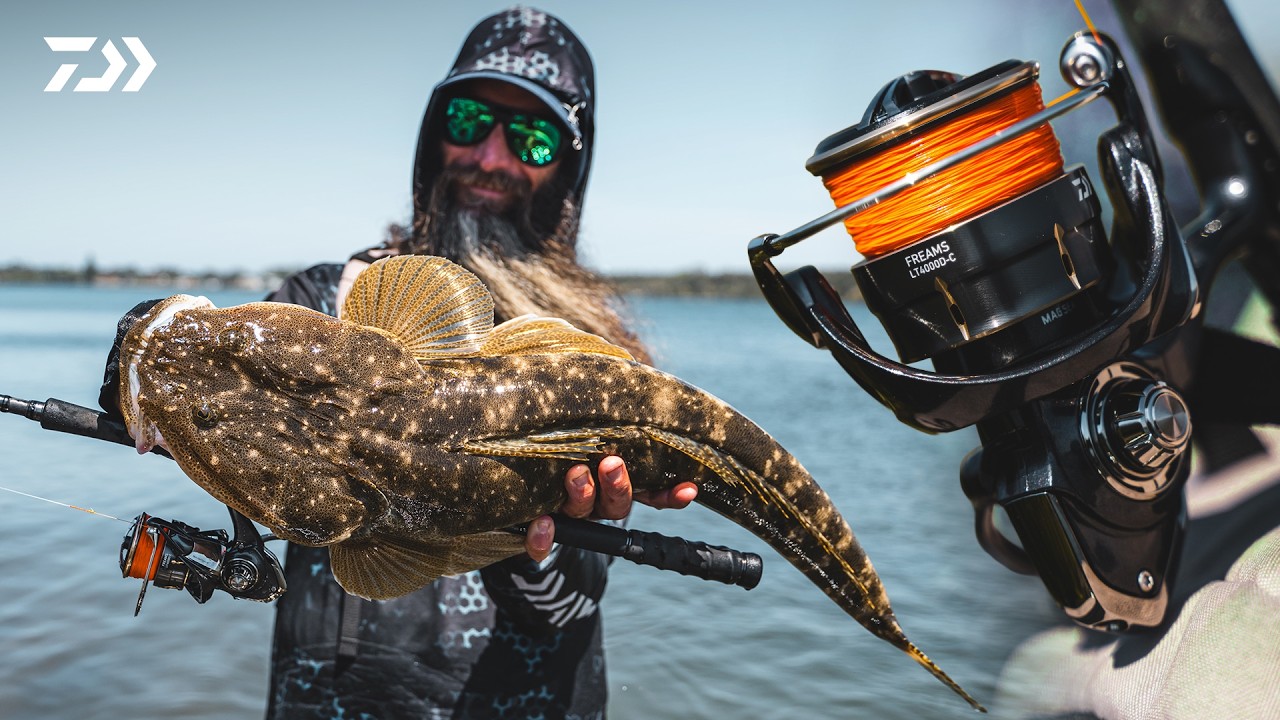
Big dusky flathead are one of the most rewarding land-based targets on the New South Wales coast, but they don't give themselves up easily when the water turns cold. On a recent outing to the mid-north coast, Daiwa Australia's John Medaka joined local angler Chris Hickson on a network of sand flats to chase "the big girls" — and got a first-hand lesson in just how tough a winter session can be.
The spot was a textbook piece of flathead country: a stretch of flats where the water wrapped around an island, with the tide just starting to turn. Hickson's plan was simple in theory. "Once you find the area, you're seeing those lies, you're pretty confident — you've just got to pepper it until you actually land on one of the fish," Medaka explained, referring to the tell-tale body impressions, or "lies," that flathead leave in the sand when they bury to ambush prey.
Conditions worked against them. A stiff northerly wind and cold water meant the fish were sluggish and reluctant to sit up in the shallows. "The A1 spot was just devoid of life," Hickson admitted afterwards. "The fish didn't seem like they were up in the shallows at all, so we had to resort to going a little bit deeper."
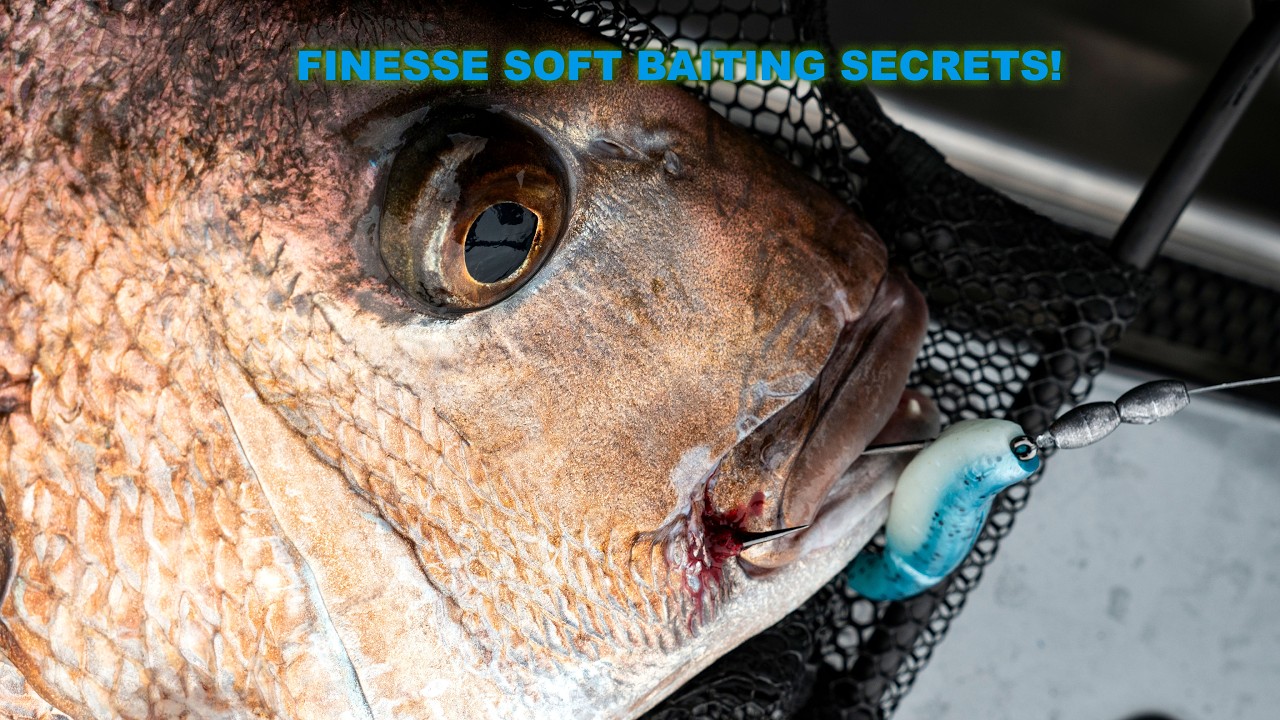
Medaka's first bite summed up the day. "It was pretty tentative. The water's really cold, I don't think these fish are super active," he said, describing a flathead that simply lay on the lure without committing. His fix is a habit worth copying: carry two rods rigged differently, one with a garfish bait, one with a lure. "If you miss a bite on a gar, or miss a bite on a lure, you can switch, and quite often you'll catch that fish on a different lure a couple of casts later," he said.
Persistence eventually paid. Switching "back to the old faithful minnow," Medaka committed to ten casts at the spot where the fish had lain — and connected. "I saw its head come out of the water, and I was like, I think it's a big one, Chris," he said. The flathead measured in the high 70s, pushing 80 centimetres, and promptly coughed up a sizeable whiting — proof, Hickson noted, that a lure dropped right on a flathead's head will get eaten even when the fish aren't actively feeding.
The fish was photographed and released. "Put your hand there, and off she goes," Medaka said, sliding the big female back.
The session reinforced a few cold-water flathead truths. When fish abandon the shallow edges, follow them deeper. Read the sand for lies and work an area thoroughly rather than covering water blindly. And when there's so much ground to cover at low tide — as Medaka put it, fish "retreat off these edges" — a methodical, pepper-the-zone approach beats run-and-gun.
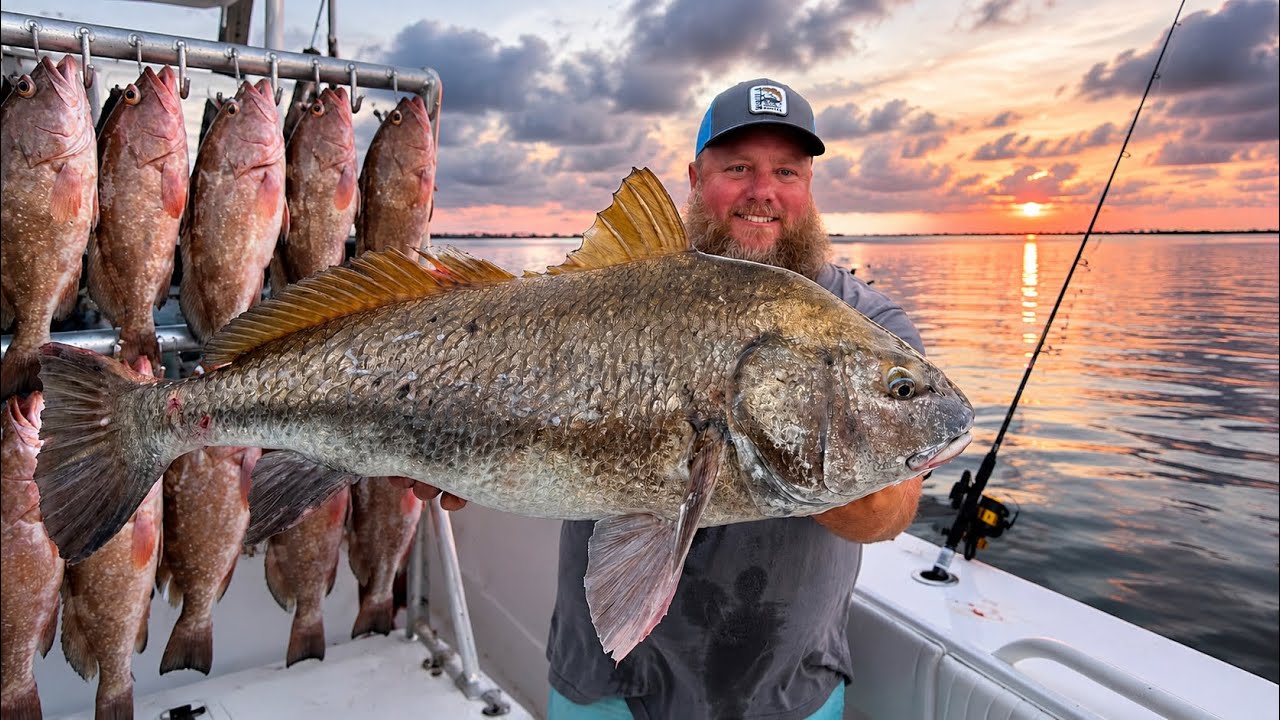
It wasn't the day they planned. "It was a tough one, mate, the game plan we had sort of didn't pan out," Hickson said. But a near-80cm flathead off the flats in cold, windy conditions is a result most land-based anglers would happily take.