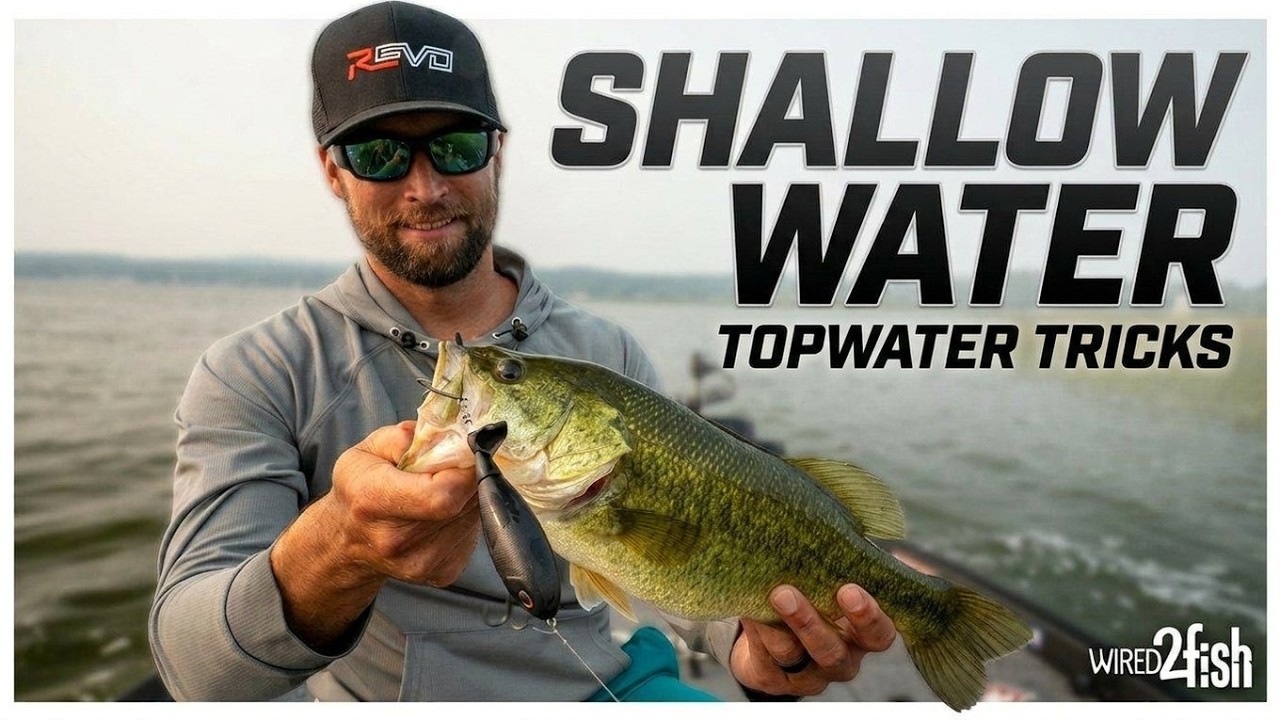
If you have ever wondered why some topwater days fall apart while others stack double-figure fish in a single morning, Bassmaster Elite pro Justin Lucas has a one-word answer: sound.
In a new Wired2Fish tutorial filmed on a small unfamiliar Michigan lake, Lucas walked viewers through a calm, foggy, low-light shallow bite that ran on the Berkley Screamin' Choppo — a tweaked, louder version of the original Choppo bait.
"Doesn't get much better listening to this thing scream on a calm, cloudy, foggy morning," Lucas said. "The advantage of fishing the topwater like a Screamin' Choppo for me is just it's all about covering water. Fast-paced covering the bank, hitting a lot more spots than I could if I was throwing some type of soft plastic or jig."
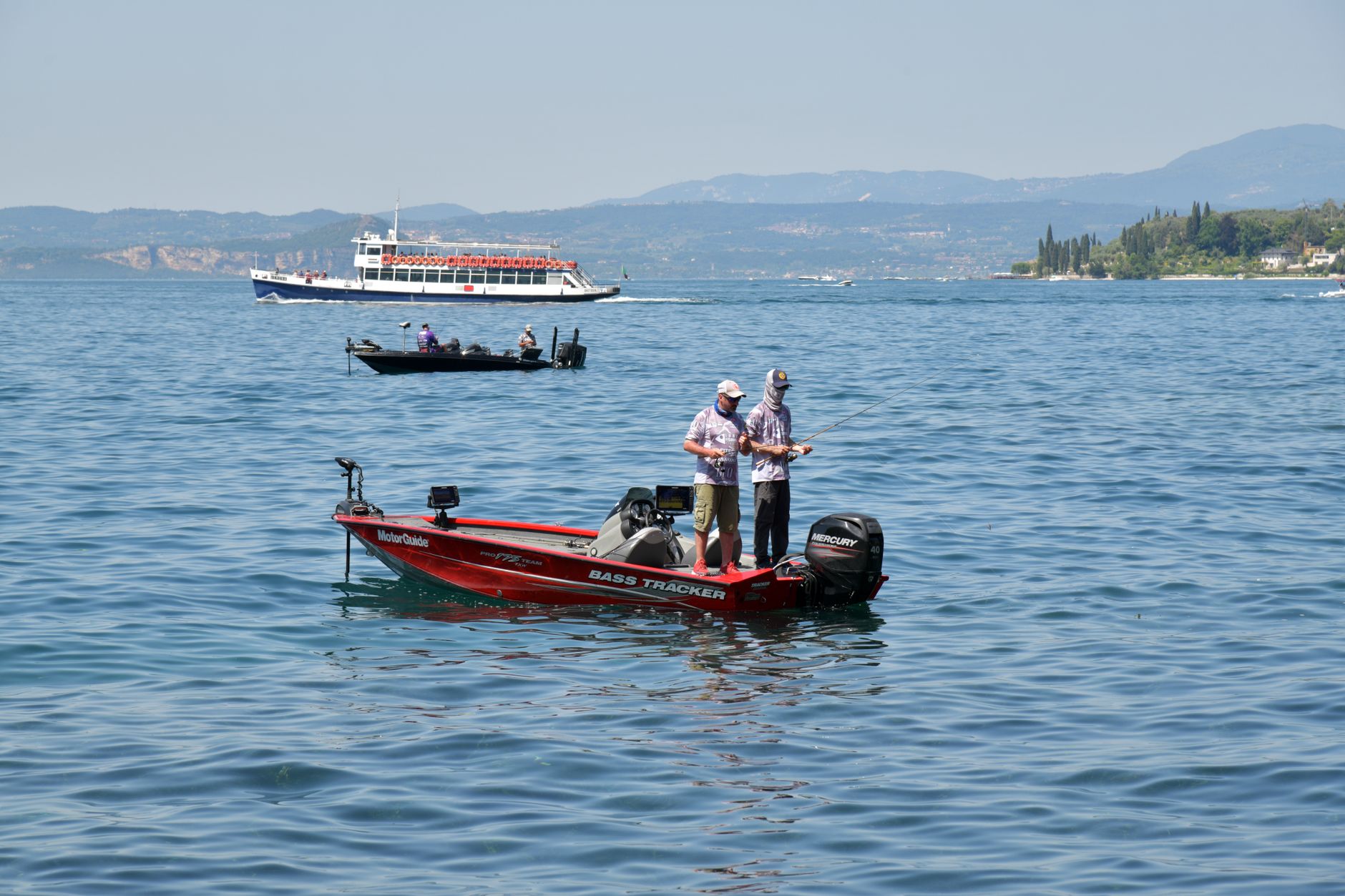
That cover-water mindset is the engine of his approach when a venue is new. "When I don't know a lake very well like the one we were on, I had never been on before, I want to get there and put the trolling motor on high and just start fishing and seeing as much as I can," Lucas said. "Just seeing if I can generate some type of bites to start clueing me into something."
The lake produced two productive zones: shallow reeds with submergent grass in front, and shaded edges of shallow docks once the sun climbed. Lucas argued that reed lines reward repetition and short, tight casts rather than long bombs into open water. "Anytime you're fishing a reed line, there's so many little nooks and crannies and points," he said. "You can just zigzag through it and make a lot of little accurate casts. A lot of these bites came pretty close to the boat."
His case for the Screamin' Choppo over older topwater designs is mechanical. "This bait has a concentric rivet and a metal tail structure built in that when they grind together give it that screaming sound profile," Lucas said. "We know that they love that squeaky sound of buzzbaits and everything, and the conditions just set up perfectly for it." Asked whether the volume itself mattered, he was direct: "Do I feel like I caught some more because we were throwing a Screamin' Choppo? I really do."
When the sun pushed bass off the open reed line and back under docks, the bait still held up — Lucas argued shallower water actually widens the strike zone rather than killing it. "You almost can't fish a dock that's too shallow up north in the summer," he said. "I'm talking if there is 10 or 12 inches of water and even if you can see the bottom, but you can't see a fish up there, like it's still worth a cast, because they will tuck so far back under these docks."
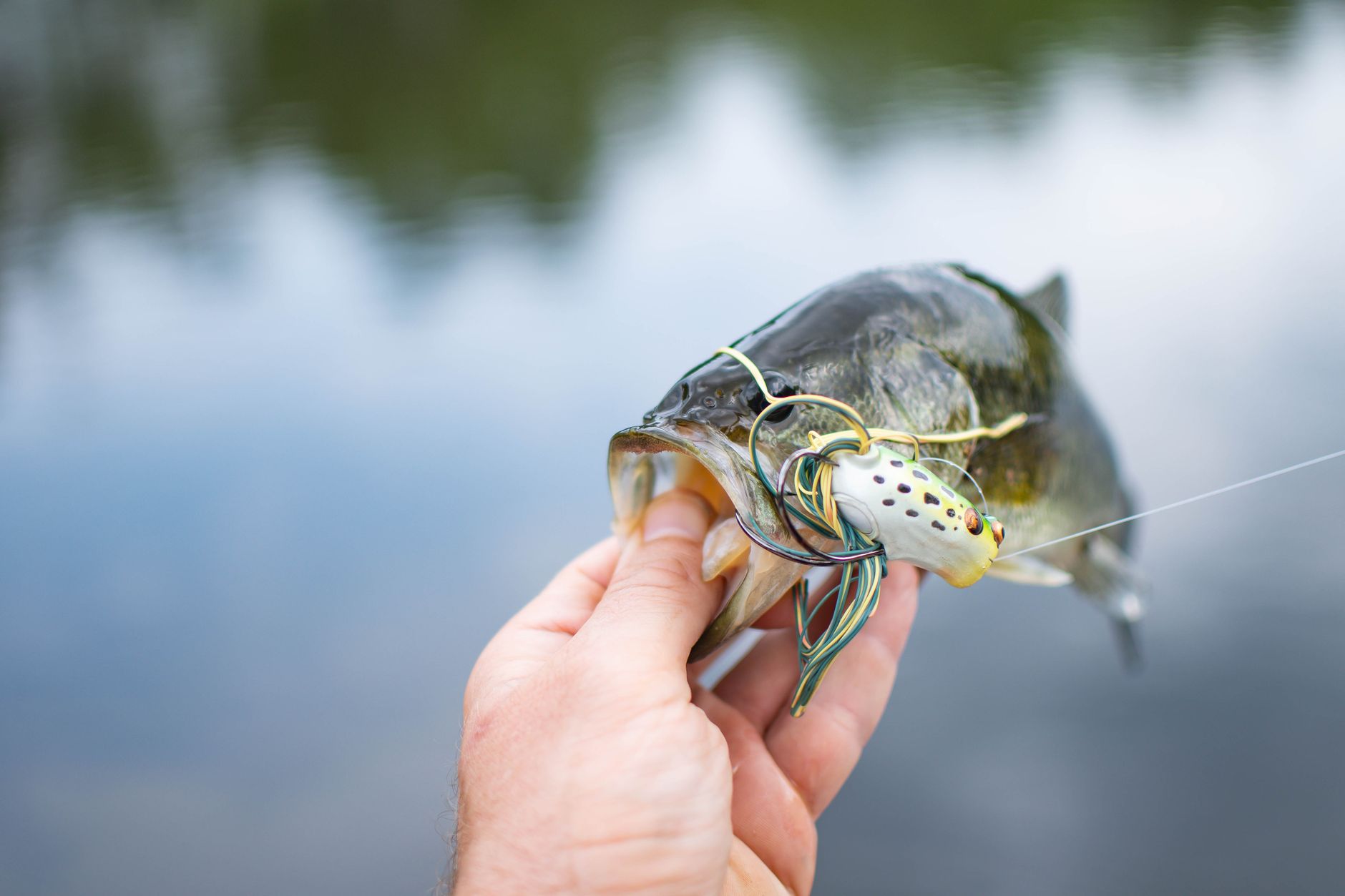
Colour selection followed sky and water clarity. In clear water with sun on it Lucas leans on a ghost bluegill pattern, especially when bass are eating bluegill on the bank. As light drops he switches to bone and black, which he believes silhouette better against the surface for fish looking up.
Gear is deliberately simple. "I'm going to keep this super simple as far as rod, reel, line goes when I'm throwing a Choppo bait," Lucas said. "It's going to be a 7'3 medium heavy rod. 40-pound braid. And the other key is a fast reel — I was throwing an 8.3:1, and that's just going to help me when I'm covering water."
His parting tactical note was about adaptation. If the topwater bite slows but bass stay shallow, Lucas keeps a flipping plastic in reach as a follow-up around the same cover rather than rotating to a fresh area. "It's pretty hard to beat a Choppo bite, and anytime I'm going to get that I'm going to take advantage of it."