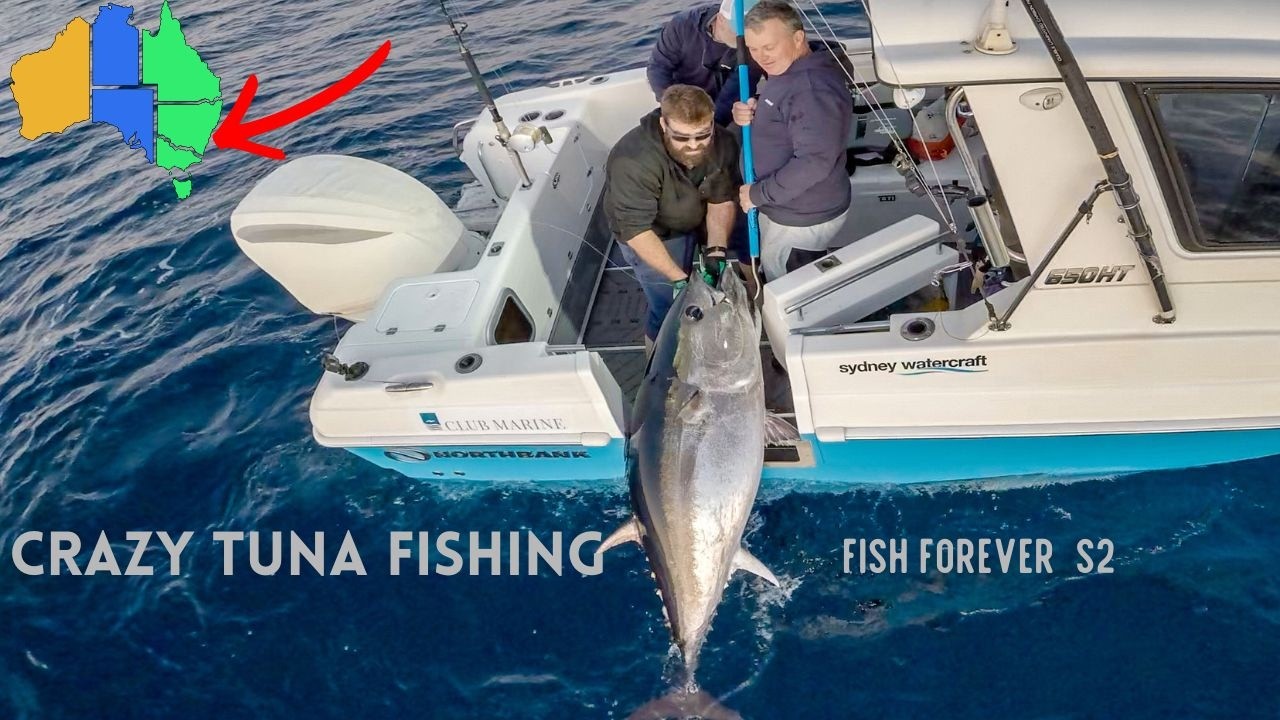
Genuine good-news stories about the ocean are rare. The recovery of the southern bluefin tuna is one of the best, and it drew presenter and marine advocate Al McGlashan offshore from Sydney for a tagging mission that doubled as a celebration of a remarkable comeback.
For McGlashan, the fish is personal. As a kid in Victoria he never laid eyes on a bluefin, despite his father's stories of catching them in the rip at the mouth of Port Phillip Bay. That changed in 2006, when a big fish turned up off Victoria's Shipwreck Coast. He raced to Portland, landed three giants, and watched a southern bluefin fishery erupt almost overnight.
"It is an amazing story about a fish that I'm so passionate about," he said. The species had been hammered by demand from Japan, where a single bluefin can fetch thousands of dollars at auction, and that appetite drove stocks to the edge. Today, assessments show the population rebuilding so strongly that the fish has been taken off the critically endangered list — a turnaround McGlashan frames as proof of "how fishing actually saved the southern bluefin tuna."
The fish are elusive by nature. Southern bluefin dive deeper than any other tuna, well past 500 metres, and they are epic migrants. Born in the only known spawning grounds in the Indian Ocean between Australia and Java, they sweep down the west coast, through the Great Australian Bight, across to Tasmania and up the east coast before returning to spawn. They live extraordinarily long lives — up to 40 years, by some data, against a yellowfin's five or six.
Three calm days off Sydney delivered long, fishless stretches broken by explosive sunset bites, when bluefin use the dropping light to attack bait. The crew tagged and released most fish on small dart tags, keeping two — including one that had swallowed the lure too deeply to release safely. "It's something that's really important to us as a family, that we harvest a fish and eat it as well," McGlashan said. "It's citizen science, but it's also feeding the family."
Those tags are doing real scientific work. Bluefin retain dart tags far better than marlin or other species: "With bluefin, we've had fish recaptured up to 20 years after the tag was put in," McGlashan said. "This is phenomenal data." Much of it is gathered by anglers footing their own costs to be out searching, day after day. The message he came home with was one of optimism — that with effort, we can "ensure we all have fish forever."