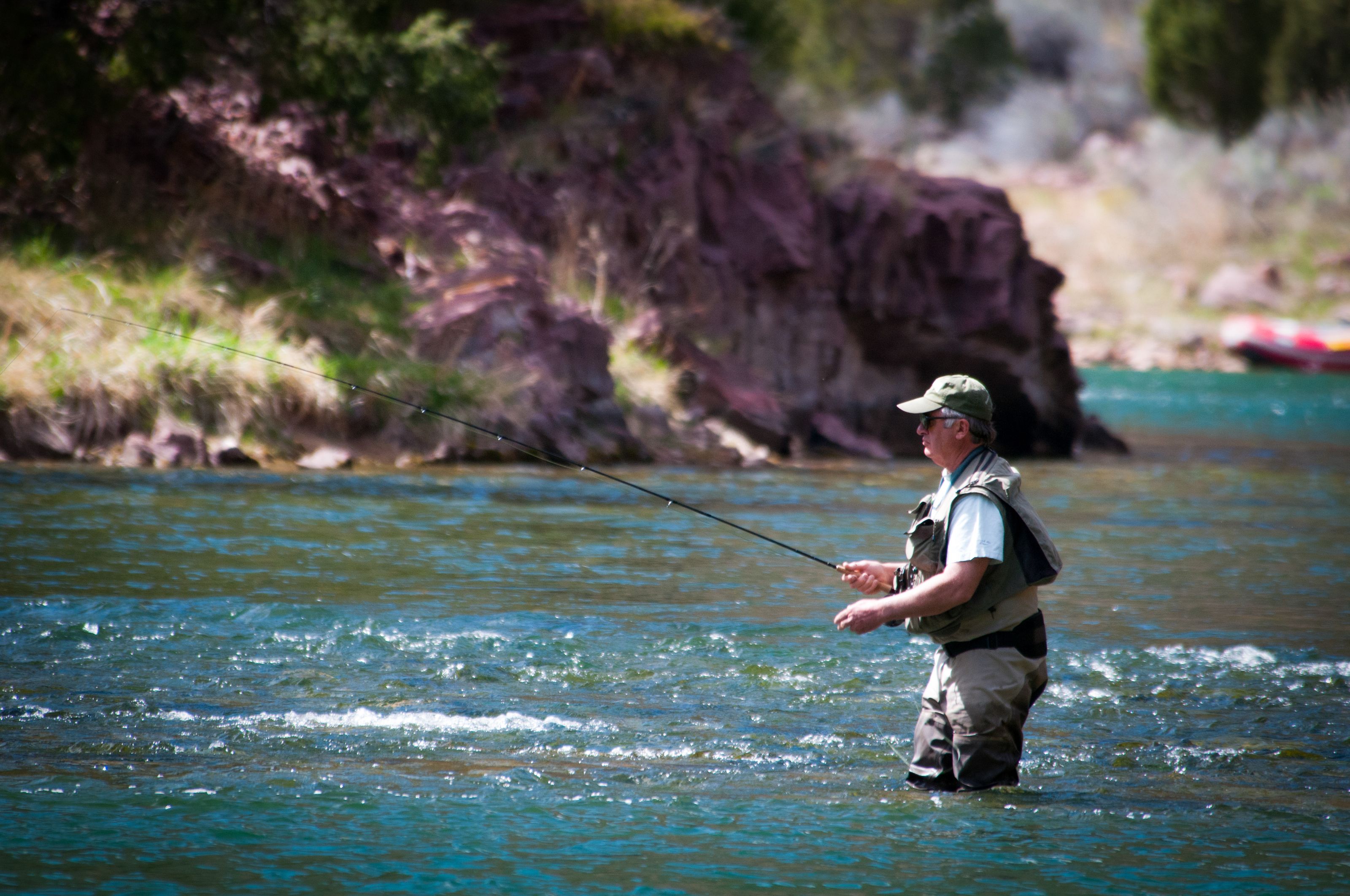
The Rio Grande usually runs cold and brimming past South Fork, Colorado, a Gold Medal trout reach that keeps fly shops busy all summer. In 2026 it is a trickle — about 87 percent below its normal flow — and anglers have been asked off it every afternoon.
The river is one of many. After a thin winter snowpack gave way to drought and relentless heat, Colorado Parks and Wildlife has imposed voluntary or mandatory fishing limits on stretches of 16 rivers and streams, roughly 460 miles of water, and shut fishing on another 10 lakes, ponds and reservoirs. The Rio Grande's voluntary closure covers 74 miles and runs from noon to midnight, when warming water does the most damage to trout. The Conejos, the Animas and San Juan, the Dolores, the Colorado, the Elk, the Eagle, the Yampa and the Gunnison are all affected.
Trout begin to suffer once water tops about 70 degrees; on the Western Slope, daytime readings have climbed past 71 while flows sit below half of normal. Before restricting a reach, biologists weigh temperature, flow and oxygen levels, said Josh Nehring, deputy assistant director of the agency's fish management team, who calls the sweep of closures unprecedented in his 16 years on the job. "It's certainly taken up a fair amount of my job, reviewing what those decisions are and whether we want to go to a voluntary or mandatory closure," Nehring said. "We have seen a ramp up, I'd say, in the last two or three weeks for sure."
The economics have hit guides quickly. Rick McGuire, owner of Wolf Creek Anglers in South Fork, reckons his business is off by at least 35 percent; he shelved river float trips a month and a half ago and later scrapped guided wading trips. "Lower water, warmer temperatures, it can be a little more technical," he said of an ordinary season. "But not [like what] we're seeing right now. I don't have really anything to compare it to."
At Conejos River Anglers in Antonito, guide Micah Keys now steers clients to nearby lakes after a morning session and urges them to carry a thermometer. "Usually, most people that come in here, they want to keep this [fishery] for later use too," Keys said. "They've been understanding."
There are silver linings. In reservoirs drained so low that die-offs are likely, CPW has scrapped catch limits entirely, letting anglers take what they can before the water disappears. And Nehring notes the restricted mileage is a sliver — 0.2 percent — of Colorado's flowing water, with high-country streams still cold. "It looks bad, but there's a lot of opportunity out there too," he said.
Everything may hinge on the monsoon. Rain should raise flows, but John Livingston, public information officer for CPW's Southwest Region, warns that storms crossing fresh burn scars bring their own hazard. "We know from past experience, seeing ash and debris flows and post-fire rain events, the kind of fish kill events that can be associated with that," he said. "It's a little bit of the give and take that could come with rains this monsoon season." Only weeks ago, a CPW team scooped a rare cutthroat trout population from the path of the Gold Mountain Fire near Ouray and relocated it — proof that in a drought summer, fish sometimes have to be carried to safety.