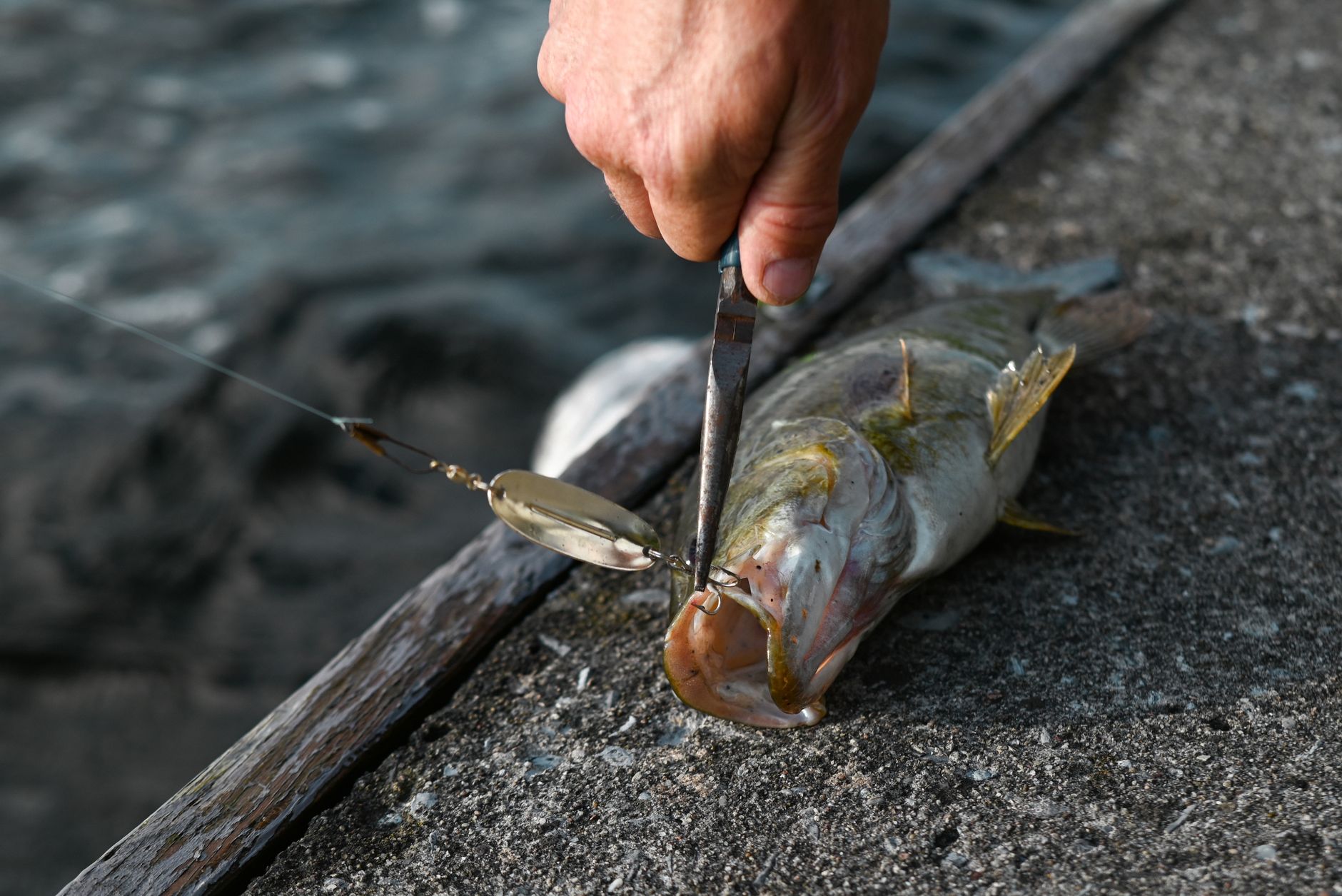
Every large smallmouth bass weighed in at the SPRO Bassmaster Elite on Lake Champlain went back to the water. Some of them left a piece of their tail behind first.
Fisheries technicians from the University of Vermont's Rubenstein Lab worked the Yamaha/AFTCO/PiranhO2 Live Release Boat during the event, taking caudal fin clips from several of the tournament's bigger fish. The clips feed a genetic database that will run through 2028, with the graduate student assigned to analyse this year's samples arriving in January.
The question the researchers are asking is one tournament fishing has largely avoided. Champlain runs 120 miles long and 12 miles wide across five distinct basins, and biologists believe smallmouth mostly stay put within one of them. Live-release tournaments do not. Fish caught in the far corners of the lake are weighed and released near the launch site, sometimes a long way from where they were hooked.
"We're trying to look at their genetics to try and determine if them getting moved all around Lake Champlain is impacting the population structure," said Morgan Cohen, one of the technicians collecting the samples.
Cohen explained why Champlain makes the question sharper than it would be elsewhere.
"One thing about Lake Champlain is that all the basins are very divided due to manmade barriers like causeways and natural barriers like islands," Cohen said. "There's not a whole lot of movement and flow between those basins, so when those fish are caught from, say, Missisquoi or the South Lake and then released in the Main Lake, they're in completely different habitat."
The tournament sampling is deliberately targeted at a size class the lab could not reach on its own.
"We will sample at least five other tournaments this summer," Bernos said. "Earlier this year, we began collecting fin clips from smallmouth bass from the five basins of Lake Champlain ourselves during an electrofishing survey of fish communities conducted by my lab. Many of the fish we caught using this approach were younger, smaller fish. We are now working with bass tournament anglers to collect clips from trophy-sized fish."
Bernos set out two objectives, and the second is the more provocative one.
"The specific goals of this study are to, first and foremost, understand whether Lake Champlain harbors distinct breeding populations of smallmouth bass and how they are distributed across basins," she said. "A second objective is to understand whether tournaments have the potential to induce evolutionary shifts in the population. This may happen if, for example, fish from small breeding populations or those carrying genes enabling rapid growth are more likely to be caught and moved across the lake."
That is a study asking whether competitive bass fishing, over enough seasons, changes the fish it depends on.
B.A.S.S. Conservation Director Gene Gilliland is comfortable with the question being asked, partly because the small number of tournament mortalities is being put to use. Any Elite fish that does not survive goes to Bernos' team.
"They're going to be able to take those fish back and age them," Gilliland said. "Now, they know how long the fish is, how much it weighs and then they can figure out how old they are, so they can look at growth rates."
He was also clear about what this does not amount to, at least yet.
"Now, we can compare genetics and growth rates. Is there a correlation there?" Gilliland said. "It's not something that the Vermont Fish and Wildlife Department is going to take directly and change a regulation, but it's the start of collecting bass data that they don't have."
Worth noting for context: Elite anglers on Champlain fish under the same rules as everyone else, and those rules permit seasonal harvest of five smallmouth per day, with a 10-inch minimum in Vermont and 12 inches in New York. The overwhelming majority of bass, in tournaments and out of them, go back.
The event itself was won by Kyle Schmitt, his second Champlain title. The fin clips will outlast the trophy.