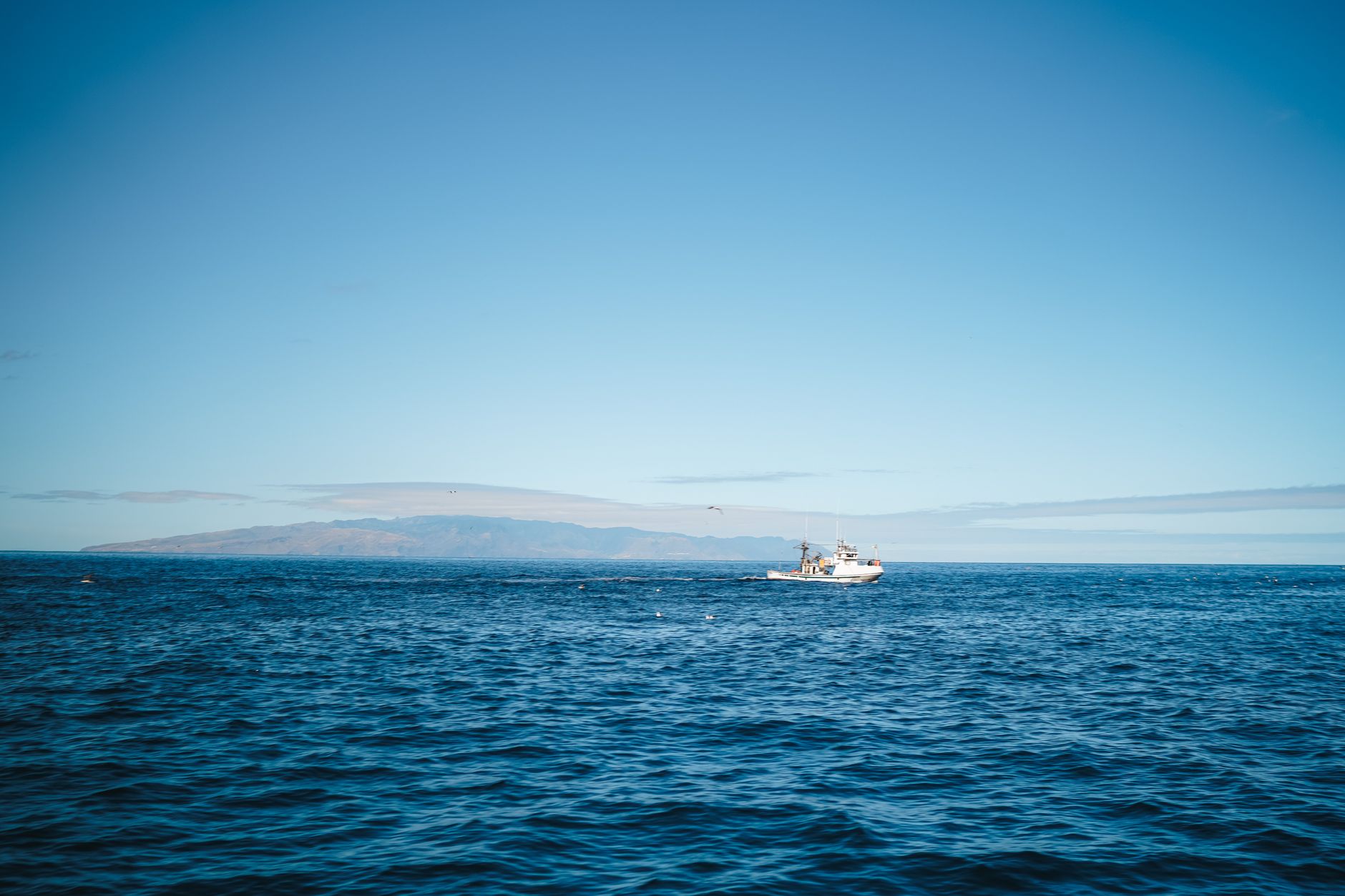
Hernan Flores had been at sea about two weeks, running a crew of 16 aboard the Negra Francisca Duarte II, when something small and mechanical came in low over the Pacific roughly 170 miles off the Galapagos Islands.
"We heard the explosion - boom! It was the kind of blast that left my ears ringing. Right then, I felt blood running down me," Flores told CNN.
That was 17 March. Nine days later, on 26 March, the Don Maca - a 35-ton longliner working swordfish and albacore about 200 miles north-west of the archipelago - was hit the same way. Both boats had sailed from Manta, the Ecuadorian port that has become the focal point of the country's war on drug trafficking. Between them the two crews numbered 36 men, most from the fishing villages of San Mateo, Santa Marianita and Jaramijo.
Neither crew has ever been charged with anything.
The accounts the fishermen have given to five separate newsrooms are close to identical. Both said they had noticed a large blue ship shadowing them for a day or two, and assumed it was a tuna boat. Both described drones about the size of a pillow, four rotors, a tube slung underneath.
"I went flying and slammed into a diesel tank that was sitting there," Jaime Ruben Cervantes Macias of the Don Maca told CNN. "People were shouting, 'Drone, drone, drone!' So, I jumped up quickly to take a look - and it was a drone firing at us, dropping the bomb on us."
What happened next is the part that has drawn attention in Washington. Both crews say they made for the blue ship in their auxiliary skiffs looking for help, and were met by armed men in brown camouflage - white, tall, speaking English, some with a US flag patch on the arm.
"From the moment we arrived on the US patrol boat, they were pointing guns at us, shouting: 'Get in, get in,'" Palacios said. "They handcuffed us, put hoods over our heads and pushed us around. We were terrified they were going to kill us."
Both crews were transferred at sea to a Salvadoran Coast Guard vessel and taken to El Salvador, hundreds of miles from home, where they were held for days before flying back to Manta at their own expense. El Salvador's military described them publicly as shipwreck survivors.
The Washington Post reported this month that the strikes were carried out under a covert CIA program, separate from the Pentagon's openly acknowledged campaign against alleged drug boats. Asked about it by CNN, a CIA spokesperson said only: "We do not have any guidance to offer on this." US Southern Command told the Guardian it had "no information to provide regarding any US government personnel involvement in any of the incidents."
Even former US officials quoted by the Post were puzzled by the secrecy, given that the Pentagon publicises its own strikes. "It begs the question about why you would need to do this," one said. "What would be the purpose of the secrecy?"
The lawyers see it differently. Fernando Bastias Robayo of Ecuador's Human Rights Council, who represents the Don Maca crew, told the Guardian the sequence itself is the violation. "A US vessel intercepted them and forced them aboard. Once they were detained, their fishing boat was blown up," he said. "Any apprehension followed by incommunicado detention constitutes an enforced disappearance."
Jorge Chiriboga Davalos, the lawyer for the Negra Francisca crew, has said he intends to file suit in the United States once he can establish who to sue. He has the coordinates: a NOAA satellite logged a fire at the spot at 3.02pm on 17 March, inside Ecuador's exclusive economic zone.
Human Rights Watch reached the same incidents from a different direction. Its July report, built on 62 interviews, documented both attacks and the disappearance of a third boat, the Fiorella, missing since 20 January with eight men aboard.
"US-Ecuador cooperation on security has been too opaque and too dangerous for Ecuadorians," HRW Americas director Juanita Goebertus said. "Before more harm is done, the US Congress should demand real answers and effective safeguards."
Not everyone reads the fishing fleet as blameless. The Post noted that the waters around the Galapagos have become a trafficking corridor, and that local fishermen are known to take paid work running fuel out to smuggling boats - though no evidence has emerged publicly that any of these crews were doing so.
For the families, the practical damage is smaller and more immediate than the geopolitics. Rising costs and extortion by drug gangs had already reduced the Flores family in San Mateo to a single boat, NPR's Carrie Kahn reported. That boat burned. Hernan Flores's nephew Jordi, whose foot was sliced open in the blast, needs a skin graft that costs $1,800. The family has been organising a town bingo night to raise it.