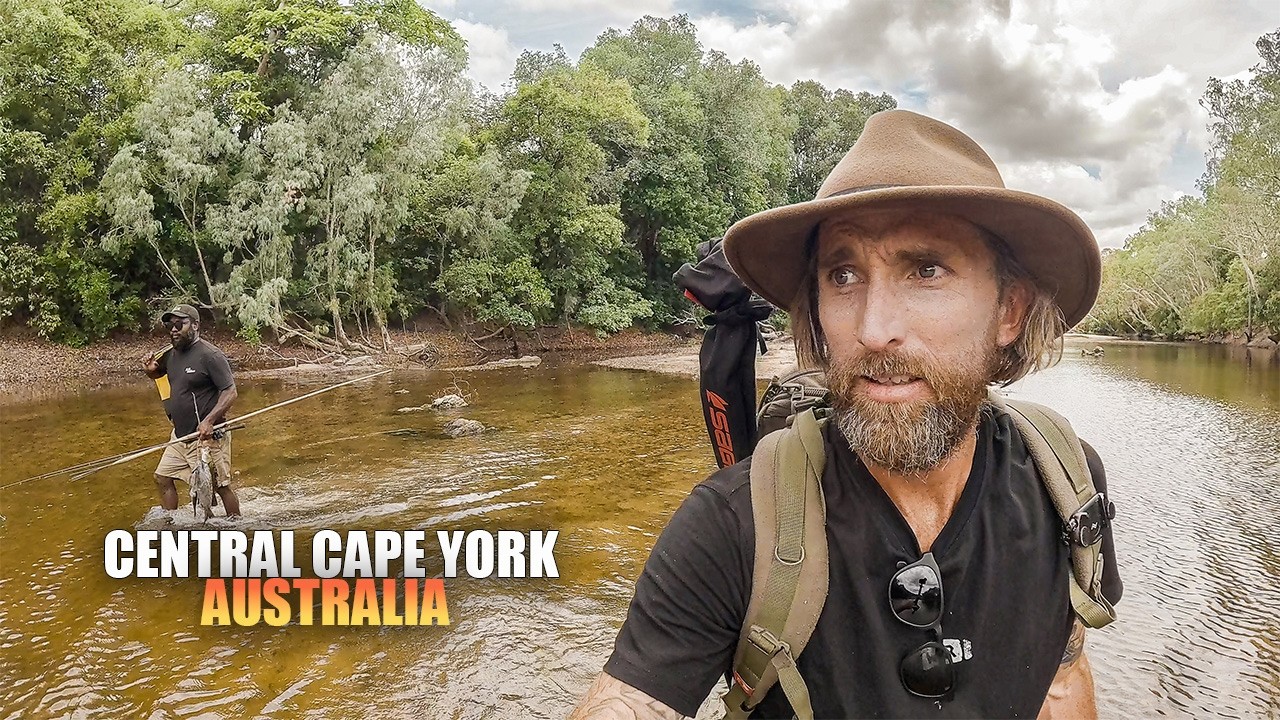
Most anglers judge a fishing trip by what they catch. On the freshwater creeks of Cape York's Archer River system, a traditional owner named Deion judges it by something more precise: whether the fish are worth eating yet.
Deion, a Kaanju country man, took the host of the Wild Reaches series out near Coen, in central Cape York, chasing sweetlip grunter and freshwater barramundi in the deep holes of a slow inland creek. The fishing was steady, but the lesson was the seasonal knowledge that decides when a fish goes in the cooler.
For sweetlip, a fish Deion rates as badly underrated eating, timing is everything. "I don't normally taste these straight after the wet season," he explained, "because straight after the wet they spawn, and after they spawn, like most animals that spawn or breed and lay eggs, they're really poor. You can taste the difference between now and one that's caught straight after the wet season."
The window he waits for runs through the cooler middle of the year. "Usually July onwards, kind of June, July onwards, is when I normally taste these," he said. "They're good eating. Really underrated fish."
The proof is in the fish themselves at this time of year. Cutting one open on the bank, Deion pointed to the layers of pale fat running through the flesh. "That's why I come this time of the year, because they're fat," he said. "Look how fat that is. That's all fat. That's what you're looking for." Smaller pan-sized fish went straight onto the coals; the better ones were set aside to take back to the elders in the community.
That detail is not incidental. Returning the catch to the elders, who taught the younger generation how to hunt and fish in the first place, is one of the quiet customs that gives a day on the water its meaning here.
The creeks Deion fishes feed into the Archer, one of Cape York's major river systems, and demand respect. Wading a shallow crossing, he mentioned almost in passing that a four-metre crocodile lived in the stretch, and pointed out smaller freshwater crocs that had themselves fallen prey to bigger animals. Up in the fresh water, he said, the targets are barramundi, sweetlip and cherabin, while long-necked turtles are found in the lagoons and billabongs rather than the running creeks.
For Deion, this knowledge is inseparable from place. His family, he said, has never been moved off this country. "We've never moved from this place. That's why we still got the knowledge of the area, all the story places, where we all come from," he said. That continuity is why the calendar in his head, when fish spawn, when they recover, when they fatten, is so finely tuned.
It is a reminder that the most valuable fishing information is rarely printed on a packet. Knowing when to keep a fish, and when to leave it alone, is local knowledge built over generations, and on these Cape York creeks it is still being passed down, one cook-up on the coals at a time.