Put a price on a fish before anyone has caught it and you get a different conversation about who should give ground. That is the strategy behind a new economic study of British Columbia's Skeena watershed, which values a single wild steelhead at roughly $100,000 in regional economic output and one full-time job.
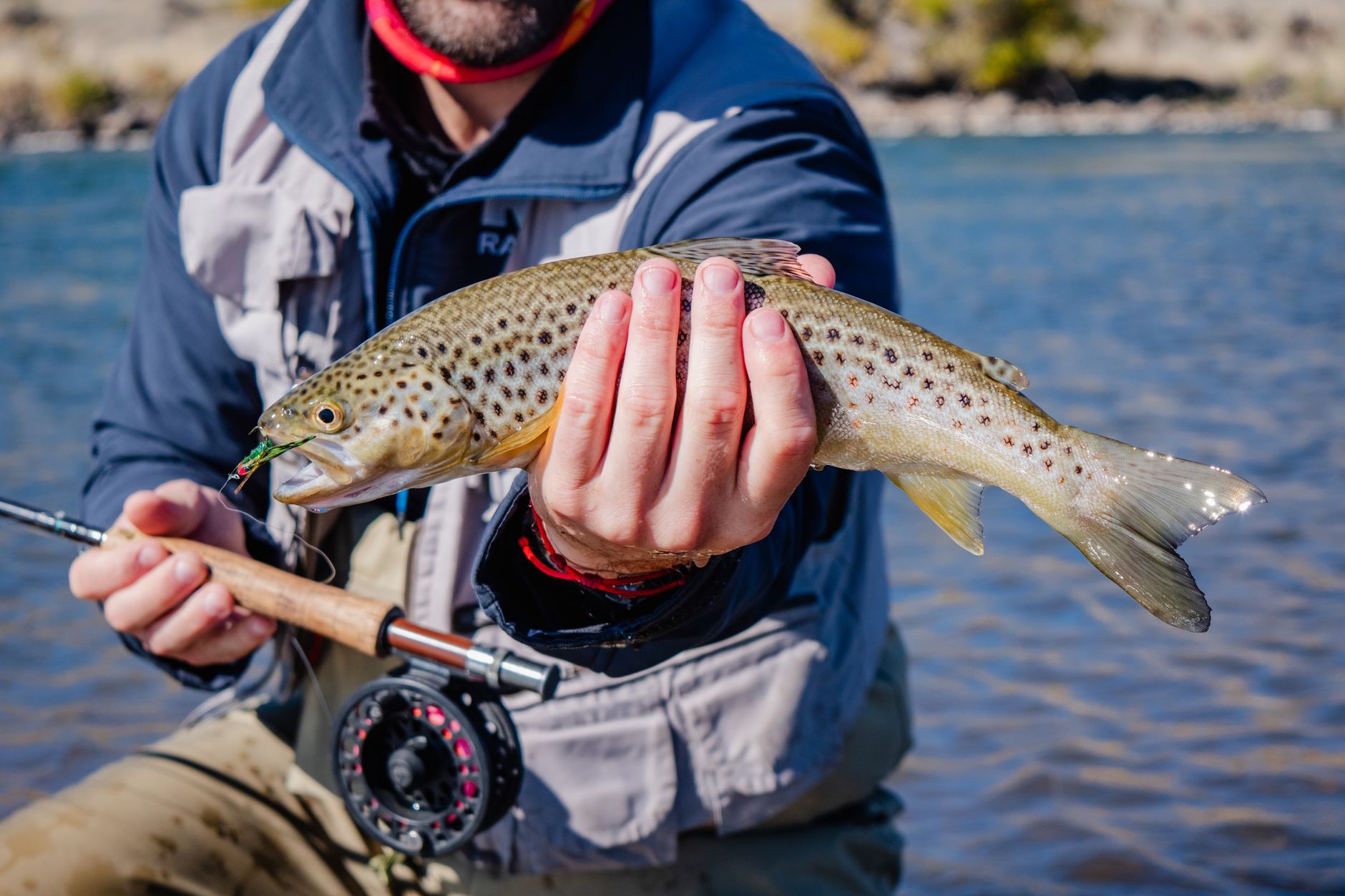
Renewable Value, Minimal Impact: The Economic Value of Skeena River Steelhead was prepared by Big River Analytics and released in late July. Its topline: the recreational steelhead fishery generates about $33 million in annual economic output, $16 million in GDP, and 291 full-time-equivalent jobs across British Columbia. As much as 80 per cent of that stays in the North Coast-Nechako region, and guided angling in the Upper Skeena accounts for more than 60 per cent of the region's steelhead-related activity.
The authors bill it as the first comprehensive assessment of what the fishery is worth and what endangers it. The policy conclusion follows directly: fixing commercial fishery management and ocean ranching would achieve more for the fish than restricting anglers, and restricting anglers would hurt communities that have few alternatives.
"This study demonstrates that healthy steelhead populations are more than a conservation success - they are a renewable economic asset that supports communities across Northern British Columbia," said Gladys Atrill of Tourism Smithers. "Protecting these fish means protecting local jobs, tourism businesses, and the long-term economic health of the region."
The per-fish number comes from treating the catch-and-release fishery as low-mortality, then dividing total economic activity by the handful of fish that die in guided angling. In the Upper Skeena the figure climbs to about $118,000 and 1.3 jobs per mortality. The point of the calculation is not really to describe the sport fishery. It is to price what other sectors are removing.
"Activities that remove steelhead - such as commercial fishing and ocean ranching - represent an opportunity cost exceeding $100,000 in provincial economic output per steelhead," said Carrie Collingwood of the Babine River Foundation, which commissioned the report. "These figures provide a benchmark for understanding the economic consequences of steelhead losses from ocean bycatch and other external pressures."
The hatchery pink salmon case is the weaker of the two, and the report does not oversell it. Odd-year pink abundance in the North Pacific has averaged 136 million fish above even-year abundance since 1990. Across the same stretch, about 14,500 fewer Skeena steelhead came home in odd years than even ones.
"That relationship does not prove that pink salmon are the sole cause of reduced steelhead survival, but it is a warning," said John McMillan, a fishery scientist with The Conservation Angler. "The potential effects of industrial-scale pink salmon ocean ranching, including large hatchery releases from Prince William Sound and elsewhere in the North Pacific, require independent scientific evaluation and serious international attention."
Worth stating plainly: the funders are the Babine River Foundation, Native Fish Society, The Conservation Angler, the Upper Skeena Angling Guides Association and Tourism Smithers. Every one of them benefits from the recreational fishery staying open.
This season, it will. Mike Ramsay, British Columbia's director of provincial fisheries management, wrote on 30 July that Tyee Test Fishery data estimated 16,700 summer-run steelhead past Tyee as of 29 July, within a credible range of 12,800 to 20,900. The extreme conservation concern threshold sits at 8,000, and the province put the probability of clearing it above 99 per cent. The fishery proceeds as normal, with time-and-area or emergency closures still on the table if conditions change.
Where the report's backers are angrier is over what they can see. Fisheries and Oceans Canada has trimmed some of the in-season machinery that anglers and guides rely on.
"This report comes just as DFO is cutting its fisheries patrol contracts and cancelling in-season meetings with stakeholders," Collingwood said. "Sadly, the fisheries making big economic contributions are also likely to be the most affected by these decisions."
A DFO spokesperson gave a more mundane explanation: meetings of the North Coast Integrated Fisheries Harvest Planning Committee were temporarily suspended this season because participation from fishery participants and stakeholder representatives was low. The department said it is interested in restarting the forum and will consult members after the season on how to structure it.
British Columbia administers steelhead under a memorandum of understanding with Canada, while DFO issues the weekly in-season updates on measures protecting stocks of concern. It is a divided file - which is how a study about Alaskan nets and Prince William Sound hatcheries ends up landing on the desk of a regulator with jurisdiction over neither.