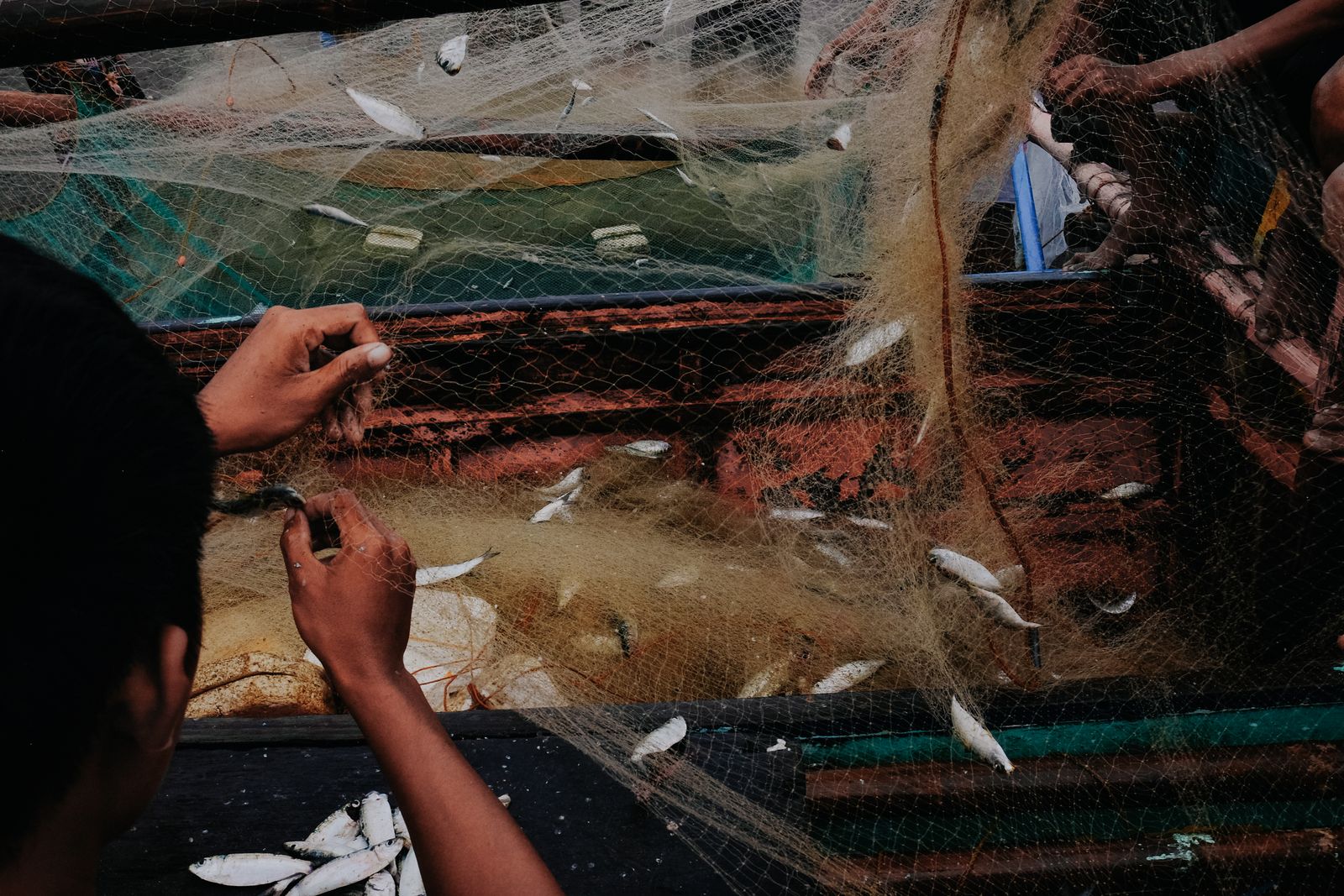
A fishing closure off South America is quietly reaching into salmon pens and shrimp ponds on the other side of the planet. Peru has pushed back the reopening of its main anchovy fishery yet again, with no fixed date to let the fleet sail — and the fallout lands squarely on the global feed industry.
The ban was meant to lift on 10 June. Instead it stays in place along much of Peru's northern and central coast, where the first anchoveta season of 2026 has stopped and started for weeks. Officials say it may be eased fully, partly or in stages once the Peruvian Institute of the Sea (IMARPE) finishes its latest stock checks.
Two things keep the boats ashore: warmer-than-normal water from a coastal El Niño, and too many juvenile anchovy showing up where the fleet wants to work. Peru's Ministry of Production argues that pausing fishing lets the schools spread out and spares the undersized fish that represent next season's catch.
"The management of anchovy in Peru is based on scientific evidence and adaptive management that allows us to act in a timely and responsible way to protect the resource and ensure its sustainability," said Peru's Minister of Production, César Quispe Luján.
Here is why it travels so far. Anchovy is the raw material behind fishmeal and fish oil, and Peru makes more of both than any other country — roughly 20% of the world's supply. Those ingredients feed farmed salmon, shrimp and other carnivorous species, so an idle Peruvian fleet tightens feed markets everywhere.
"Peru accounts for a large share of global fishmeal and fish oil supply, implying that disruptions quickly tighten availability," said Enrico Bachis, market research director at the International Fishmeal and Fish Oil Organisation (IFFO).
Supply was already thin before Peru's latest pause. IFFO figures put global fishmeal output down 21% year-on-year in April and 26% lower on a cumulative basis against 2025, with fish oil off 19% for the month and 14% cumulatively. A few producers bucked the trend — Spain rose 36% cumulatively and Chile held steady — but declines in Peru, the North Atlantic and parts of Africa pulled the world total down.
Bachis tied the shutdown to the warm-water alerts, pointing out that the extended ban took effect in the country's north-centre on 27 May "as warm water and high juvenile presence suggest a precautionary management of the anchovy biomass." Weeks later, the fishery is still shut.
Peru's pain is compounded elsewhere. China has limited its own marine-ingredient output under fishing bans in force since 1 May, and catches of blue whiting and sand eel across northern Europe have been weak. Feed producers told IFFO they expect June and July to be the hardest months of the year for profitability, as fish already in ponds get harvested and growers decide whether to restock.
The bet Peru is making is a familiar one for any angler who has sat out a closed season: give up fish now to have fish later. Backed by IMARPE's monitoring — recently certified to the ISO 9001:2015 standard for its biomass work — the country is treating this year's young anchovy as an investment, even as the feed mills that depend on them wait for the all-clear.