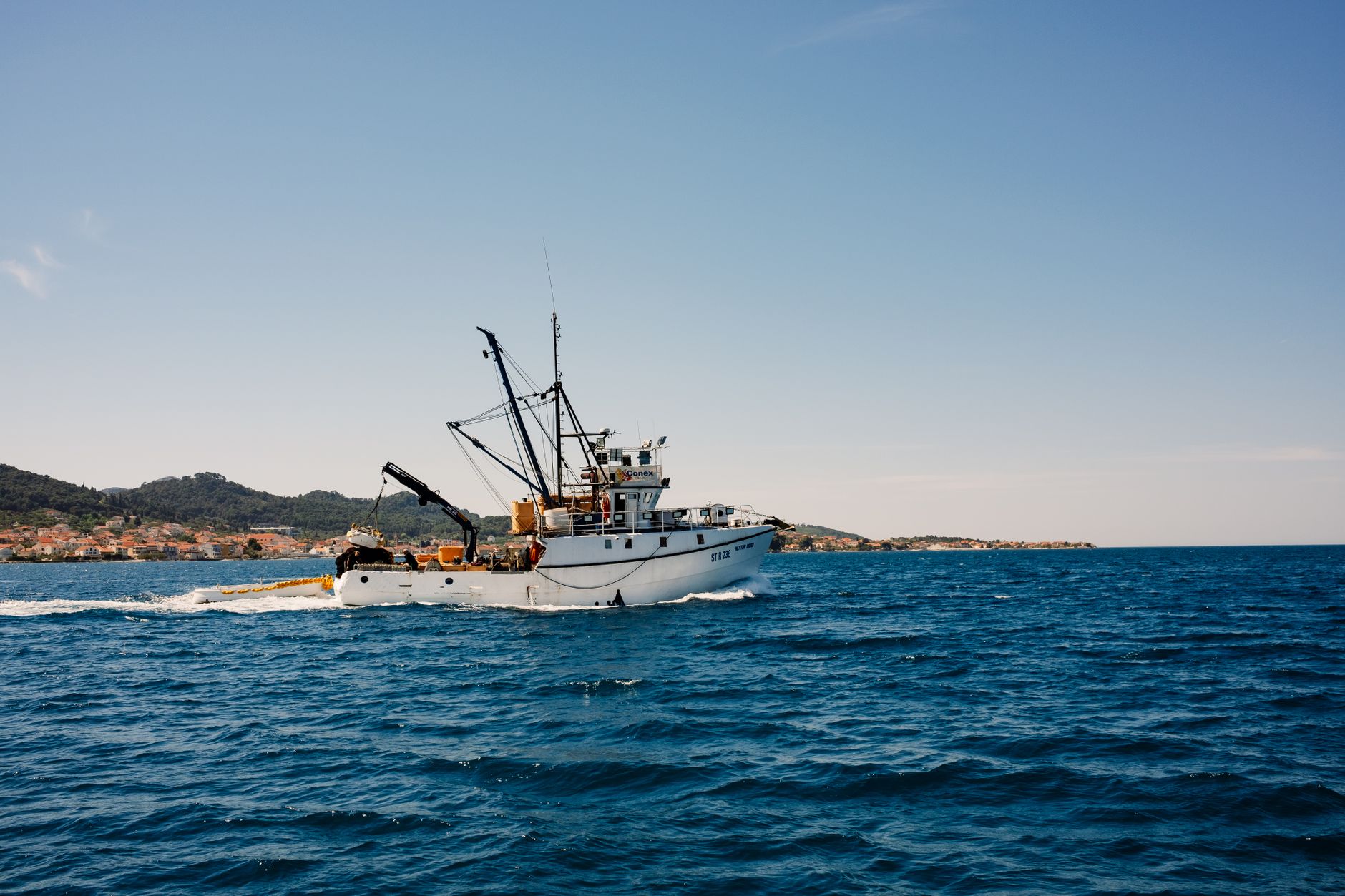
Rather than sanction thousands of Chinese fishing boats, a bipartisan group of US senators wants Treasury to go after 29 ships that never catch a fish.
In a letter dated 23 July to Treasury Secretary Scott Bessent, nine senators led by Todd Young (R-Ind.) asked the Office of Foreign Assets Control to place reefer carriers, bunker tankers and floating bases serving China's distant-water fishing fleet - plus their registered and beneficial owners - on the Specially Designated Nationals list.
Those support ships are what allow the fleet to stay offshore indefinitely. Reefers take catch off the boats at sea, tankers refuel them, and floating bases handle food, spares and medical care. Without a return to port, the inspections and enforcement that happen dockside never occur. And there are far fewer of them than fishing vessels.
"China's distant water fishing fleet continues to disrupt global and regional fishing economies," Young said. "Through overfishing and illegal incursions into foreign waters, China seeks to undermine the global fishing industry until there is nothing left. The United States must take steps to combat these activities and promote American fishing practices, which remain the gold standard for sustainable fishing."
Joining him were Ted Cruz (R-Texas), Dan Sullivan (R-Alaska), Andy Kim (D-N.J.), Tom Cotton (R-Ark.), Chris Coons (D-Del.), Roger Wicker (R-Miss.), Rick Scott (R-Fla.) and Marsha Blackburn (R-Tenn.).
Cruz did not soften the language.
"The Chinese Communist Party is using its global distant-water fleet to conduct ecocide across at least three continents in both hemispheres. They kill endangered species by the hundreds and sharks, whales, and dolphins by the thousands, and have destroyed tens of thousands of acres of coral reefs," he told SeafoodSource. "Their fleet uses coerced laborers, who are subjected to physical abuse, malnutrition, overwork, and withheld pay. They could not conduct these activities without supply ships, including reefers, tankers, and floating bases."
For Sullivan, the issue lands on Alaskan docks.
"Chinese trawl fleets ravage fish stocks in every corner of the world's oceans without regard for any other users or future generations. These fleets also engage in gross human rights abuses, including utilizing slave labor," he said. "We are urging Secretary Bessent to deploy the numerous Treasury Department tools and designations available to aggressively sanction these support vessels and dismantle the Chinese Communist Party's hub-and-spoke IUU fishing scheme."
The tool has been used before. OFAC sanctioned two Chinese nationals and their networks in December 2022 under Executive Order 13818, sweeping more than 150 vessels onto the SDN list. A designated ship struggles to obtain flagging, insurance, financing, fuel, port services or buyers, and its automatic identification system makes it difficult to disappear.
The push has been building for two years. Congress put $170 million into Coast Guard maritime domain awareness in July 2025. In January the House Select Committee on China described the fleet as being wielded "with the precision of a military command, fusing fishing vessels, state subsidies, processing plants, and overseas infrastructure into a unified geopolitical weapon." The Senate passed the Fighting Foreign Illegal Seafood Harvests Act in March, which would bar listed vessels from US waters.
The Congressional-Executive Commission on China has gone further, asking the White House for a full ban on Chinese-caught or processed seafood: "The reason is simple. Chinese seafood is too often produced through forced labor and enters our market at prices honest American fishermen cannot match. That is not competition. It is abuse shipped into the United States."
Whether Treasury acts on any of the 29 names is another matter. But targeting the supply chain rather than the fleet is a narrower ask than an import ban, and it carries signatures from both sides of the aisle.