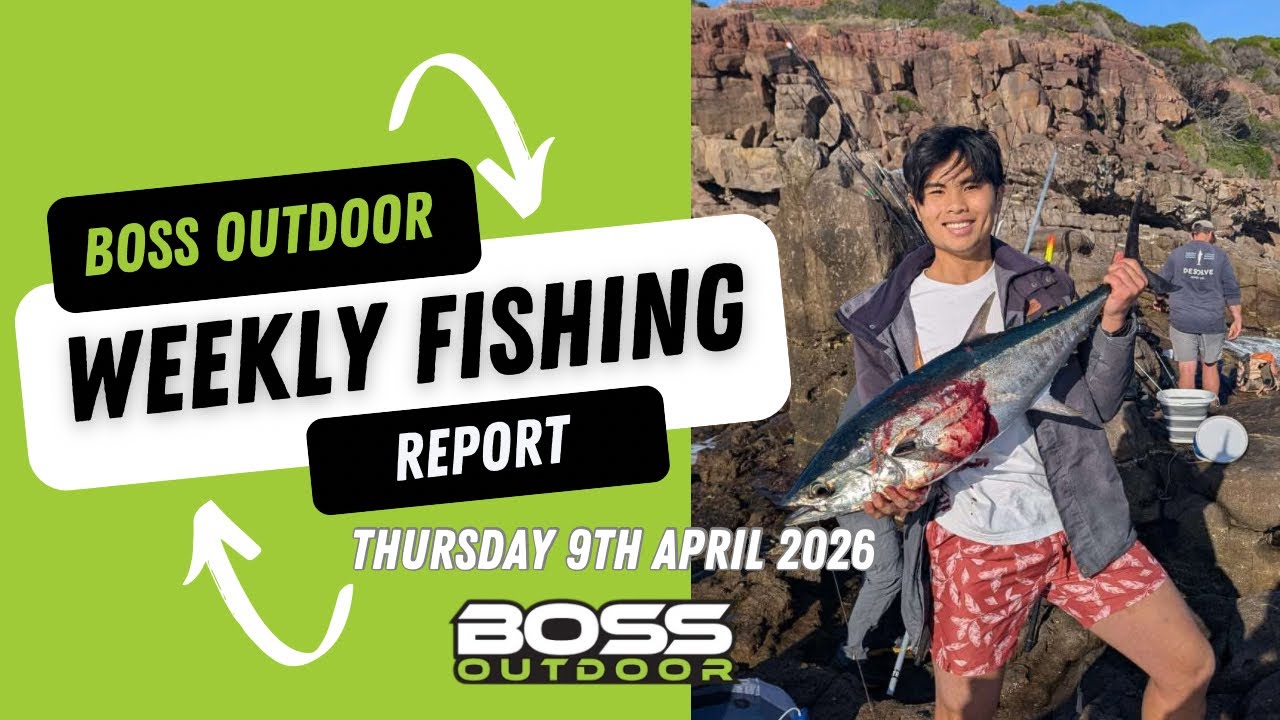
April on the Sapphire Coast has turned into one of those rare multi-species weeks where almost everything with fins is biting. The Boss Outdoor Merimbula weekly report — fronted this week by Jamari, Leif and Corey — covers a far south coast of New South Wales that is simultaneously seeing longtail tuna on the headlands, 70 cm snapper on the plastic grounds, late-season marlin hanging off Eden and Bermagui, and crayfish stacked up in Twofold Bay.
"Autumn is one of my favorite times of year to get after a whole different range of fish," Jamari said to kick the report. "So, stay tuned. We've got a cracker of a report this week."
The pelagic rotation on the headlands is heavy. Frigate mackerel are "almost at the end of the frigate season". Bonito will stick around until at least late April and into May. But the new arrival is the longtail tuna. "There's been a couple caught off the pier in the last couple days. We do get a run of longtail. They don't last very long. They're usually here for about three weeks to a month, max, and then they head up back up north," Jamari said. "If you can get a live bait past the bonito, you're in with a shot at a longtail. You're also in with a shot at a kingfish."
Kingfish have been showing off the wharf and around Long Point. "Boats ticking liveys around the end of Long Point have been doing really well. Kings and longtail on the headlands — what more could you want?"
The water has finally stabilised at around 20 to 21 degrees, clear, with a strong northerly current. That's also lighting up the squid fishery in the sheltered bays. Anglers looking for a lee off a headland with weed and reef structure should find squid — "some better size ones will start to get caught as we come into the cooler months".
Offshore, Leif called the report in from the deck of his own boat, having just landed a bag of snapper and flathead out of Cannery. "We just got into that normal 40-metre range and got our bag, no problems at all," he said. "The snapper were really good early, just flicking some plastics around in that sort of 20 to 25 metres of water. Casting them upstream or up-tide, or up-drift probably, and then letting them come down. They sink down, hit the bottom, and that's where you catch your fish."
The snapper size range has been remarkable. "Plenty of fish over that 50 cm range, a couple over 60, and even one over that 70 cm mark. So, some absolutely remarkable snapper fishing." Morwong are in the mix at 60 cm. "Still a few nannys about if you want to get on the jig."
Marlin numbers are softening. "Probably not the same sort of numbers that we've seen over the last month or two, I suppose, where we've seen boats catching double figures up into 10 fish. I don't think we've seen that this week, but still lots of boats catching one, two, and three fish out there." Leif advised running south to Eden or north to Bermagui for the better water.
Dive season is on. Corey reported from a morning in Twofold Bay. "Spent a couple of hours in Twofold Bay diving. Bit of a change of pace from the fishing. There's lots of treats to have on offer down here at Twofold Bay. The diving's been exceptional today. Lots of crayfish, abalone, mussels, and we even got a leather jacket. They're not monsters, but they're good size."
The single strongest tip of the week comes from Eden's beaches, which have lit up with mulloway. "Whether you're at the Quarry, in front of the Seahorse Inn, any of those beaches around the bay are going to hold mulloway," Jamari said. "Get out there at nighttime, get a livey out, or get a strip bait out off the beach, and you'll come up tight with a few mulloway. They've also been coming into the estuary system, too. Generally at nighttime, try and get that change of tide, and get a big bait out."
Back in Merimbula itself, trevally are thick up and down the channel, and Jamari pointed viewers to a handful of visible flathead lies on the sand flat between the jetty and the rock wall. "My guess is, in the early hours of the morning, if you can line up a high tide, they'll be sitting there. Once the sun comes up and the pelicans get on that flat, they tend to disappear, because the pelicans do actually eat them."
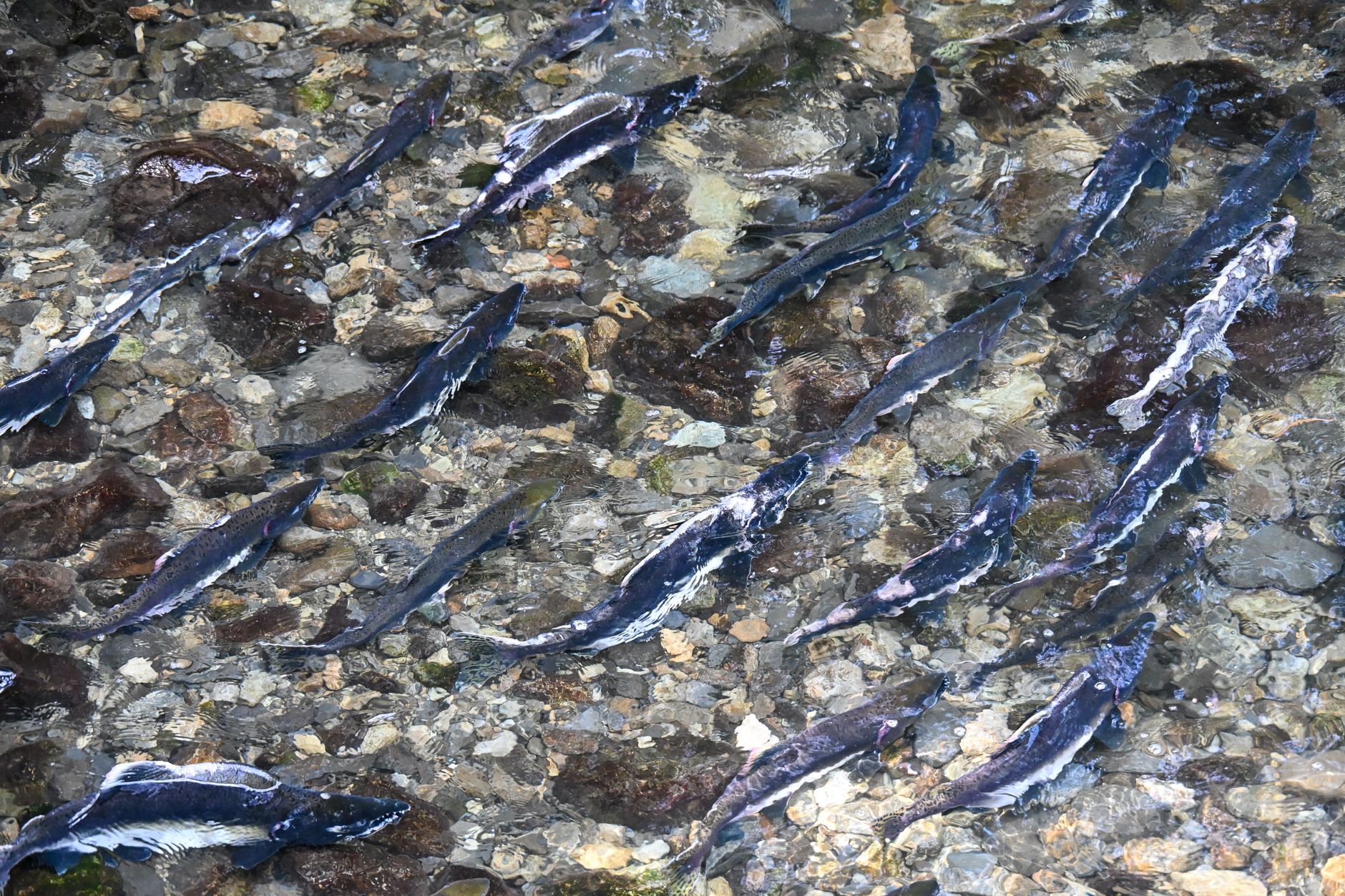
From headlands to estuary, Easter 2026 on the Sapphire Coast is shaping as a week worth taking off work for.