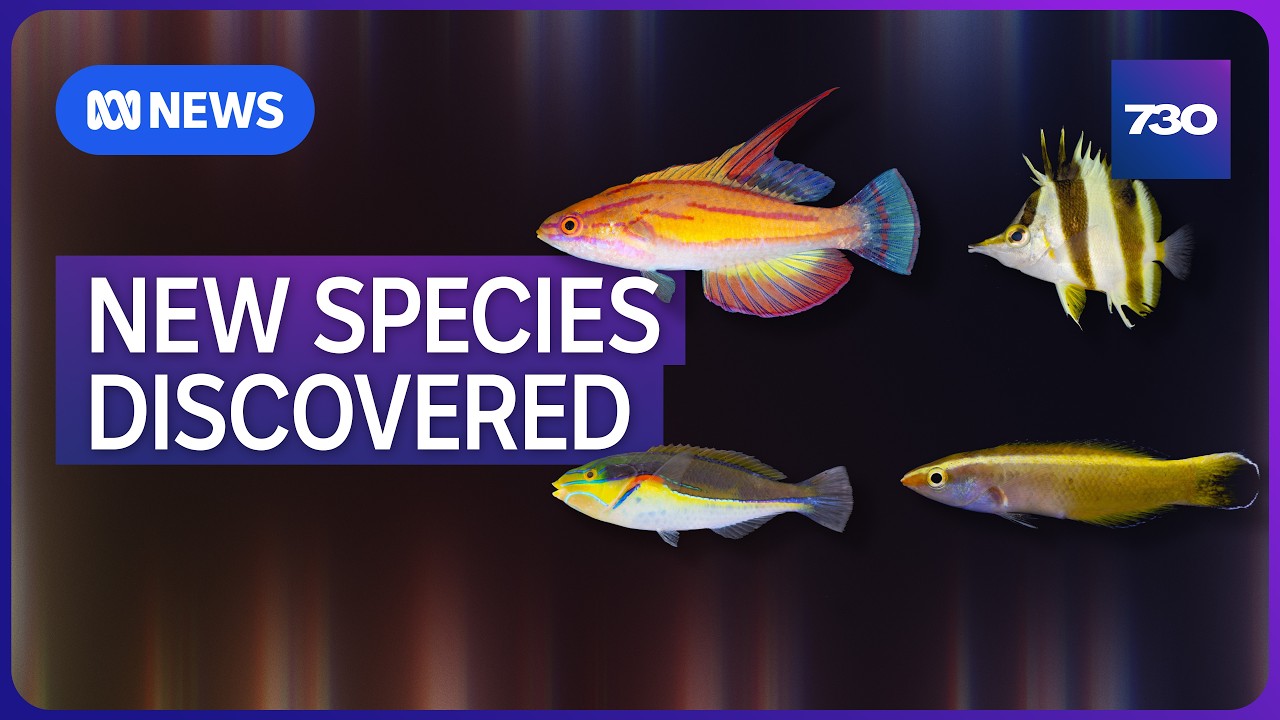
Australian marine scientists have formally described more than 110 fish and invertebrate species new to science from the Coral Sea Marine Park, with researchers warning the final count could exceed 200 once cryptic species are teased apart.
The discoveries came out of CSIRO's Coral Sea Frontiers expedition aboard RV Investigator, and were announced on 1 April 2026 following a run of taxonomy workshops that participants described as likely the largest ever held in Australia for marine animals.
The park itself is enormous — almost one million square kilometres of Coral Sea sitting outside the Great Barrier Reef — and most of it remains a scientific blank page. The voyage dropped deep-towed camera systems between 200 and 3,000 metres, a zone well beyond most commercial and recreational fishing activity.
For chief scientist Dr Will White, it delivered exactly the kind of headlines CSIRO hopes to land every time the ship leaves port.
"During the voyage it was incredible to observe plenty of unique, deep-sea creatures in locations from seamounts and atolls to unexplored deep reefs," White said. "These incredible discoveries, made possible by the impressive deep-water survey capabilities of RV Investigator, reveal the extraordinary life in our oceans and are crucial for protecting Australia's marine biodiversity."
White has already put names on some of the biggest-ticket finds — two new rays in the genera Dipturus and Urolophus, a deepwater catshark in Apristurus and a chimaera in the genus Chimaera. The voyage also logged rare video footage of Odontaspis ferox, a sand tiger shark that is a deepwater cousin of the grey nurse familiar to east-coast anglers. Brittlestars, crabs, sea anemones and sponges fill out the haul.
Those records are being entered live into the Ocean Census Biodiversity Data Platform — the first open-access global register of newly described marine species, run with the Nippon Foundation-Nekton Ocean Census.
"To ensure high-quality data is visible to the global community in real-time, the taxonomists at the workshops input the species data directly into the Ocean Census Biodiversity Data Platform," said Dr Michelle Taylor, the foundation's head of science.
The find also matters for anglers. Every new species described on the edges of the reef reshapes how managers think about stocks, bycatch and protected areas closer to shore.
"Voyages like the Coral Sea Frontiers expedition are essential for uncovering biodiversity in our marine parks," said CSIRO marine ecologist Dr Candice Untiedt. "Turning them into knowledge depends on taxonomic expertise."
That expertise came out of two workshops that paired DNA sequencing with old-school morphology — particularly useful for delicate animals like jellyfish that lose their defining features once preserved.
"Voyages such as the recent one to the Coral Sea allow us to take tissue samples from the jellyfish before they are fixed in formalin, and it is exciting to get samples from these deep-sea specimens," said Dr Claire Rowe, collection manager at the Australian Museum. "A lot of the species collected have either not been sequenced before, or not been sequenced from Australian waters."
The samples are now held across the CSIRO Australian National Fish Collection and state museums, available for follow-up work by Australian and international researchers.
"This work demonstrates the power of collaboration between science and marine park management," said Shaun Barclay, who represents the Marine and Islands Branch at Parks Australia.