After more than two decades guiding clients onto barramundi across Queensland's far north, Ryan Moody has caught almost everything the tropics can throw at a lure. Almost.
"I've been catching barra professionally for decades, and at this point it almost feels like breathing," Moody admits at the start of his latest outing. "But there's one fish out there that I've never caught in all my years as a guide - saratoga."
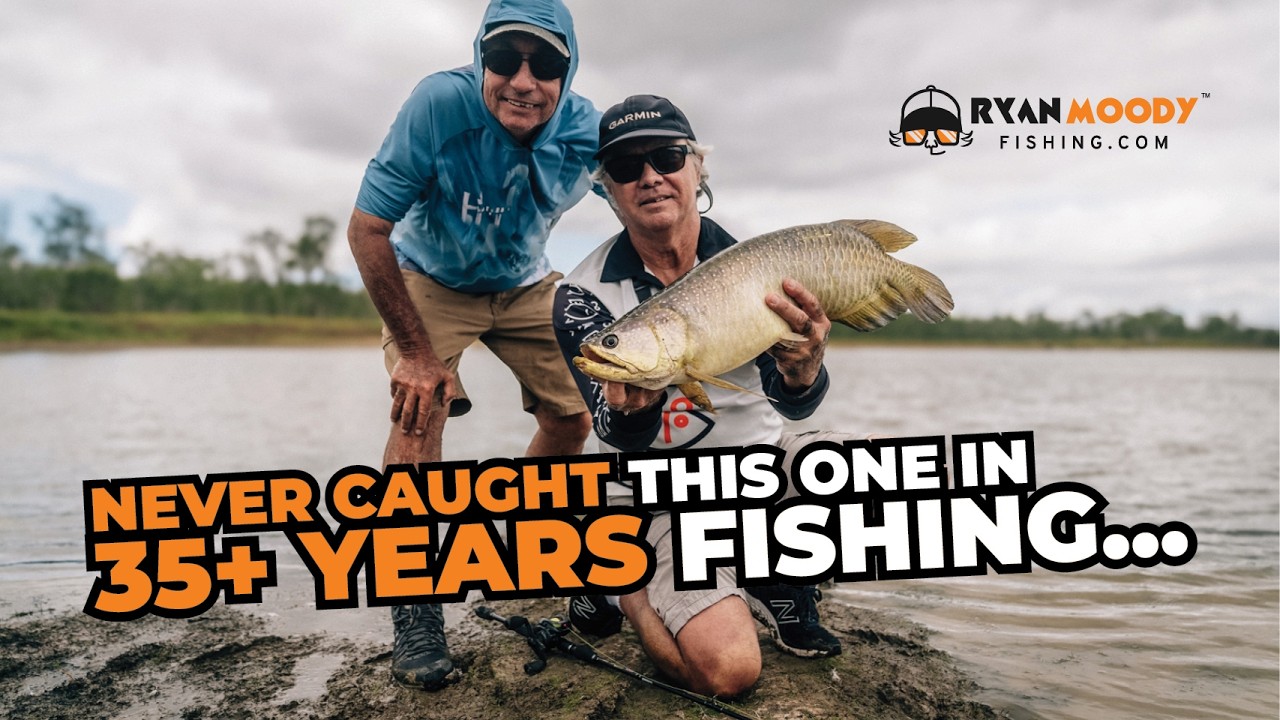
To finally tick off the prehistoric-looking native, Moody headed up to a cluster of stocked lakes on the Tablelands behind Cairns, fishing with local operator Kim Anderson of Kim Anderson Sportfishing. The water carries a personal history: it was seeded years earlier by a biologist mate, Terry, whom Moody tracked down to ask whether the saratoga he vaguely remembered being stocked had actually survived. They had - and then some.
Saratoga are famous for smashing surface lures, but Moody quickly learned that watching them eat and actually landing them are two very different things. "Traditionally people think of topwater for saratoga - they've got their eyes on the top of their head, so topwater is obviously a really good way to go," he explains. "However, the hook-up rate, and probably more the landing rate, is extremely low."
The numbers were brutal early on. "I think we were one from 30 the first trip up here, tearing our hair out," Moody says. "The next one I went 15 from 17 when I switched over to using a paddle-tail rig, weedless, with a very small sinker on it." His method is to swim the soft plastic like a frog across the top of the lily-covered lies, then change the game at the edge: as the lure reaches the drop-off, he lowers the rod tip, lets it sink, and starts a slow roll back.
The hookset is where most anglers come unstuck - and it mirrors the discipline barra demand. "It's the same as with barra - don't lift your rod tip and side strike them," Moody advises. "You feel a delayed reaction, then a bit of a hook set, but not too savage." Even done right, the toll is heavy; he shrugged off a long string of pulled hooks as "a normal bad toga day."
That difficulty, though, is the appeal. "They're not the world's biggest fish, but they're very difficult to keep on, so that makes a really good challenge," Moody says. His first-ever saratoga went 65cm and was tagged for ongoing growth-rate data; Anderson has landed fish to 89cm in the same system, which also holds stocked barramundi.
Conditions shaped the session, too. The fish, usually solitary, had bunched into tight pockets following the season's first cold snap - behaviour Moody likened to barra after an early cool change. He suspects the moon matters as well: around the full moon the bite windows are shorter but aggressive, while closer to the quarter moons there is a better chance of fish feeding all day.
His verdict after finally cracking the code is simple. With saratoga, persistence is non-negotiable: "You've got to get used to [losing them], otherwise it'll do your head in."