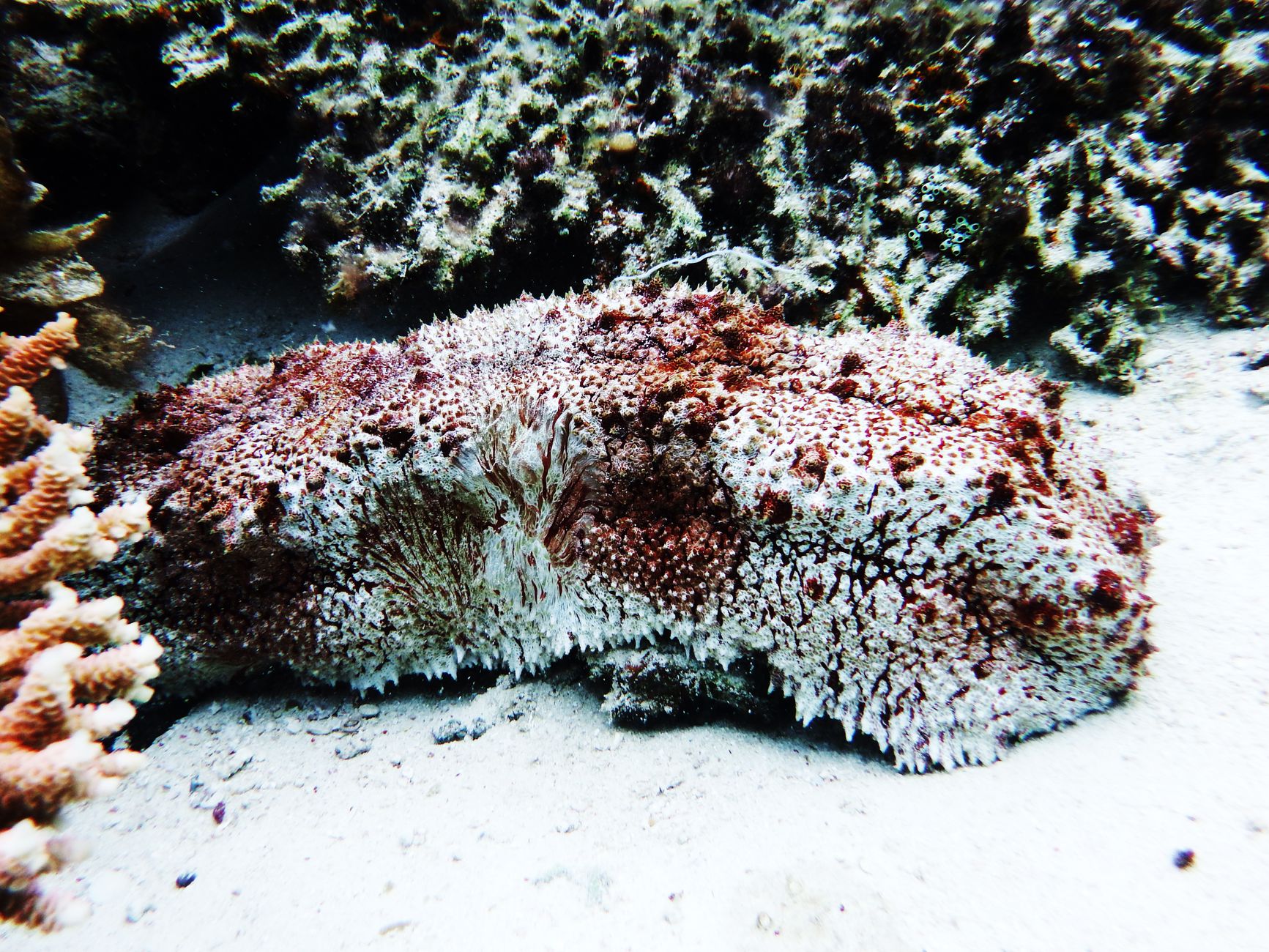
They are not much to look at — leathery, slow, spineless animals vacuuming the seafloor — but sea cucumbers have quietly become some of the most valuable and most poached creatures in Australian waters, and researchers say the country's remote reefs are being emptied of them.
At the Rowley Shoals, three coral atolls roughly 300 kilometres off the Western Australian coast, sea cucumber numbers fell by more than half between 2018 and 2023. Two species, the pineapple and hairy blackfish sea cucumbers, are now close to locally extinct there. The cause, scientists and border authorities agree, is a steady stream of foreign vessels crossing from Indonesia to strip the reef by hand.
"You just pick them up, put them in a basket and keep going," said Teale Phelps Bondaroff, research director at OceansAsia, describing how easily the animals are harvested. No net, no line and no skill required — which is exactly what makes them so vulnerable.
The driver is money. Dried and sold into Asian markets as bêche-de-mer, the Japanese spiky sea cucumber can fetch more than $3,500 a kilogram, rivalling the value of many finfish. That price has fuelled a global hunt that has already flattened populations elsewhere.
"It's really difficult to have any form of sustainable sea cucumber fishery," said John Keesing, a research scientist at CSIRO. India banned sea cucumber fishing more than two decades ago, and the Galapagos fishery collapsed to the point of being economically unviable. Australia, Keesing said, is now one of the last strongholds. "We have some of the last pristine populations of sea cucumbers."
Enforcement is hard across such vast, isolated waters. Between 2021 and 2023, the Australian Border Force intercepted 112 vessels and seized about 22 metric tons of sea cucumbers — an estimated 33,000 to 45,000 animals. A larger crackdown, Operation LUNAR, launched in late 2024 and has since intercepted more than 100 foreign vessels and arrested dozens of Indonesian fishers, with catches confiscated and gear destroyed. Even so, Keesing is blunt about the odds. "Your chances of not getting caught if you're an illegal fisherman are unfortunately pretty good."
The losses may reach well beyond the animals themselves. Sea cucumbers recycle nutrients and turn over sediment on the seafloor, and researchers are only starting to map what happens when they disappear. "We're just starting to learn how important they are," said Alison Hammond, a sea cucumber researcher at the University of the Sunshine Coast. Their removal, she warned, could ripple through reef systems in ways that take years to surface. "These effects can be way down the line."
Signs of depletion are turning up closer to shore, too. In the Great Sandy Marine Park's Hervey Bay, more than a year of searching turned up just two golden sandfish, a once-common species. It is the kind of slow, invisible decline that rarely makes headlines because the victims are neither charismatic nor familiar to most anglers.
For recreational and commercial fishers alike, the sea cucumber story is a warning about what unmanaged extraction does to a slow-growing species. The animals can take years to mature and breed by broadcasting eggs into the water — a strategy that only works when enough of them remain close together. Strip them out, and the population simply stops replacing itself.