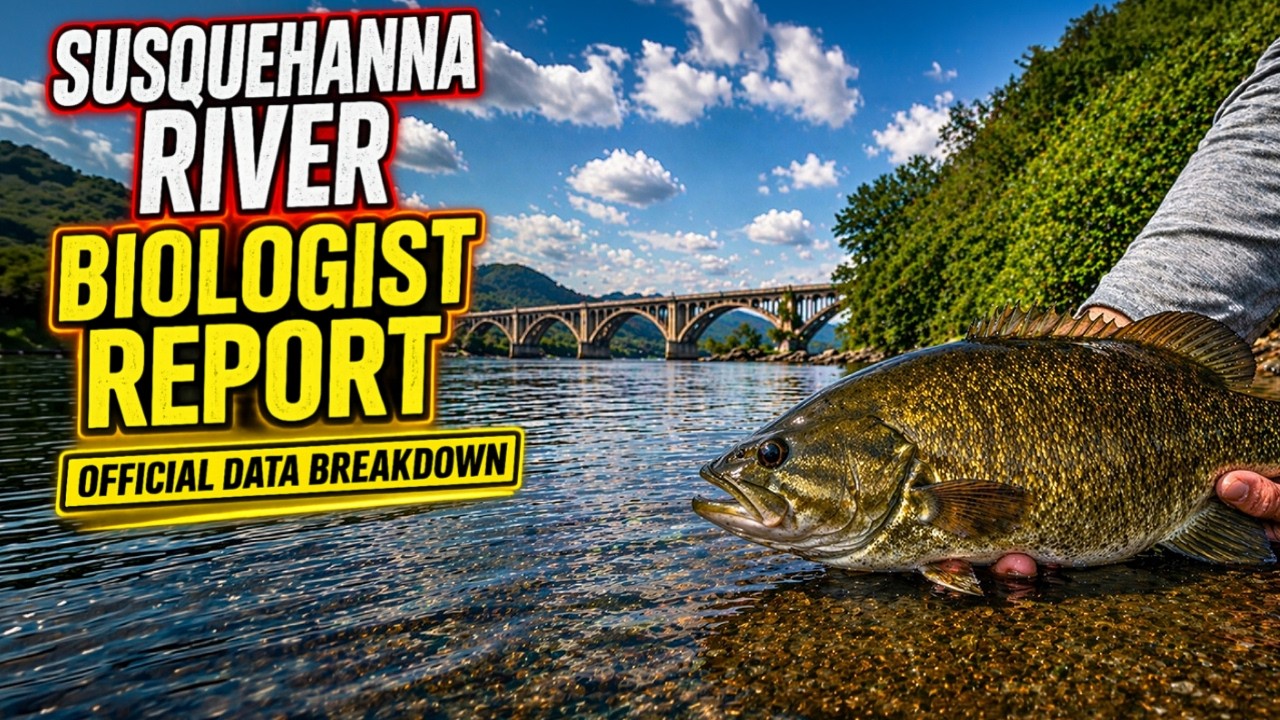
Pennsylvania's flagship smallmouth bass fishery has returned to full health following a lengthy battle with disease, according to official 2025 survey results shared by state biologist Geoffrey Smith.
The Susquehanna River system, long considered the Mid-Atlantic's premier smallmouth destination, endured nearly a decade of poor recruitment when largemouth bass virus combined with environmental stressors caused widespread juvenile mortality each summer. Young bass died in large numbers during July and August, preventing new fish from entering the population even as adult smallmouth continued to thrive.
Smith, who has dedicated 18 years to studying the watershed, explained that the crisis bottomed out between 2005 and 2012. Bumper year classes in 2012 and 2015 signalled the recovery's beginning, and recent data confirms populations now consistently exceed historical averages.

The middle Susquehanna—the showcase stretch between York Haven Dam and Sunbury featuring iconic bedrock ledges and complex habitat—has recorded catch rates above long-term medians for the past four to five years. The lower Juniata River, flowing into the Susquehanna near Harrisburg, shows similarly robust numbers.
Pennsylvania employs specialised night-time electrofishing surveys to monitor bass populations, taking advantage of nocturnal feeding behaviour that draws fish into shallow water. These standardised surveys target the same sites annually under similar flow conditions, creating reliable trend data.
Managers track three key metrics: overall adult abundance, numbers of fish exceeding 38 centimetres, and the ratio of small to large fish. All managed reaches have met objectives for three of the past five surveys, triggering discussions about potential regulation changes.
Current rules prohibit all harvest and possession in the middle Susquehanna and lower Juniata, protecting the recovering fishery but also preventing competitive anglers from holding legal weigh-in events. Smith suggested authorities may explore alternative approaches that balance conservation with expanded access, given the population's sustained strength.
The river's natural complexity contributes significantly to its resilience. Spawning occurs across a broad timeframe—late March through early June—as different tributaries warm at varying rates. Large fish spawn first when temperatures reach 15 degrees Celsius, with smaller size classes following in waves. Some mature bass nest twice per season.
This temporal and spatial diversity means localised setbacks rarely affect overall recruitment, as productive spawning always occurs somewhere within the watershed.
Other Susquehanna reaches present distinct characteristics. The west branch runs exceptionally clear due to its forested geology and ongoing recovery from historical acid mine drainage. Though less fertile than downstream sections, remediation work has dramatically improved conditions over 20 years.
The lower river below York Haven includes hydropower reservoirs managed jointly with Maryland under a decades-old reciprocal agreement.
Anglers targeting the Susquehanna can expect prime pre-spawn action through April as fish stage near spawning areas. Water temperatures in the high 40s Fahrenheit trigger migration from winter haunts, concentrating trophy-class smallmouth in predictable locations.
Smith's presentation underscores how quickly robust river systems can recover when disease pressure diminishes and environmental conditions improve—valuable insight for fisheries managers addressing similar challenges elsewhere in the Chesapeake watershed.