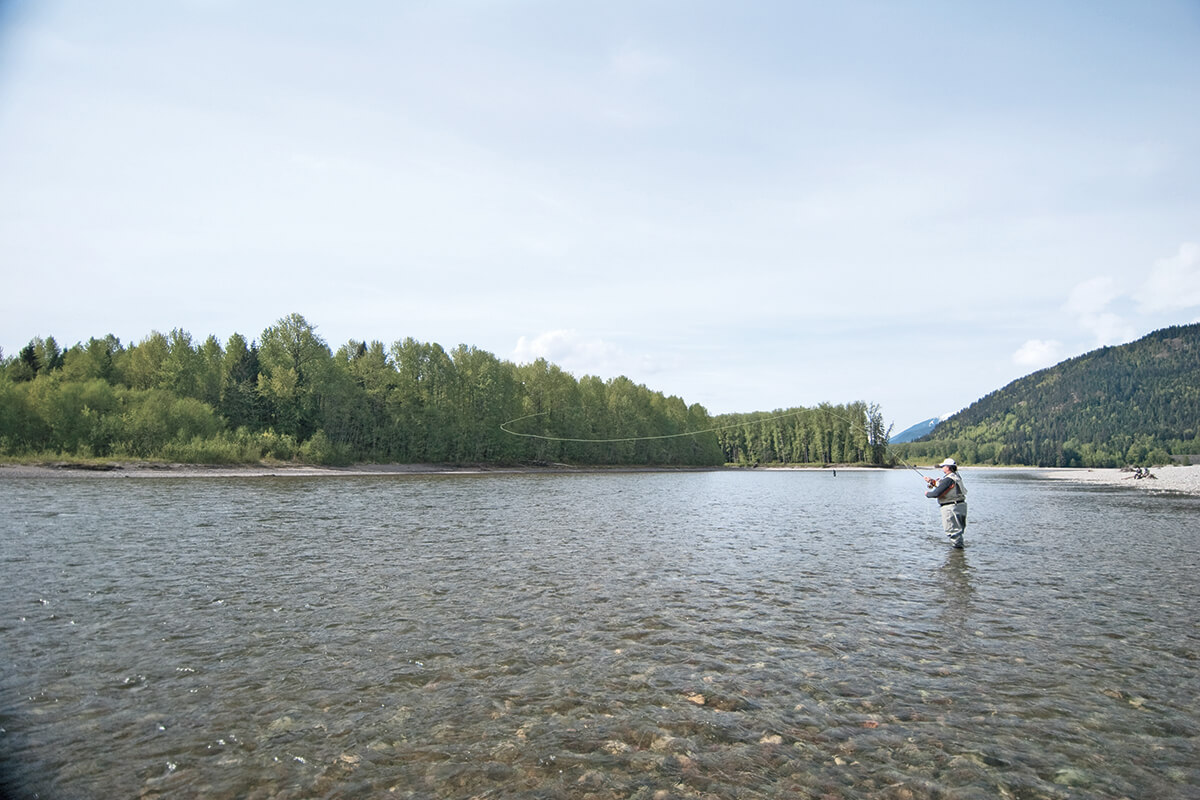
Fly fishing enthusiasts understand that mastering the art of casting can significantly enhance their fishing experience. Steve Rajeff, a 14-time world casting champion, emphasizes the importance of efficient casting, especially for saltwater fishermen and West Coast steelhead anglers, who often rely on long casts. "While most trout anglers may not prioritize distance, refining these skills can yield better results in various fishing scenarios," Rajeff noted.
The bridge between effective casting and success in fishing often lies in the principles of distance casting. As Rajeff explains, effective distance casting helps anglers mitigate fatigue, improve accuracy, and cast bulkier flies. To tap into these benefits, he shares six crucial tips that every angler should consider.
1. Create Narrow Loops
One fundamental principle is to focus on the shape of your loop. Rajeff mentions, "A tight, wedge-shaped loop results from moving the rod tip along a straight path, optimizing energy use." This efficiency minimizes energy lost in vertical motion. On the contrary, a wide loop, akin to a windshield wiper's movement, reduces casting performance. A well-shaped loop, resembling the front of an aircraft wing, excels in cutting through the wind, thereby enhancing casting effectiveness across various environments.
2. Master the Double Haul
Another essential technique is the double haul, which involves pulling on the line with your line hand to generate speed. According to Rajeff, "A double haul not only occurs on the forward cast but also during the backcast, maximizing the line’s acceleration." However, he cautions that poor timing can inadvertently introduce slack, diminishing the cast's overall efficacy. To successfully execute this, he suggests, "Absolute synchronization between the casts, keeping hands close to the reel, is key to achieving tight line management."
3. Drift on the Backcast
For maximum casting distance, Rajeff advises allowing the rod hand to travel along the longest possible path during the backcast. This principle ensures a more efficient transfer of energy. "Bringing your casting hand slightly backwards during this phase allows greater extension and power in the next forward cast," he explained.
4. Control Your Wrist
Additionally, the mechanics of your wrist play a critical role during casting. Rajeff stated, "Keeping your wrist locked at the end of a false cast not only stabilizes the rod but also ensures that all stored energy is released effectively into the forward cast." This simple adjustment can lead to improved accuracy and distance.
5. Focus on Your Stance

As well as the mechanics of casting, your posture has a significant influence on performance. Rajeff emphasizes, "A balanced and stable stance sets the groundwork for effective casting. Your feet should be shoulder-width apart, allowing you to follow through properly without losing your balance."
6. Practice Regularly
Lastly, Rajeff imparts the importance of consistent practice: "Like any skill, casting requires regular attention. Spending time on the water practicing these techniques is vital to becoming an effective caster." Frequent drills can help solidify the muscle memory necessary for seamless casting.
In summary, casting, often overlooked by some trout anglers, holds tremendous potential for enhancing their fishing encounters. By applying Rajeff's six tips, aspiring fly fishers can improve their casting techniques, ultimately leading to more successful fishing trips.