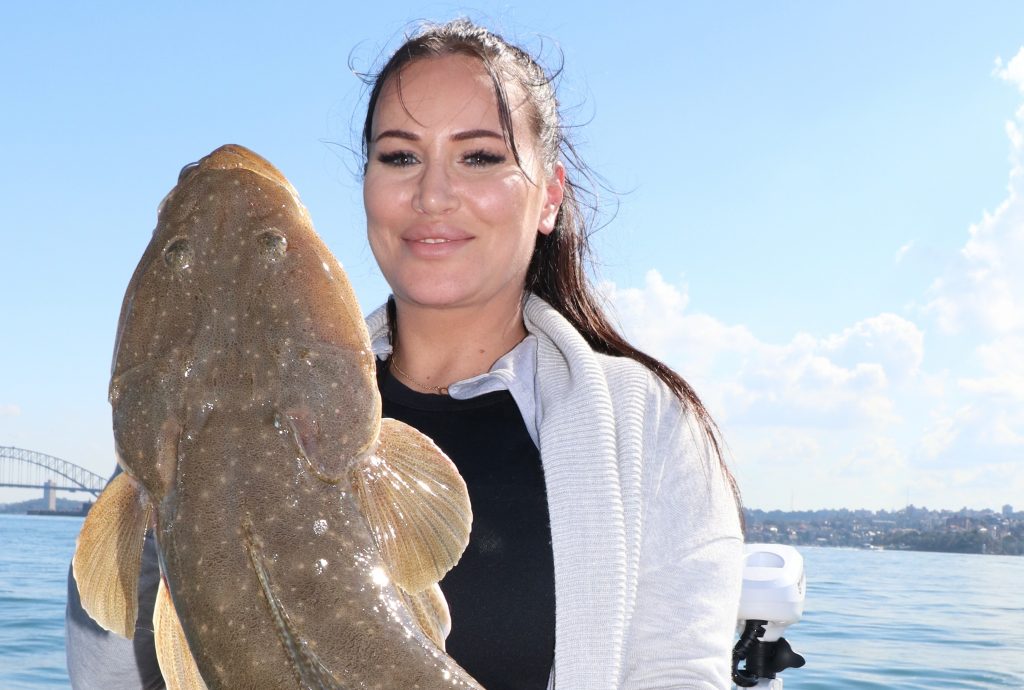
Flathead fish are a staple in the waters of Sydney Harbour, thriving in various locations, from the sheltered upper reaches to the rugged heads. "Around the heads, the smaller sand flathead dominate with the occasional dusky flathead making an appearance," explained local expert Craig McGill of Fishabout Fishing Charters. These dusky flatheads can grow impressively large, reaching sizes up to one meter and finding comfort in water as shallow as one foot.
Choosing the right gear is crucial for an effective fishing experience. McGill advised, "A single-handed spinning or light baitcasting rod with four or six-kilogram line will comfortably handle most flathead luring." Nevertheless, ensuring a stronger trace of around ten kilograms is essential to prevent losing fish from bite-offs. He noted, "While their teeth aren’t particularly sharp, they thrash their head from side to side, which can rasp and weaken your line." For those looking to bait fish, opting for heavier gear is advisable due to the possibility of hooking larger species such as jewfish or kingfish.
Timing is another significant factor in successful flathead fishing. "The prime windows are the two hours before low tide and the first hour after the tide begins to come back in," said McGill. Additionally, he emphasized that fishing during early mornings and late afternoons can enhance these already favorable conditions.
Flathead are known to cluster around specific structures in the water. According to McGill, they prefer places like "channel edges, rock bars, weed banks, and sand or mud bank drop-offs." Notably, areas where water flows off mangrove stands during a falling tide also serve as productive fishing spots. "Boat moorings in the harbour’s bays are worth a look too," he added, suggesting a variety of environments to explore.
Though flathead fishing can be a year-round pursuit, fish tend to become lethargic during the winter months, especially when it comes to lures. When targeting larger, trophy flatheads, McGill firmly stated that "autumn is by far the best season in the harbour."
Lure fishing for flathead presents a unique strategy that some might overlook. "They often get a bad rap as poor sport fish, but this perception quickly disappears when flathead are targeted with lures," McGill explained. The psychological thrill of chasing flathead with lures can rival that of other predatory fish. Furthermore, he asserted that the excitement is amplified in clearer waters, where the action of the fish striking can be visually observed.
For the best chances of success while lure fishing, McGill recommends several key locations. "Some of the best spots include the shallows of Rose Bay, the upper reaches of Middle Harbour, and the entire length of Lane Cove River," he mentioned, noting that "Iron Cove and the Parramatta River upstream from Gladesville Bridge also hold promise."
When it comes to techniques, the choice of lures plays a vital role in attracting flathead. "The three main lure types I rely on are stick baits, soft plastic/jig head combos, and diving minnows," McGill specified. Stick baits, designed for use in weed-laden areas, are particularly effective due to their weed-resistant features. He cited the ‘Slug-go’ as an ideal example, praising its ability to navigate through thick cover.
For deeper water and drop-offs, soft plastic jig head combos work effectively, enabling anglers to keep the lure in the strike zone longer. For trolling, achieving the correct depth is key, necessitating a selection of bibbed minnows with various diving capabilities. "Diving minnows can be particularly effective, but you’ll need a broad range to cover different depths," McGill noted.
Understanding the feeding habits of flathead is crucial for effective lure presentation. "They are opportunistic feeders, so presenting the lure close to the fish is critical," said McGill. With fishing conditions ranging from one to fifty feet deep, depth-suitable lure choices become essential. Success lies in using a strategic approach to casting, where each cast lands just a couple of meters apart, monitoring the line carefully for indications of bites.
In conclusion, successful flathead fishing in Sydney Harbour requires expertise in gear selection, timing, and understanding fish behavior. As McGill summarizes, "Flathead fishing is not just about catching fish; it’s about the thrill of the chase and the joy of success. When you know what you're doing, it can be incredibly rewarding."