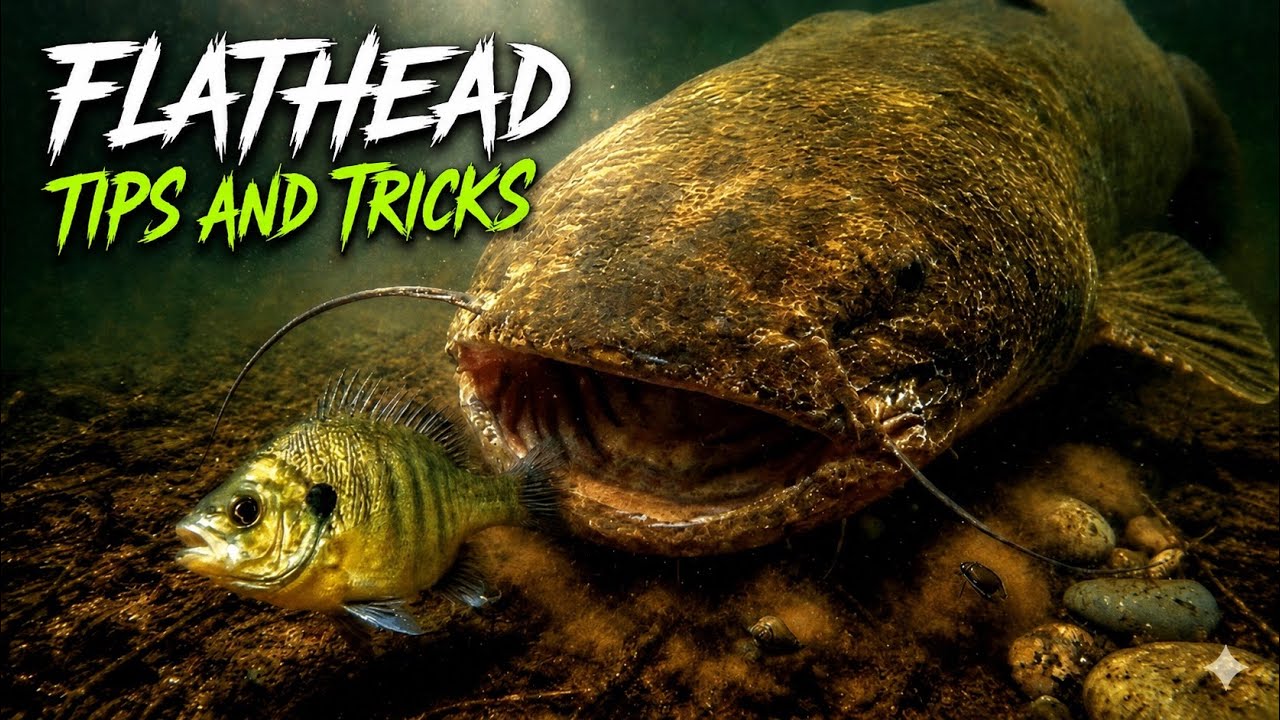
Catching a big flathead catfish on a quiet stretch of river is less about luck than most anglers assume, and a new how-to from the Hagen Grubbs Fishing channel breaks down the small decisions that separate a blank night from a memorable one.
Filmed on the angler's home river only a few miles from his front door, the session followed a familiar pattern: a system that had run low and currentless through spring was finally pushed up and flowing by a week of good rain. That fresh current, he explained, is exactly the trigger that switches flatheads on.
The first job is bait, and here the advice is uncompromising. Flatheads respond best to fresh offerings, and while live bait is always a strong option, on this river cut bait often outperforms it. The key, the angler stressed, is freshness — flatheads will occasionally take frozen or stale bait, but it is never the norm. To keep his shad lively he runs a 25-gallon tank dosed with a couple of cups of rock salt. "That salt makes all the difference in the world when you're trying to keep shad alive," he said, after netting shad, bluegill and a prized mooneye to cover his options.
Presentation is matched to the conditions. Fishing three-way rigs with a mix of long and short droppers, he hooks his shad through the nose when there is current, reserving back-hooking for still water or lakes. The reasoning is simple: in current, a back-hooked baitfish is stressed and dies faster, while a nose-hooked shad rides naturally in the flow.
Location is where his experience really shows. He targets banks loaded with rock ledges and timber, and he is particular about the speed of the water. Blue catfish, he noted, love really fast current, but flatheads prefer something more moderate — around a mile an hour is, in his view, about perfect. He also favours seams where current deflects off a bank and slows, gathering baitfish and the predators that hunt them.
Timing and depth round out the plan. He fishes deeper water of 25 to 30 feet through the middle of the day, then moves shallower to 10 to 20 feet as darkness approaches, and he is fastidious about stealth, drifting into position on the trolling motor and dropping anchor quietly because, in his words, boat noise matters a whole lot when chasing bigger fish.
Realistic expectations are part of the message. On a river like this, he said, landing one or two flatheads counts as a good night — "you can't catch what doesn't live there" — and over two evening trips he banked a pair of solid fish, one around eight pounds and a slightly bigger second-day fish showing early spawning marks with the water sitting at 68 degrees.
Both fish went back. Despite admitting flatheads taste great, he releases nearly all of them, keeping only the occasional small blue cat for the table. "I enjoy catching the flathead so much I normally just put them on back and let them grow up," he said — a quiet conservation ethic tucked inside a masterclass in reading a river.