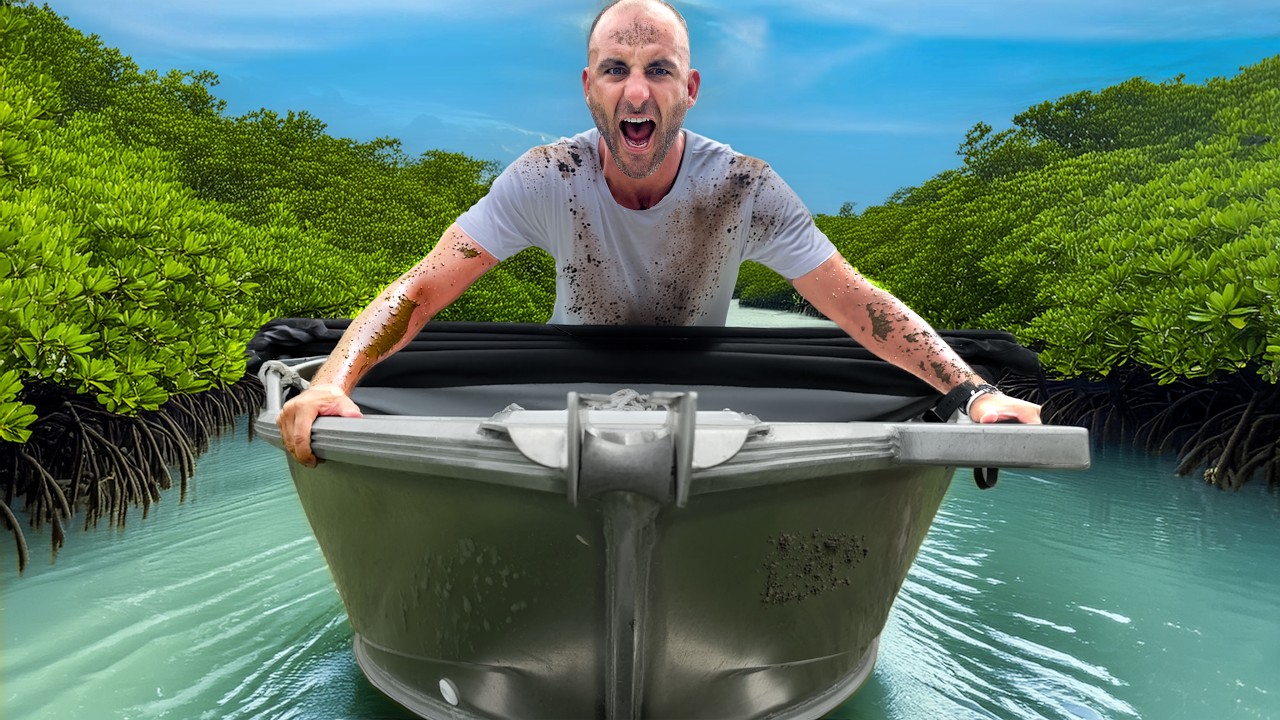
An extreme fishing challenge in Queensland's mangrove systems has seen angler Luke Falzon complete a demanding 20-hour session where survival depended entirely on his catch rate.
Documented for his NXT STOP YouTube channel in April 2026, the challenge imposed strict rules: no food brought aboard, all meals cooked on the boat, and shore access permitted only for collecting live bait. Falzon would fish continuously through the night in waters known for substantial crocodile populations.
Local guide Liam accompanied the expedition, providing essential knowledge of the area's treacherous sandbars and tidal patterns. Early in the session, a three-metre crocodile was spotted, underscoring the serious nature of the environment.
Morning rain and high water initially hampered efforts. Liam's experience proved valuable, advising a wait until tides dropped sufficiently before pursuing barramundi. The strategy shifted to flathead as conditions evolved.
Rapala Crosscity impostor prawn lures rigged on 50-pound leader eventually produced results. Falzon secured two legal-sized flathead that became the crew's sustenance for the extended session. Both fish were properly bled and stored before being pan-fried on the boat's portable cooker.
Live bait proved essential for the barramundi campaign. Cast-netting in shallow creeks yielded approximately 25 mullet, which were maintained in an onboard aerated tank. Liam's choice of size 10 hooks for barramundi reflected his approach to the species' aggressive feeding behaviour and substantial jaw structure.
As sunset approached, anticipation built. Positioning at a productive creek mouth, the anglers deployed live mullet beneath floats. The tactic immediately drew attention, with multiple barramundi engagements occurring in quick succession.
Hookup conversion proved challenging despite the activity. Falzon's first barramundi on live bait became entangled and was lost during the fight. A subsequent fish was landed but measured below the legal limit and was carefully released.
Throughout the night hours, the crew adapted tactics repeatedly. Floats were removed in favour of running sinker rigs. Multiple spot changes were necessary as tidal flows altered fish positioning and to prevent the vessel becoming stranded on emerging sandbars.
Mangrove jack also featured in the mixed-species approach. Traditional handline methods were demonstrated, with Liam employing a plastic bottle as a visual strike indicator on free-spooled line, an effective technique in confined mangrove channels.
While trophy barramundi eluded capture despite numerous opportunities, the session achieved its primary objective. The flathead provided necessary nutrition, and Falzon gained valuable experience in extended nocturnal fishing.
The expedition exemplifies a growing trend in fishing media toward endurance and survival formats. Rather than focusing solely on catch quantity or size, these challenges emphasise adaptability, local knowledge, and physical resilience.
For Falzon, the experience marked his longest night fishing session and revealed both the rewards and frustrations of mangrove angling, where success demands patience, skill, and respect for a powerful, unpredictable environment.