Anglers often envision Murrells Inlet, South Carolina, for its flounder, king mackerel, and redfish. Yet, the Waccamaw River emerges as an unexpected treasure for bass fishing enthusiasts.
"Not just vacationers, but even among those who grew up here, or have lived here for decades, you’d be amazed at how many have never even been on the Waccamaw River, much less been bass fishing on it. And they’re missing out," said Capt. Todd Vick from Fishin’ Freshwater Charters, who emphasizes the river's hidden potential.
Vick favors the smaller creeks branching off from the main river, which can often be congested with various boaters during the summer months. "Especially during the summer, the main river just gets too much traffic from PWCs, pleasure boaters, other anglers and even big commercial boats," he noted. This preference is not just about avoiding congestion; the smaller creeks offer abundant shade, submerged cover, and ideal ambush points for largemouth bass.
August stands out as an optimal period for bass fishing on the Waccamaw River, providing ample opportunities for both numbers and size. Vick operates primarily out of Wacca Wache Marina, a site significantly influenced by tidal movements. "Tidal rivers offer more challenges than non-tidal ones," he stated. One of the primary challenges is ensuring boats do not run aground as the tide recedes.
So, when is Vick's preferred time to fish? "I want to begin fishing when the tide is high, but starting to fall," he explained. During high tide, bass venture deep into flooded trees. As the tide drops, they move toward the creek's edges, making them accessible for anglers.
In terms of tactics, Vick advocates for utilizing trick worms. He favors unweighted white or pink trick worms on No. 3 or 4 extra-wide gap hooks. "I’ll start one of my anglers with a white worm, the other with a pink worm," he noted. He employs a strategic approach where the more effective color quickly becomes the group's focus.
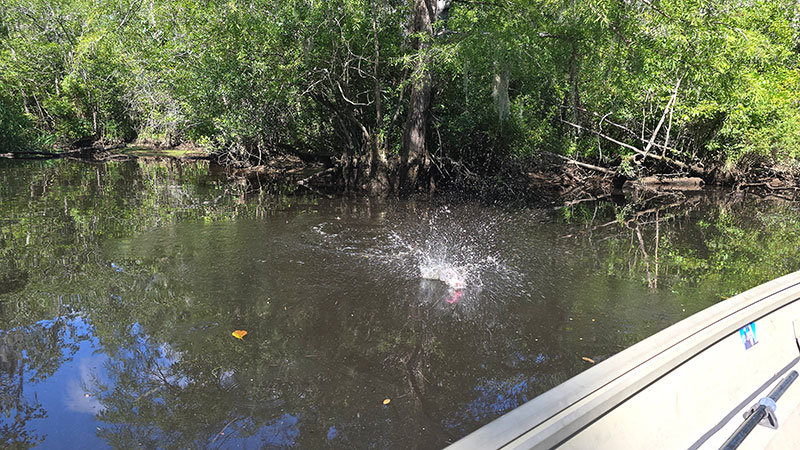
The technique involves casting near the base of flooded trees and allowing the lure to descend. "Once it hits the edge of the grass, let it fall freely," Vick instructed. If a bass is nearby and hungry, it will often strike during the fall. Vick cautions anglers to remain vigilant since the bites can be aggressive. "Just remember to stay prepared at all times, because they will hit this worm hard," he added, likening the experience to combat in close quarters.
As the tide recedes further, Vick shifts to utilizing weightless Senko worms. He prefers colors like watermelon and black/blue, again sticking with the same hook size. The transition in technique is significant. While trick worms thrive on motion, Senkos rely on patience. "With a Senko, you need to pay closer attention to the line. You’re not going to feel much from a fish when it bites a Senko. Instead, you’ll see the line jump or start moving in one direction or another," he explained.
Vick’s Senko strategy involves casting and counting down before making slight twitches of the rod. "If you don’t get hit, reel it on in and make another cast," he encouraged. The key with a Senko is to observe the line closely, particularly as spring and summer encourage active feeding.
When the tide drops substantially, Vick changes gears once again, opting for weighted lures to reach the bottom where bass tend to congregate as their cover diminishes. "When the tide drops to the point that the baitfish don’t have many places to hide, the bass don’t have many places to go either," he explained, stressing the importance of adapting to the ever-changing conditions on the water.
In summary, the Waccamaw River offers diverse fishing opportunities for those willing to explore beyond the main currents. With the right techniques and lures, as articulated by Captain Vick, anglers can significantly increase their chances of landing quality bass in this scenic area. This not only showcases the river's potential but also highlights the unique challenges and strategies that come with tidal river fishing.