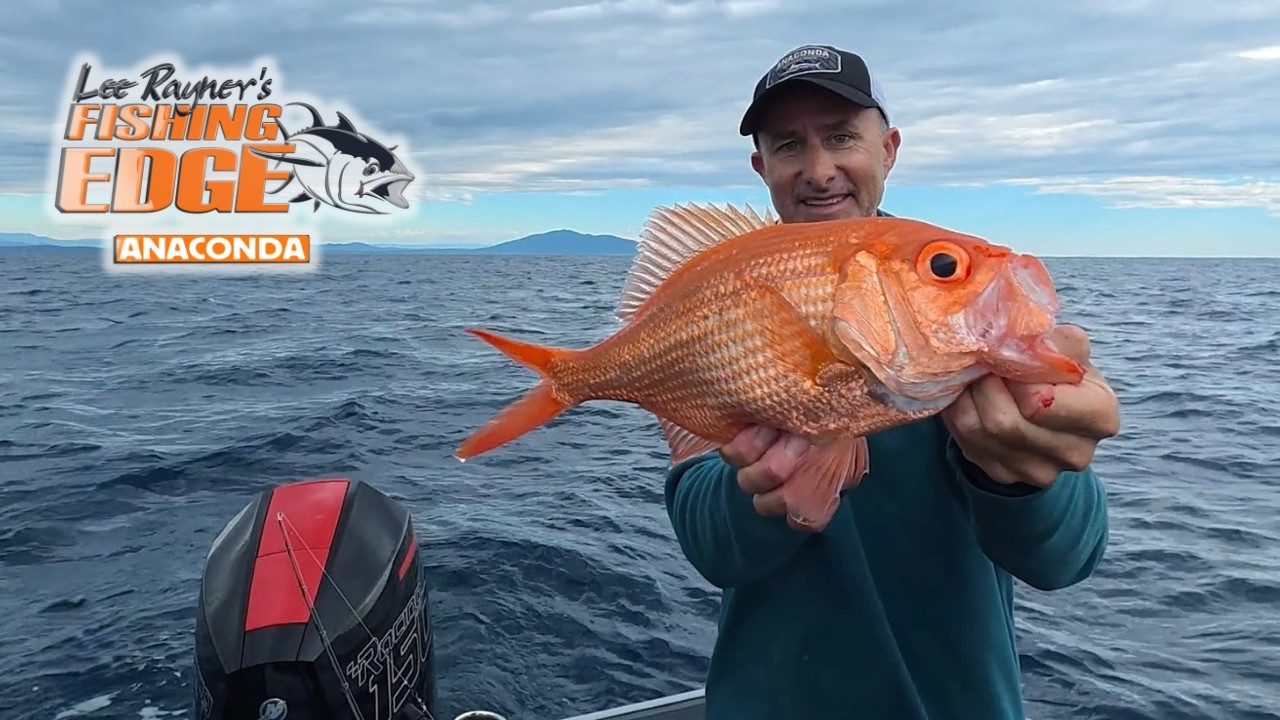
Plenty of anglers chase deep-water bottom fish these days with the help of electric reels. Lee Rayner decided to do it the old-fashioned way. On a recent episode of Fishing Edge, the presenter dropped baits into 120 metres of water off the South Coast in search of a feed — and wound every fish up by hand.
"Today we're fishing in 120 metres of water chasing some bottom fish," Rayner said, setting up over ground he would normally fish for marlin. That overlap was deliberate: good marlin reef tends to be good bottom reef, so he kept a couple of marlin rods rigged "just in case" while he sent baits to the bottom.
Nannygai were the goal, but the reef handed up a mixed bag — ocean perch, flathead and a gemfish among them — plus a relentless run of slimy mackerel that made it hard to get a bait down untouched. Rayner ran a paternoster rig with both dead and live baits, hoping a livey might draw the big John dory and trumpeter that share the deep reef.
He leaned into the cost-of-living angle, joking that the crew had come out for "some tasty treats to eat" while doing their best to ignore the "$3 a litre" fuel bill to get there.
The hand-winding was the real story. Rayner's deckhand was openly unenthused about cranking 120 metres of line by hand, and Rayner estimated they would haul roughly 30 kilometres of line up over the day. The payoff came as quality nannygai — "Haven't seen one like that for a long time," he said of one — turned up between the ocean perch the pair grew to dread retrieving, a fish he noted some call "poor man's lobster."
He slipped in a few useful tips along the way. To rig a live slimy mackerel, Rayner passed the hook through its nostrils and pinned a shallow back hook so it could swim naturally. For handling a spiky flathead, he showed a grip he prefers to the thumb: "You just grab them like that. You don't tend to drop them or get spiked." And filleting at the end, he argued for keeping the skin on a flathead — "I like to leave the skin on because it goes nice and crispy."
Undersized fish and the gemfish were released, and as a forecast nor'easter threatened to swing south, Rayner pulled the pin once there was a feed in the esky. The trip, he said, was "more about just getting a feed" than landing a trophy — a reminder that a good day on the deep reef does not require a boat full of electronics.