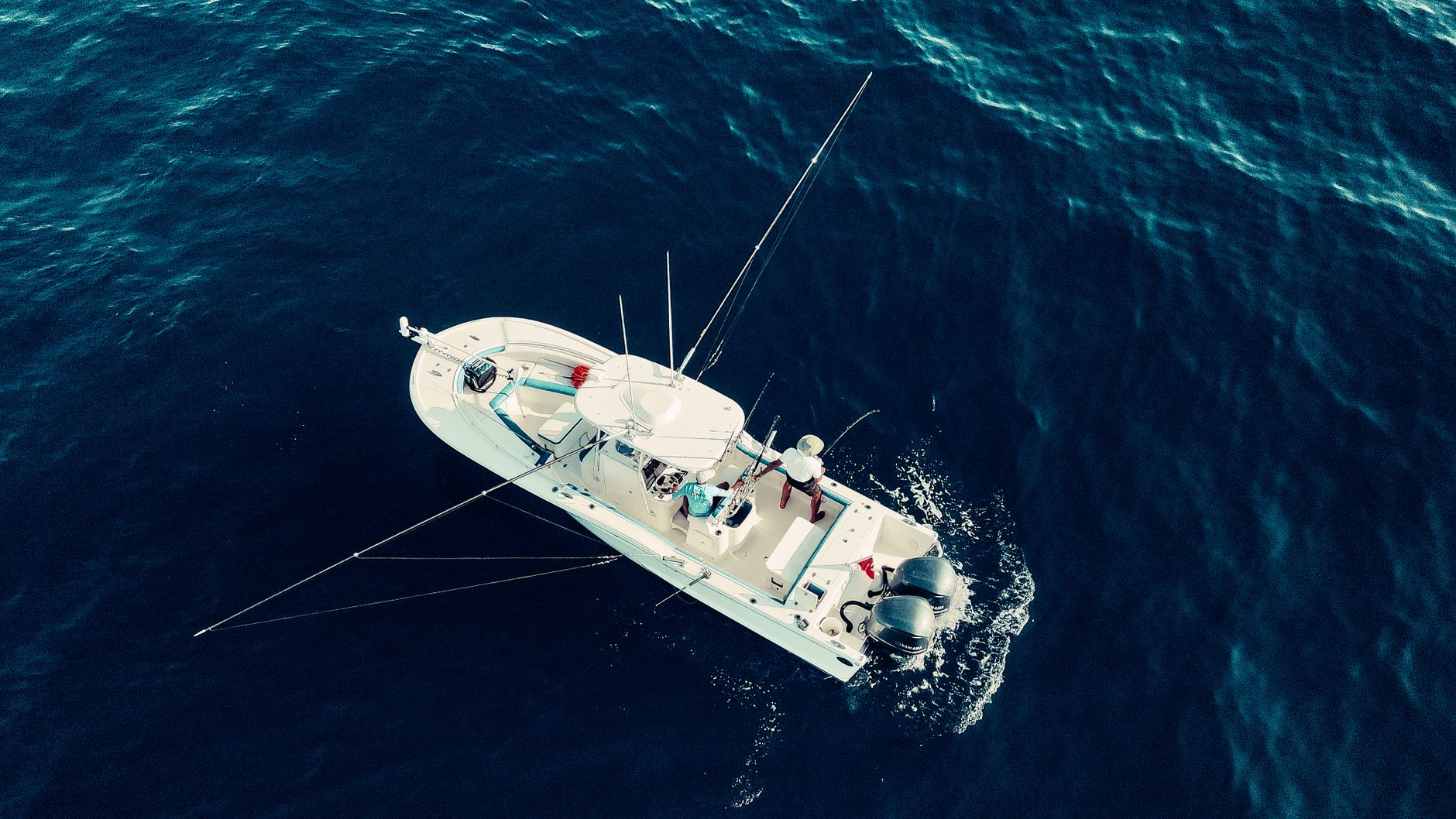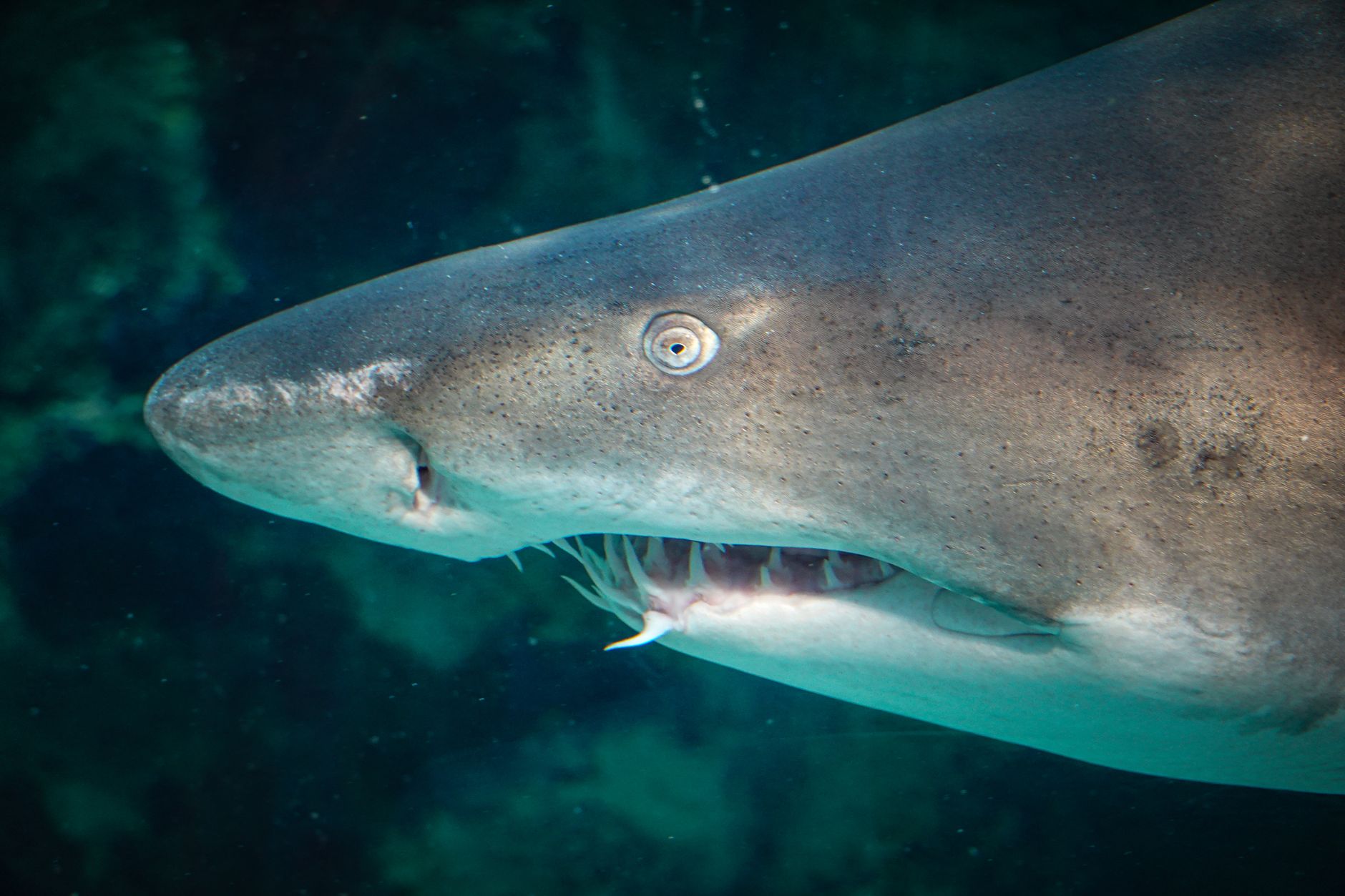
Capt. Ross Walkinshaw has a way of describing a white shark's mouth that sticks with people. Not teeth, exactly. Machinery.
"It's like a chainsaw, it's not like a nice set of dentures," says Walkinshaw, who owns Cape Cod Charter Guys. "That thing comes out, and it wants to bite things."
Walkinshaw told Outdoor Life about a day last summer that has become a fairly ordinary kind of Cape Cod charter. A shark came up beside a client with its mouth open. He moved five miles. He hooked a striped bass, and a second shark took it apart behind the boat.
"[The shark] came up and out in 9.7 feet of water and down on the striper and surgically cut it," he says. "It then folded my rod all the way down and almost pulled me over the set of motors."
He moved again, almost four miles this time. An 18-foot white shark breached clear of the water. That was the end of the day. "My customers had had enough," Walkinshaw says.
By some estimates there are hundreds of white sharks working the Cape at the height of summer. The Atlantic White Shark Conservancy tagged 268 of them between 2010 and 2021, and detected 134 individuals in 2022 alone. The Cape is now described by the conservancy as the only known place in the northwest Atlantic where white sharks aggregate.
What is striking is how differently the fleet has reacted to that.
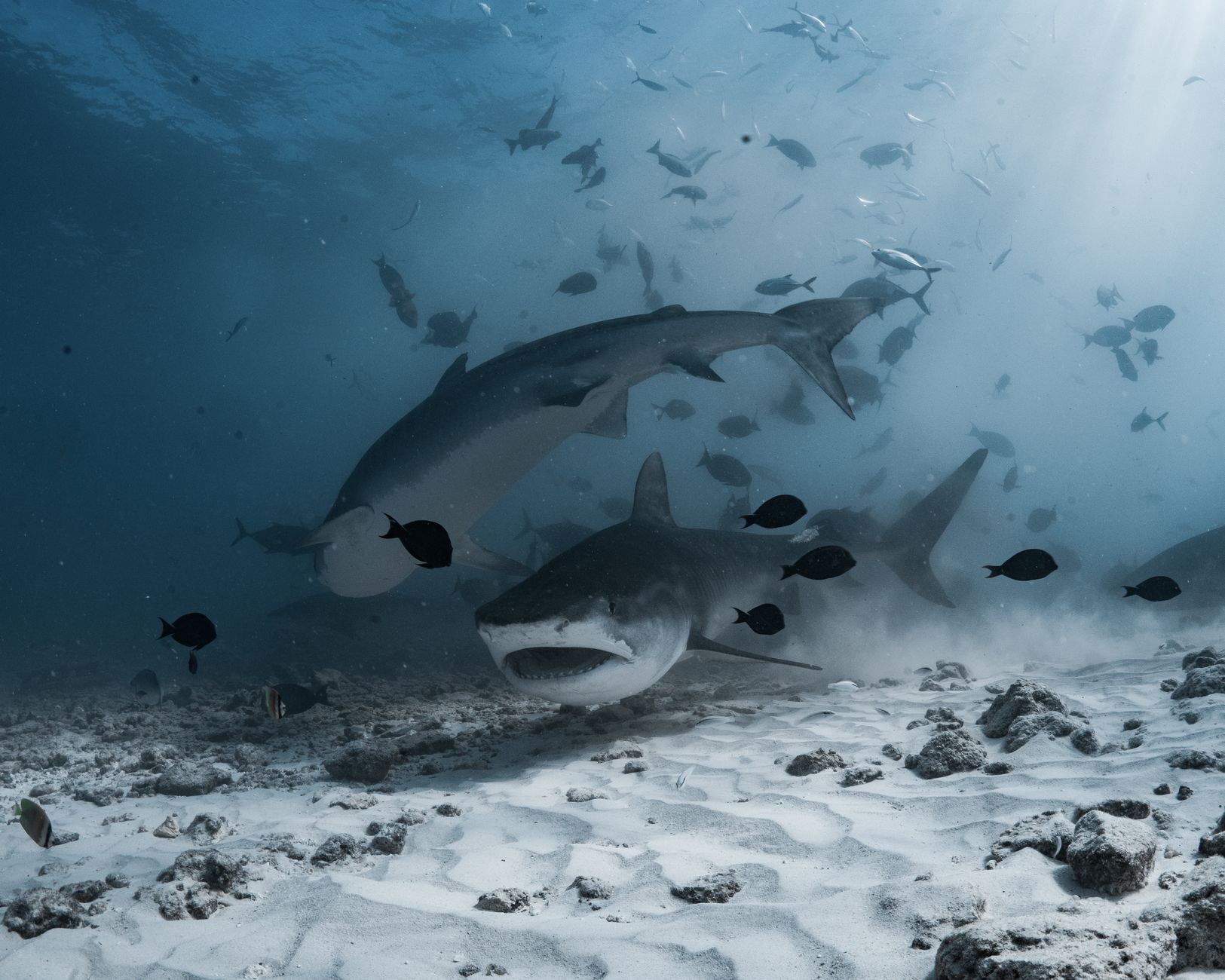
Capt. Doug Brown, who runs Jenniferann Sportfishing Charters and has been on the water there for about 25 years, treats the sharks as an attraction rather than an obstacle. "They're really a cool creature," Brown says. "They're just living in their environment. And we're in theirs."
Brown argues the risk to anglers is close to nil, whatever it looks like on a beach webcam. "They don't really bother us," he says. "Occasionally they spook our fish away and, every once in a while they grab a customer's fish, but that's pretty cool to see. People don't mind that."
He has a working theory about why the boats attract them at all. "If they hear a diesel engine running, they know there's food around it and they key in on it," Brown says.
Capt. Tom Szado of The Perfect Catch Fishing, guiding in the area since 1978, reports the same commercial reality. "We've had a few fish come back half eaten. But they haven't slowed down our business at all," Szado says. "They're not scared as long as the boat's floating and they can go out on the water."
Walkinshaw's answer is the opposite one. When numbers peak in late summer, he leaves. "Last year, we had more than a dozen at our boat, so that's when we switch over to the south side, to the Vineyard, to get away from them," he says. "They aren't thick and heavy over there yet."
Run further down the coast and the issue evaporates entirely. Capt. Andy LoCascio of Long Island Fishing Charters says white sharks simply are not part of the conversation there. "We have many species of sharks that are more obvious," he says, "and none of them impact charter fishing."
The captains' reports of small sharks are now feeding directly into the science. Researchers have spent 15 years on the large seal-eating sharks off the Outer Cape; this season the focus has shifted into Cape Cod Bay, where fishermen keep reporting whites under about nine feet.
"As far as the Cape goes, it's really the next frontier for white shark research," Megan Winton, senior scientist at the Atlantic White Shark Conservancy, told CAI.
Greg Skomal, the Massachusetts Division of Marine Fisheries shark biologist, says the juveniles appear to be deliberately keeping their distance from the adults. "What's really neat is they appear to be segregating from the larger white sharks," Skomal says. Larger whites will eat smaller ones, which raises the question of whether the Bay is functioning as a nursery worth protecting.
"We want to get a better understanding of this age/size group," Skomal says. "And so we're going to spend a little bit more time in the Bay - get some tags out to look at, not only their residency in the Bay, their behavior in the Bay, and where they go after they leave the Bay."
Brown, for his part, spends part of his day doing informal public safety work. He described pulling up to a family with five children swimming in Cape Cod Bay in late June.
"And I said to the parents, 'There are white sharks out here.' And [the dad] said, 'Yeah, I know, we won't be out here long.' And I said, 'It doesn't take long.' What do you say to something like that? I just turned my boat and shut up."